

Capitalism Vs. Socialism: Comparing Economic Systems
Examining the many ways the most influential modern economic theories are developed; how they do or do not function; how they manage to operate both together and in opposition to each other.
Already subscribed?
Sign in
A look at the USSR in the final few years before its collapse; the restructuring known as perestroika; examining some of the major questions that shape economic systems; closing with a brief overview of the goals and scope of the course.
S1:E1 • Mar 30, 2018 • 31m
Meeting four of the most influential economic thinkers in history; examining their individual philosophies and influences across three centuries; finding out how many of their ideas overlap even as their philosophies differ.
S1:E2 • Mar 30, 2018 • 32m
There is no one absolute measurement that determines the health of an economy; the different metrics for economic success; an understanding of how they are calculated and interpreted; why these data points can start more arguments than they resolve.
S1:E3 • Mar 30, 2018 • 31m
Traveling to the birthplace of industrial capitalism; a fortuitous meeting of politics, technology and economics shapes the future; it also inspires writers like Charles Dickens to reveal the social repercussions of unregulated industrialization.
S1:E4 • Mar 30, 2018 • 30m
America is defined by modern capitalism from the beginning; the paradoxes in free-market systems; how Protestant religious philosophy plays a part in the direction of the economy; how founding figures set the course for American economic dominance.
S1:E5 • Mar 30, 2018 • 30m
Religious and political thinkers alike turn to new solutions to alleviate the often horrible conditions many workers experience; socialist projects that fall into two camps; the difficulties of running socialist systems in a largely market economy.
S1:E6 • Mar 30, 2018 • 29m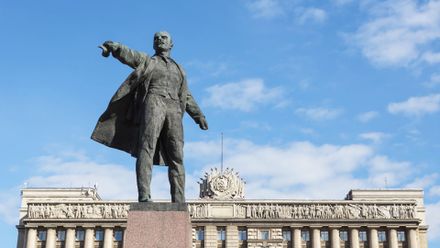
The Bolshevik revolution; the birth and troubled development of communism; why Marx never envisions communism taking root in an illiterate, agrarian society; how the lack of economic experience in Soviet leadership creates disaster.
S1:E7 • Mar 30, 2018 • 28m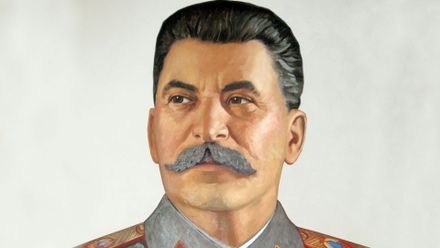
Examining the ways Stalin seeks to exercise complete control of the Soviet economy; his Five-Year Plan for production; an eye-opening look at the ways economics and politics can feed off of one another, or in this case, starve each other.
S1:E8 • Mar 30, 2018 • 28m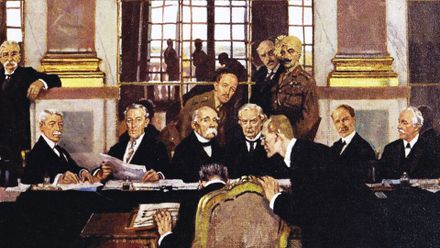
The end of World War I illustrates one of the iron laws of capitalism; how the Treaty of Versailles sets up harsh terms for a depleted Germany; why shortsighted leadership from the Allied powers leads to economic fallout and the Second World War.
S1:E9 • Mar 30, 2018 • 29m
Why Black Tuesday is actually a symptom rather than a cause; tracing the origins of the Depression in the U.S.; looking at the ways FDR applies the ideas of John Maynard Keynes to help America recover from economic devastation.
S1:E10 • Mar 30, 2018 • 29m
Some European countries seek to reform the capitalist system; the different motives behind the reforms; the differences between public and private goods; comparing and contrasting the myriad ways economies can blend capitalism and socialism.
S1:E11 • Mar 30, 2018 • 31m
The economic system of Sweden is perhaps the best example of a philosophy that falls between two extremes; Professor Stuart explains the many factors that contribute to Sweden's relative economic success and what it can teach about mixed economies.
S1:E12 • Mar 30, 2018 • 29m
Why France is vital in shaping influential socialist theories; how centuries of political upheaval can leave impressions on a nation's economic history; France is a strong example of the ways economies are shaped by internal and external forces.
S1:E13 • Mar 30, 2018 • 31m
Looking at one of the British economy's shifts between privatization and nationalization; the socialist programs introduced by a post-World War II Labour Party government; the Margaret Thatcher era of deregulations and privatizations.
S1:E14 • Mar 30, 2018 • 30m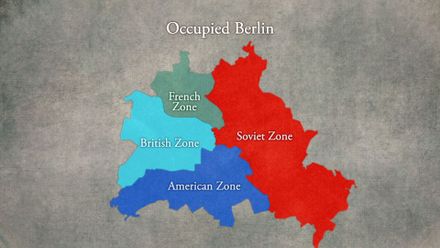
Germany under Otto von Bismarck shows how socialist policies can create more efficient workforces; how Bismarck's ideas are used to help Germany achieve greater power; tracing his legacy into the 20th century under Chancellor Helmut Kohl.
S1:E15 • Mar 30, 2018 • 30m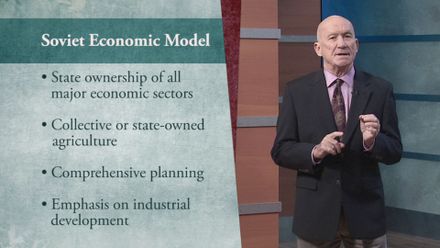
Examining the ways Soviet Russia dominated the nations of Eastern Europe, bringing them under the umbrella of authoritarian communism; which nations push back against this takeover; Western policies and institutions put in place to rebuild Europe.
S1:E16 • Mar 30, 2018 • 31m
The post-war occupation of Germany by four separate powers creates a division that dominates Europe for decades; it also provides a unique opportunity for direct comparison between communist and capitalist enterprises.
S1:E17 • Mar 30, 2018 • 28m
Russia is never able to successfully reform the Soviet communist system; how the authoritarian government encourages dysfunctional behavior in production; why the resulting scarcity of decent goods and services becomes unsupportable.
S1:E18 • Mar 30, 2018 • 29m
When the communist governments begin to collapse in the 1980s, it takes many people in the West by surprise, tracing the ways Soviet communism's failures are replicated over and over again in the Eastern Bloc nations, with nearly the same results.
S1:E19 • Mar 30, 2018 • 30m
Professor Stuart turns his attention to China; focusing on the 20th-century influence of Soviet communism under leaders like Mao Zedong; how China is shaped by its earlier history; how the Cultural Revolution under Mao further impedes progress.
S1:E20 • Mar 30, 2018 • 30m
Contrasting the economic reforms under Deng Xiaoping against the earlier communist strategy under Mao; comparing them with the unsuccessful attempts at similar reform in Russia under Gorbachev; a look at China's economic influence on the world stage.
S1:E21 • Mar 30, 2018 • 32m
The secrets behind the transformations of the "Asian Tiger" countries; their shared features; their progression from authoritarian regimes to more democratic governments; comparing and contrasting their concentrated efforts to shape their economies.
S1:E22 • Mar 30, 2018 • 32m
The European Union has been a spectacular success in preventing war between major European powers; the other ways it can be considered a failure; the post-war conditions under which the EU was created; the dimensions of its economic influence.
S1:E23 • Mar 30, 2018 • 32m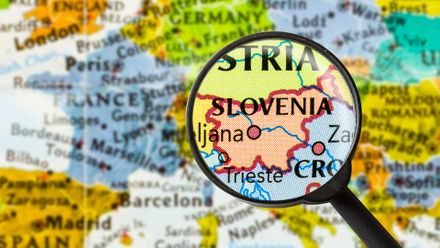
Using Slovenia as a model, exploring questions concerning the evolution of world economies; whether economies are becoming more similar or diverging; definitive answers remain elusive; the tools provided open up a world of possibilities.
S1:E24 • Mar 30, 2018 • 34mMore Like This
 TVPG • 1 season
 TVPG • 1 season
 TVPG • 1 season
 TVPG • 1 season
 TV14 • 1 season
 TVPG • 1 season
 TVPG • 1 season
 TVPG • 1 season
 TVPG • 1 season
 TVPG • 1 season
 TVPG • 1 season
 TVPG • 1 season
 TVPG • 1 season
 TVPG • 1 season
 TVPG • 1 season
 TVPG • 1 season
 TVPG • 1 season
 TVPG • 1 season
 TVPG • 1 season
 TVPG • 1 season