

The World's Greatest Geological Wonders: 36 Spectacular Sites
S1:E36 Planetary Wonders - Out of This World
Some amazing geological features beyond Earth; the planet-circling lava flows on Venus; the solar system's largest volcano and canyon on Mars; the hydrocarbon lakes on Saturn's moon Titan; there is no end to geological wonders throughout the cosmos.
Already subscribed?
Sign in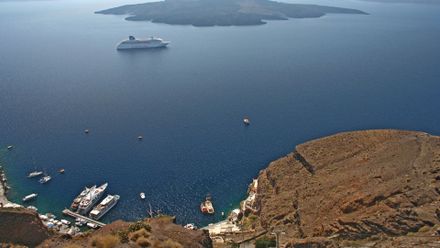
Wysession's criteria for choosing more than 200 different geologic wonders in nearly 120 countries; the first on his list is the beautiful Greek island of Santorini; the relic of a volcanic eruption; an effect on the ancient Mediterranean world.
S1:E1 • Jun 14, 2013 • 33m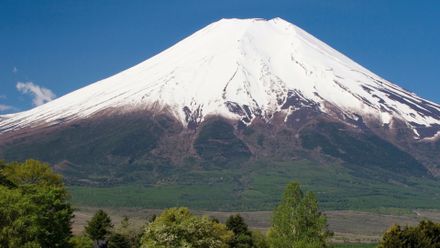
Moving to volcanoes; Mount Fuji in Japan is a sacred site whose nearly perfect cone shape is a popular subject in Japanese art; the origin of volcanoes such as Mount Fuji; the special conditions that produce their sturdy symmetrical cones.
S1:E2 • Jun 14, 2013 • 33m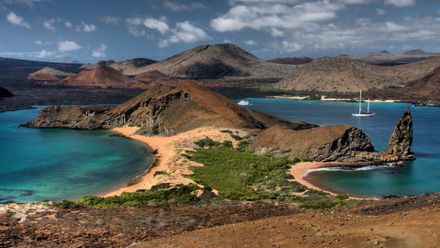
Phenomena associated with plate tectonics; the Galapagos Islands are made famous by Charles Darwin; this island is on a volcanic hotspot near a mid-ocean ridge, formed by moving tectonic plates; natural wonders abound, both above and below water.
S1:E3 • Jun 14, 2013 • 32m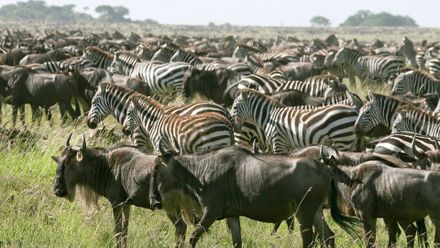
The African Rift Valley is a mid-ocean ridge in the making; from the Red Sea to Mount Kilimanjaro, tectonic forces split Africa apart, forming a new ocean in the process; this valley is also the site of fossil discoveries relating to early humans.
S1:E4 • Jun 14, 2013 • 29m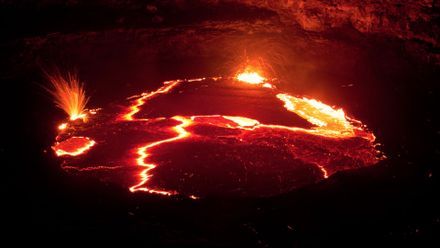
A striking feature of the African Rift Valley is the lava lake at Erta Ale in Ethiopia; this seething cauldron of molten rock is the oldest of the world's five active lava lakes; it replicates on a small scale the complex process of plate tectonics.
S1:E5 • Jun 14, 2013 • 27m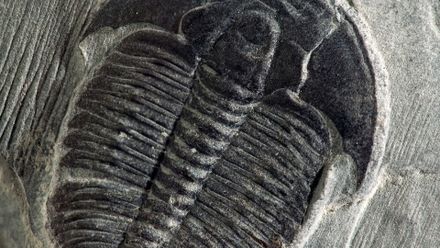
The evolution of life is revealed in the rare fossils of the Burgess Shale in British Columbia; this mountainside quarry records the proliferation of new organisms, both familiar and bizarre, that follow a mass extinction half a billion years ago.
S1:E6 • Jun 14, 2013 • 31m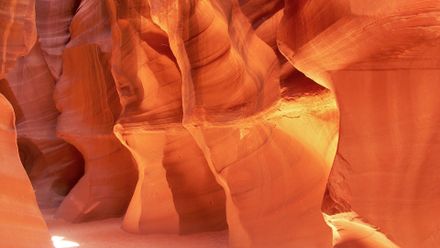
The incredible story told in the mile-deep layers of the Grand Canyon; probing the canyon's formation and its connection to the opening of the Gulf of California; the birth of the San Andreas Fault; what gives the canyon its striking visual effect.
S1:E7 • Jun 14, 2013 • 31m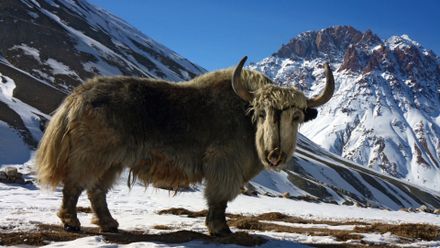
Knowing what makes the highest mountains in the world so high; the events that create Mount Everest and the rest of the Himalayan range on the vast Tibetan Plateau; the role of the plateau in cooling the entire planet over the last 60 million years.
S1:E8 • Jun 14, 2013 • 30m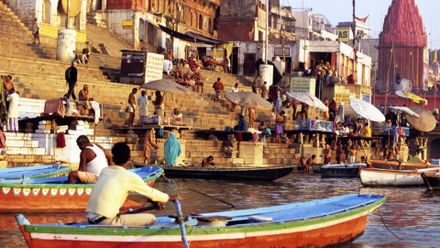
Much of the rock eroded from the Himalayas ends up in the Ganges River delta, a highly biodiverse place; how a delta forms and how the Ganges is both life-sustaining and destructive, giving it a religious significance for millions of people.
S1:E9 • Jun 14, 2013 • 30m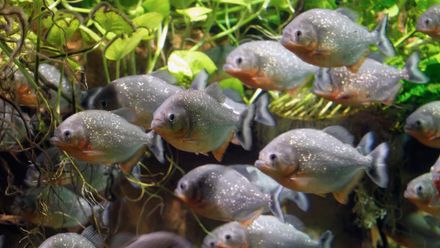
The Amazon River collects rainfall from the Amazon basin; the basin's extensive network of tributaries produces 20 percent of the freshwater that flows into the ocean; the basin's lush vegetation gives 20 percent of all oxygen in the atmosphere.
S1:E10 • Jun 14, 2013 • 31m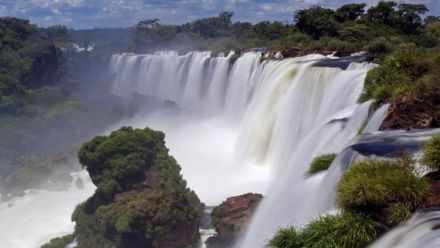
The most striking waterfalls form under unusual geological conditions; along the border of Brazil and Argentina, touring the Iguazu Falls, a display of 275 separate falls; their close connection to a hotspot on the Mid-Atlantic Ridge.
S1:E11 • Jun 14, 2013 • 28m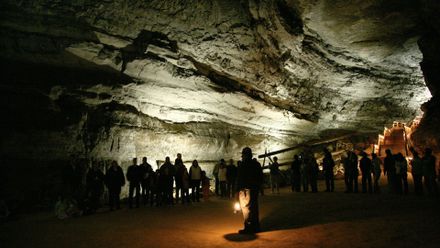
Water does not just flow on the surface, but also flows underground, carving caves in the process; the largest cave system in the world is Mammoth Cave National Park; groundwater excavates this network of passages that extends for at least 390 miles.
S1:E12 • Jun 14, 2013 • 31m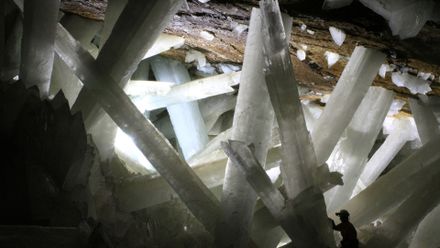
Exploring stalagmites, stalactites, flowstones and other cave features formed by minerals slowly precipitating from water; visiting the Cave of Crystals in Mexico, a science-fiction-like world with individual crystals up to 35 feet long.
S1:E13 • Jun 14, 2013 • 30m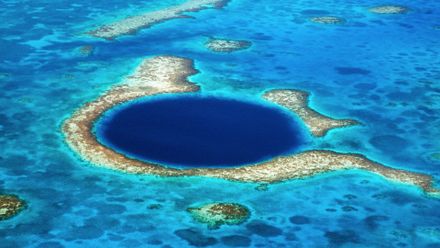
Probing the mystery of the Great Blue Hole, an enormous submerged sinkhole ringed by a coral reef off the coast of Belize; the processes that create sinkholes; the nature of karst topography, which is produced by the erosion of limestone.
S1:E14 • Jun 14, 2013 • 32m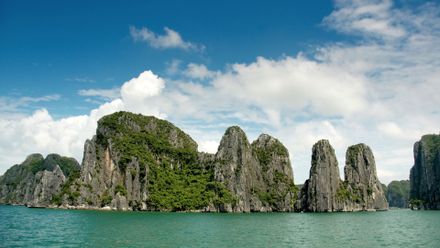
The limestone islands in Vietnam's Ha Long Bay are an example of mature karst topography; the bay's cone-shaped towers are related to specific sinkholes, their puzzling geology focusing not on the rock that's there, but on what is missing.
S1:E15 • Jun 14, 2013 • 30m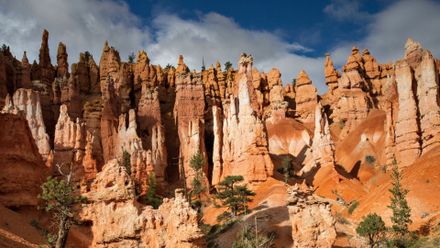
Studying erosional features with Utah's Bryce Canyon, the densest display of weathered rock pinnacles, called hoodoos, anywhere in the world; Bryce Canyon is not really a canyon because it is not formed by a river; knowing what creates the hoodoos.
S1:E16 • Jun 14, 2013 • 31m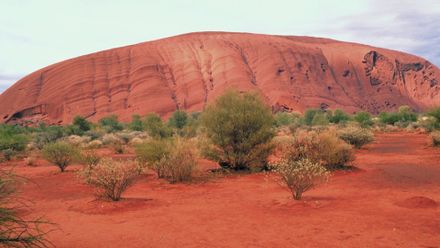
Uluru-Kata Tjuta National Park in Australia; two popular attractions shaped by erosion are Ayres Rock and the Kata Tjuta rock domes; tracing the history of moving plates; rising and receding seas; constant weathering that creates these structures.
S1:E17 • Jun 14, 2013 • 32m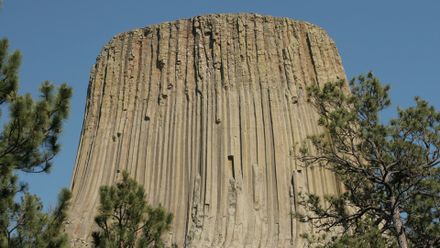
Famous as the landing pad for aliens in the movie "Close Encounters of the Third Kind", Devils Tower in Wyoming is an otherworldly geological formation; how this massive tower of igneous columns develops; probing why nature loves hexagons.
S1:E18 • Jun 14, 2013 • 31m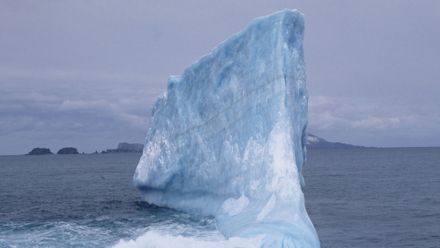
Heading south to Antarctica, a pristine continent; the varied geology and the behavior of the giant ice sheets that flow relentlessly toward the ocean; Antarctica is a superb place to test techniques for exploring cold, dry environments such as Mars.
S1:E19 • Jun 14, 2013 • 32m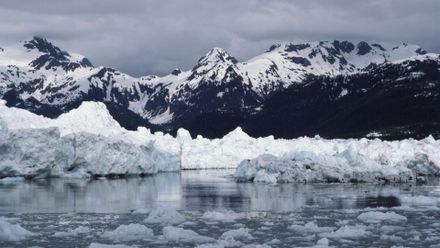
The power of glaciers, which carry a continuous stream of ice and rock from the tops of mountain ranges down to the base; the Columbia Glacier in Alaska; the rapid retreat of Columbia Glacier since 1980, which is triggered by climate change.
S1:E20 • Jun 14, 2013 • 30m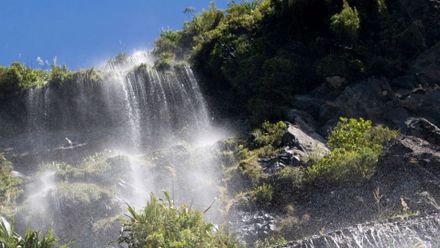
Visiting the stunning fjords of Fiordland National Park in New Zealand; focusing on the most famous of these flooded glacial valleys, Milford Sound; the landscape's beauty is matched by tumultuous tectonic forces that slowly rip New Zealand apart.
S1:E21 • Jun 14, 2013 • 32m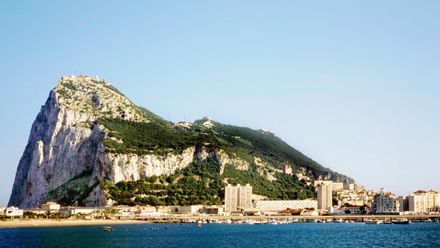
The Rock of Gibraltar marks the gateway from the Mediterranean Sea into the Atlantic Ocean; exploring the currents, catastrophic floods and drastic sea-level changes that occur at the Strait of Gibraltar and throughout the Mediterranean basin.
S1:E22 • Jun 14, 2013 • 32m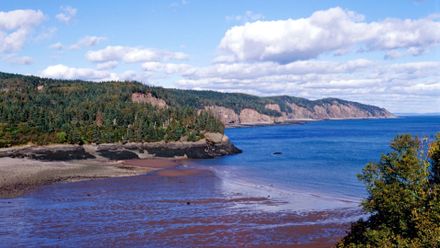
Knowing why the tides in Canada's Bay of Fundy are exceptionally high; the principles of tides and what causes them; examining why the times of high and low tide vary from day to day; the geometry between Nova Scotia and New Brunswick.
S1:E23 • Jun 14, 2013 • 31m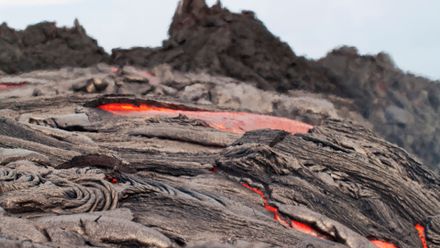
The Hawaiian Islands are part of the Hawaiian-Emperor Seamount Chain, which stretches across the western Pacific Ocean; this feature is mostly straight, except for a curious sharp bend; the special qualities of the big island of Hawaii.
S1:E24 • Jun 14, 2013 • 31m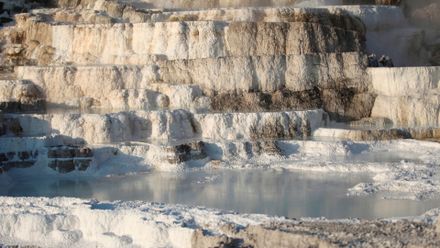
What happens when a hotspot is beneath a continent; Yellowstone National Park is a wonderland of geysers and hot springs nestled in the caldera of a supervolcano; the attractions of Yellowstone; the history and future of the hotspot that fuels it.
S1:E25 • Jun 14, 2013 • 32m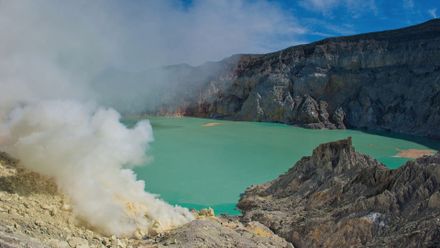
A place where steam is so acidic that it burns one's lungs; where flaming, liquid sulfur condenses from that steam; a turquoise-colored lake is filled with the equivalent of battery acid; the crater lake of Kawah Ijen on the island of Java.
S1:E26 • Jun 14, 2013 • 32m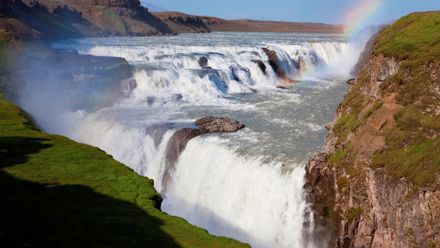
Visiting Iceland, a geologist's paradise where one can walk along the Mid-Atlantic Ridge; Iceland is a hotspot that sits atop the plate boundary that divides North and South America from Europe and Africa; where volcanoes and glaciers coexist.
S1:E27 • Jun 14, 2013 • 28m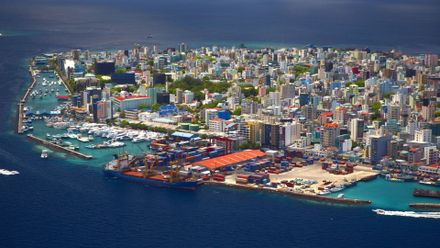
Home to beautiful beaches; the Maldives in the Indian Ocean shows the tranquil end-stage of ocean islands built on hotspots; the volcanoes beneath this coral reef archipelago are dormant; the islands themselves barely rise above sea level.
S1:E28 • Jun 14, 2013 • 27m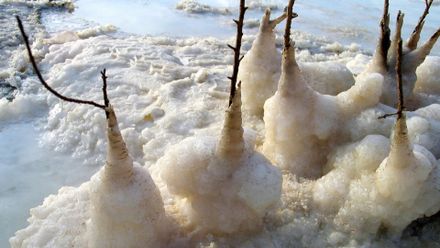
Looking at desert regions by exploring the Dead Sea; learning why this body of water on the border between Israel and Jordan is almost nine times saltier than the ocean; the lowest elevation of any place on Earth.
S1:E29 • Jun 14, 2013 • 31m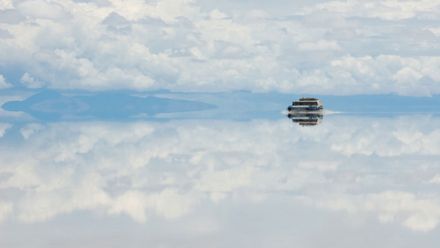
The world's largest salt flat, Salar de Uyuni in Bolivia; almost the size of Connecticut, Uyuni is the flattest place on the planet; when it gets a very thin layer of water, it becomes the world's largest mirror; the largest reserve of lithium.
S1:E30 • Jun 14, 2013 • 30m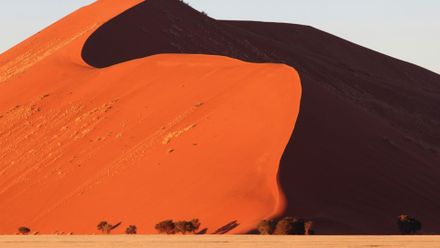
Contrasting the Namib and Kalahari deserts in Southern Africa, two fascinating deserts; the Atlantic shoreline of the Namib Desert is named the Skeleton Coast; the Kalahari Desert's Okavango River empties into the arid landscape and then disappears.
S1:E31 • Jun 14, 2013 • 32m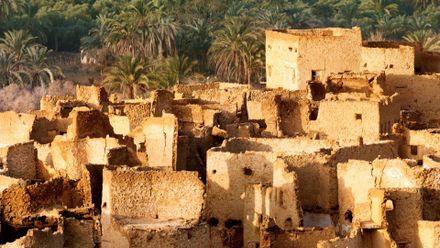
In the eastern Sahara Desert, Siwa is an island of water in a sea of sand; how an oasis with 1,000 springs exists in one of the driest places on Earth; one clue is that the water beneath Siwa soaked into the ground more than 20 million years ago.
S1:E32 • Jun 14, 2013 • 29m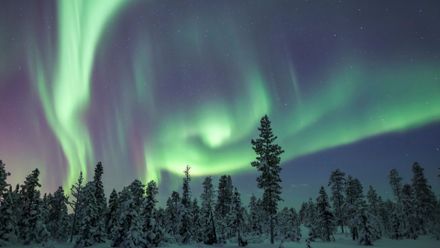
A stunning atmospheric phenomenon caused by events both inside Earth and in outer space; the shimmering colors of auroras result when particles from the solar wind are accelerated in Earth's magnetic field; generated by Earth's churning iron core.
S1:E33 • Jun 14, 2013 • 32m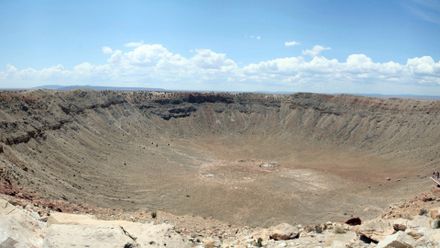
Meteor Crater in Arizona is the best preserved of Earth's few remaining impact craters; the moon has more than 500,000 craters at least as large; what happens when extraterrestrial debris strikes Earth; a small object can do a lot of damage.
S1:E34 • Jun 14, 2013 • 30m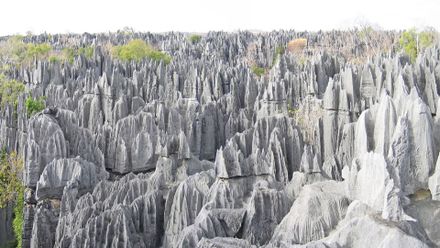
In an entertaining change of pace, watching a countdown of 10 geological wonders that are hard to classify; from number 10, the White Cliffs of Dover, to number one, a geological mystery in Death Valley that seems like a hoax if it were not true.
S1:E35 • Jun 14, 2013 • 31m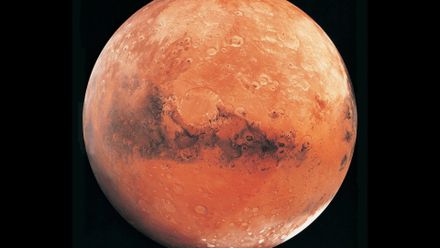
Some amazing geological features beyond Earth; the planet-circling lava flows on Venus; the solar system's largest volcano and canyon on Mars; the hydrocarbon lakes on Saturn's moon Titan; there is no end to geological wonders throughout the cosmos.
S1:E36 • Jun 14, 2013 • 39m