

Plant Science: An Introduction to Botany
S1:E21 How Temperate Trees Change Color and Grow
Trees are a wonderful example of convergent evolution; how trees have adapted to weather conditions; how the tree roots of some trees can forage through the soil for nutrients.
Already subscribed?
Sign in
While every child knows the difference between an elephant and a giraffe, few people of any age can name different plants, learning about various species of plants that provide countless resources.
S1:E1 • Apr 28, 2017 • 30m
Scientists are discovering various similarities between plants and humans; humans, as well as plants, thrive in moderate temperatures, have a circadian rhythm of rest and require water for life; learning about the hearing developed by plants.
S1:E2 • Apr 28, 2017 • 31m
A group of plants called bryophytes develop two special adaptations that allow them to inhabit dry land; the environmental and commercial importance of these plants; how ancient species combat the threat of modern competitors.
S1:E3 • Apr 28, 2017 • 35m
Botanists still struggle to unravel the full evolutionary history of ferns, their staggering reproductive and colonization power, and how ferns are found in low-light and bright-light environments from the arctic regions to the tropics.
S1:E4 • Apr 28, 2017 • 30m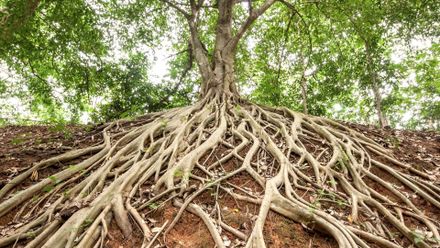
The root is an important part that is necessary for the survival of the plant; how the roots physically support the plant, absorb water and minerals and store carbohydrates while relying on symbiosis with bacteria and fungi.
S1:E5 • Apr 28, 2017 • 32m
Learning about how the pressure flow hypothesis models the movement of sugars through a plant's phloem and xylem; the structures that determine whether an organism will grow in height or girth; how the stem is also a site of photosynthesis.
S1:E6 • Apr 28, 2017 • 30m
How plants use hormones to determine when to shed their leaves or grow new ones and the similarities with human development; learning about the hormones that affect leaf growth and abscission; Charles Darwin's discovery.
S1:E7 • Apr 28, 2017 • 32m
How green plants generate their mass by synthesizing food from carbon dioxide and water via the energy from sunlight with the help of appropriate enzymes; how photosynthesis separates plants from animals.
S1:E8 • Apr 28, 2017 • 31m
Learning about the pigments that interact with sunlight to serve as chemical clocks for flowering plants; the roles played by messenger RNA and temperature and their impact on climate change.
S1:E9 • Apr 28, 2017 • 32m
The effectiveness of spores for plant reproduction and the evolution of alternatives; seeds, which are packages of embryonic roots, stems and leaves, lie dormant until conditions are right; learning about cycads, ginkgos and gnetophytes.
S1:E10 • Apr 28, 2017 • 29m
Conifers have adapted to snow, wind, fire and low-nutrient soils; learning about the unique properties of conifers that allow them to claim the largest forest on Earth; conifers are the source of various cancer drugs.
S1:E11 • Apr 28, 2017 • 30m
The evolution of flowering plants and how they displaced other species; the different types of flowering plants; learning about the unique reproductive mechanisms that led to this explosion of speciation in such a relatively short time.
S1:E12 • Apr 28, 2017 • 33m
Learning about the special evolutionary relationship between flowers, insects and mammals; how the morphology, color and scent of flowers relate to the body shape and sense organs of animals due to their coevolution.
S1:E13 • Apr 28, 2017 • 31m
Learning about the difference between nuts, fruits and seeds; why so many foods carry misleading common names; the similarities between humans and fungi.
S1:E14 • Apr 28, 2017 • 30m
The evolution of the seed as an advantage for land plants; how flowering plants produce a fruit around that seed, aiding in germination and dispersal; learning about the ways in which seeds are dispersed.
S1:E15 • Apr 28, 2017 • 30m
How seagrasses, mangroves and other aquatic plants tolerate low light levels, anaerobic and nutrient-poor sediments; their benefits to surrounding ecosystems and their provision of habitats and protection for animals.
S1:E16 • Apr 28, 2017 • 30m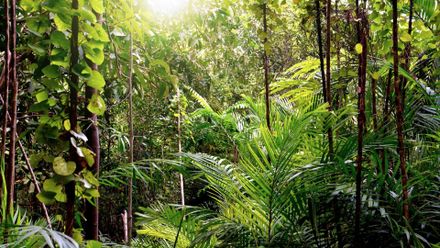
Tropical regions are the most diverse ecosystems that house shade-adapted plants and epiphytes; learning about the ways in which bromeliads, orchids and lianas survive in this diverse ecosystem.
S1:E17 • Apr 28, 2017 • 30m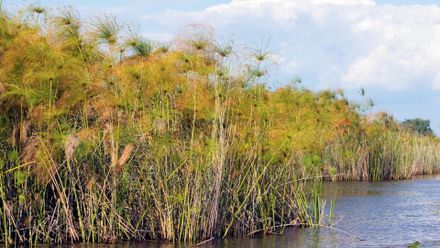
The grassland ecosystem covers one-third of the land area of the planet; how grasses have developed unusual adaptations related to their specific mechanism of photosynthesis; the role of grasses in the development of human society.
S1:E18 • Apr 28, 2017 • 29m
The ecological advantages of shrubs; how shrubs are able to communicate through volatile organic compounds released by the leaves; how they prevent other plants from growing nearby.
S1:E19 • Apr 28, 2017 • 28m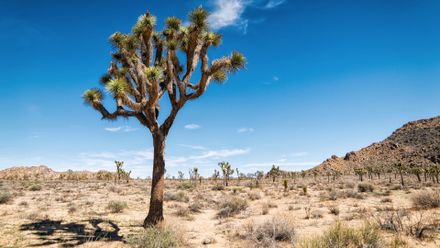
Desert plants have adapted to a lack of water and developed an alternative pathway to photosynthesis by storing carbon dioxide at night to use during the day to prevent daytime water loss.
S1:E20 • Apr 28, 2017 • 32m
Trees are a wonderful example of convergent evolution; how trees have adapted to weather conditions; how the tree roots of some trees can forage through the soil for nutrients.
S1:E21 • Apr 28, 2017 • 31m
The growing season of alpines and the weather conditions in which they survive; how the unique rosette and cushion morphologies allow alpine plants to thrive; how heliotropism aids in pollination.
S1:E22 • Apr 28, 2017 • 29m
Some plant species eat animals while others possess poison-injecting hairs; learn about the invasive species that have taken over millions of acres and hampered species diversity, animal habitat, and entire economic systems.
S1:E23 • Apr 28, 2017 • 30m
Genetically modified organisms are lauded for solving numerous agricultural problems and reviled for other reasons, learning about future possibilities and the dilemmas posed by this type of plant science.
S1:E24 • Apr 28, 2017 • 40m