

History of the Ancient World: A Global Perspective
Ancient civilizations are with people in almost everything they do; the ancient world influences customs, religious beliefs, laws, governments, architecture and art; the ancient world's greatest civilizations; how they affect the world today.
Already subscribed?
Sign in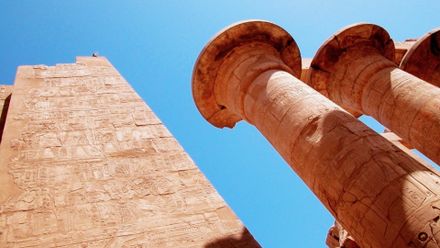
The different kind of approach one will take in exploring the ancient world; hearing a story that illustrates the risks of letting one's own cultural biases and limited perspective overly influence the interpretation of archeological discoveries.
S1:E1 • Dec 16, 2011 • 33m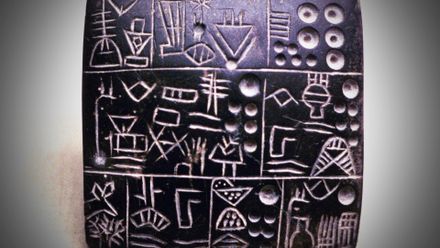
This civilization reveals a theme that appears again and again; grasping the role of geography and resources in shaping Mesopotamia's method of subsistence, religion, structures, empire and means of leaving its written record.
S1:E2 • Dec 16, 2011 • 34m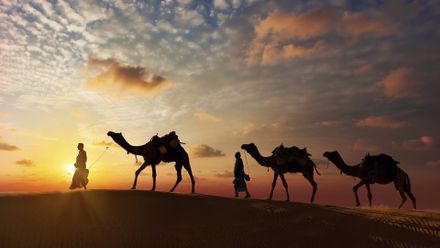
The lack of geographical barriers makes it difficult for the most powerful cities to retain their power; how a succession of empires rise and fall, leaving behind legacies ranging from the use of intimidation in warfare to seafaring and astrology.
S1:E3 • Dec 16, 2011 • 30m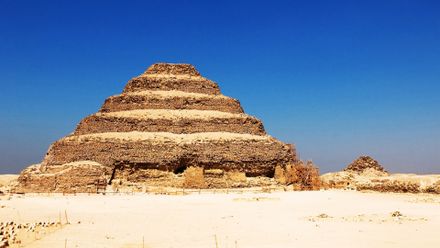
An introduction to Egypt reveals a civilization shaped by geography: how the Nile's annual flooding, though creating a fertile strip amounting to three percent of Egypt, permits civilization to thrive in an otherwise uninhabitable desert.
S1:E4 • Dec 16, 2011 • 30m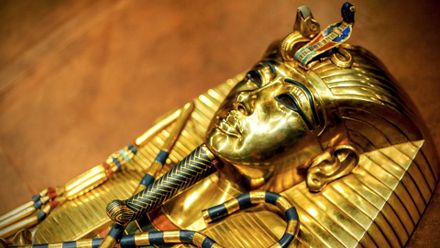
How Egyptian views of death and tombs change with the kingdom's occupation by, and eventual expulsion of, the Hyksos; examining how the differences between the Egyptian and Mesopotamian environments may influence their visions of the afterlife.
S1:E5 • Dec 16, 2011 • 29m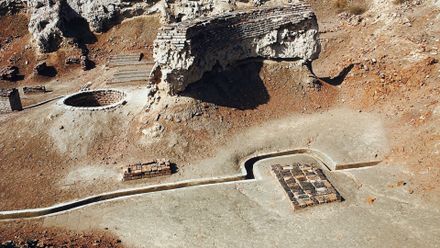
The exploration of a once-lost civilization introduces a key theme; the problems faced by historians and archeologists in interpreting an ancient civilization through physical evidence alone, with no written documents to bring that evidence to life.
S1:E6 • Dec 16, 2011 • 31m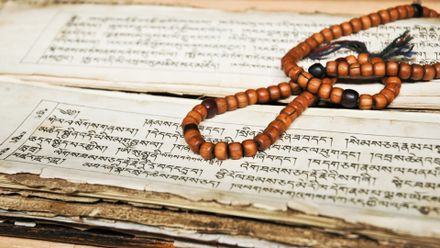
In a reversal of the Indus legacy, the next great era of Indian history is known through a bounty of texts, but relatively little archeological or material evidence; grasping what thousands of verses say about Vedic culture and religion.
S1:E7 • Dec 16, 2011 • 31m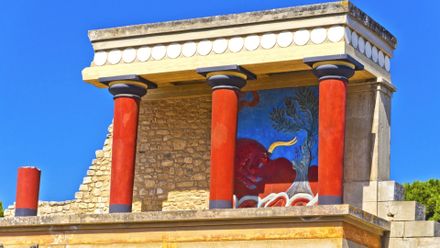
The Minoan and Mycenaean civilizations of the Mediterranean; the Minotaur myth's historical underpinnings; Plato's account of what might be the basis for the legend of Atlantis; the rediscovery of writing as Greece emerges from its own Dark Ages.
S1:E8 • Dec 16, 2011 • 30m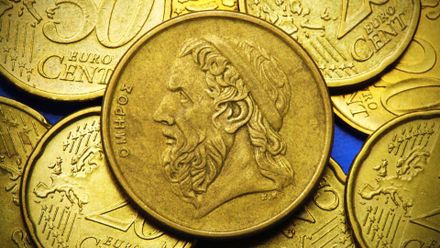
Discovering how a work or body of literature can become the core of an entire culture; examining the influence of Homer on the Greeks; exploring the centrality of the Vedas and Epics in the civilizations of ancient India.
S1:E9 • Dec 16, 2011 • 31m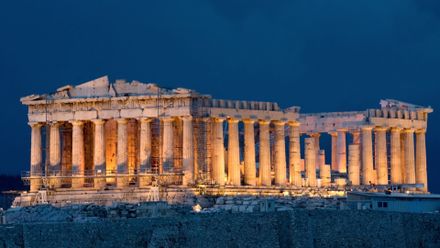
Greece's most famous city-state is praised for its creation of democracy; examining the origins of that system; discovering some revelations; the role played by an instance of spurned affection; perhaps the earliest example of stuffing a ballot box.
S1:E10 • Dec 16, 2011 • 32m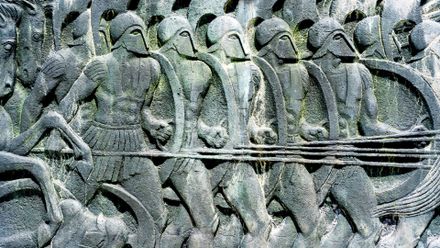
What it is like to be raised a Spartan man or woman; the changes in military tactics and equipment that make their armies so feared; the flaw that guarantees that this Greek city-state's power, no matter how widespread or intimidating, cannot endure.
S1:E11 • Dec 16, 2011 • 32m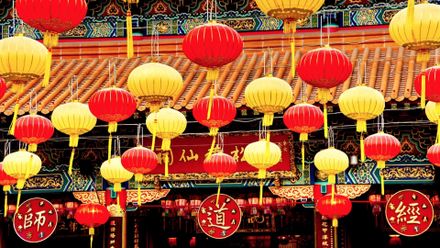
The early development of a unique culture that views itself as constituting the entire world and thus the site of all cultural advancement; the latter self-image is maintained even after China gains an awareness of the world beyond its borders.
S1:E12 • Dec 16, 2011 • 30m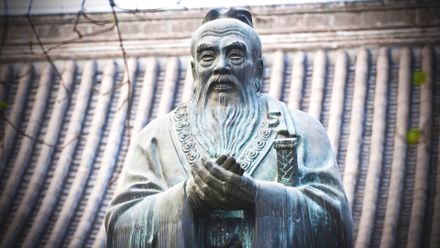
From 700 to 500 B.C., thinkers around the world begin to turn to philosophical questions; focusing on those whose concerns address this world and its issues through rational inquiry, including Confucius, the Legalists and the Ionian Rationalists.
S1:E13 • Dec 16, 2011 • 32m
Thinkers who look beyond the physical world for answers to their questions about the fundamental issues of existence; the impact of several key texts and belief systems, including the Upanishads, Jainism, Buddhism, Daoism and Zoroastrianism.
S1:E14 • Dec 16, 2011 • 33m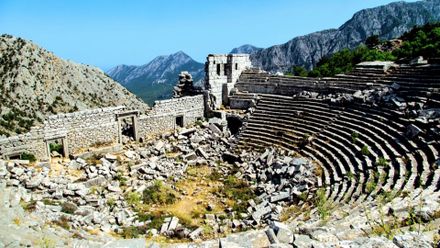
The reasons the Greek city-states are able to emerge intact from their conflict with the Persian Empire; how the defensive alignment put in place to protect those states and begun as an alliance of equals instead becomes an Athenian empire.
S1:E15 • Dec 16, 2011 • 30m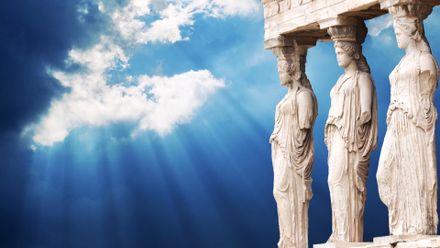
Appreciating two of classical Greece's most important contributions to art and architecture; learning the distinguishing characteristics of Greek sculpture; the principles that contribute to the beauty of Greece's temples.
S1:E16 • Dec 16, 2011 • 30m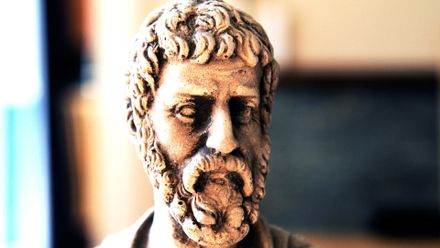
A look at Greek theater; its greatest playwrights of tragedy, which include Aeschylus, Sophocles and Euripides; examining the second wave of philosophers known as the Sophists, led first by Socrates and then by his disciple Plato.
S1:E17 • Dec 16, 2011 • 31m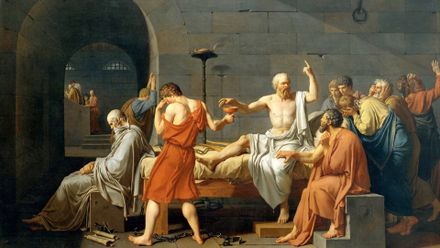
How the end of Greek unity brings down the political and cultural successes of the early fifth century; this culminates in a shameful episode in Greek history, which is the trial and execution of one of its greatest thinkers, Socrates.
S1:E18 • Dec 16, 2011 • 30m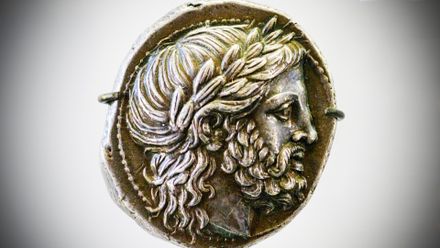
Exploring what has come to be known as the Great Man Theory of History; it states that a single person could alter the course of history; reviewing the careers of five rulers who might well provide the best arguments for the theory.
S1:E19 • Dec 16, 2011 • 29m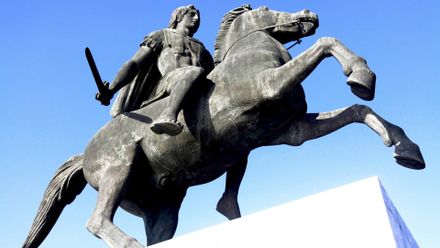
Philip's son successfully invades the western Persian Empire and carries out his father's plan; Alexander the Great creates his own path, following the route of the greatest conquest in the world.
S1:E20 • Dec 16, 2011 • 30m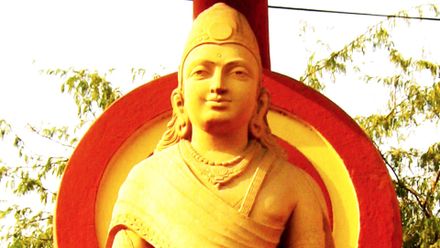
Alexander's death causes his vast empire to fragment; a father and son create the largest Indian empire that lasts till the establishment of the modern Indian nation in 1947.
S1:E21 • Dec 16, 2011 • 30m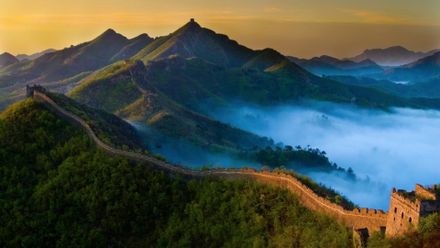
The father of the Chinese nation combines ruthlessness and vision to unify his country; he creates the largest empire in that part of the world; he executes a clear and coherent philosophy that becomes China's political model for almost a millennium.
S1:E22 • Dec 16, 2011 • 33m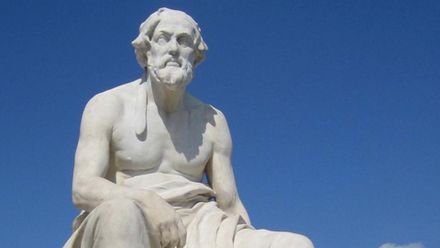
Considering the experiences of the very first historians who defined their art and its standards; fundamental questions about writing history are answered by Herodotus, Thucydides and Sima Qian.
S1:E23 • Dec 16, 2011 • 31m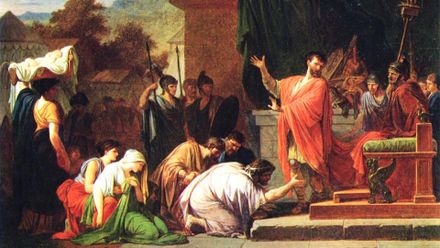
The three centuries following Alexander are years of warfare, absolutism and political stalemate; the Hellenistic era leaves a legacy of cultural richness and originality; achievements in philosophy, science and art belie the era's suffering.
S1:E24 • Dec 16, 2011 • 31m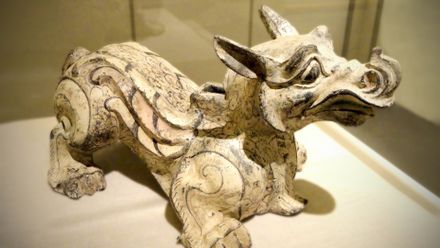
In 200 B.C., the world enters nearly 600 years of instability; something different from the state of the world happens in Rome and China; these powers shape a stable empire for the next four centuries.
S1:E25 • Dec 16, 2011 • 30m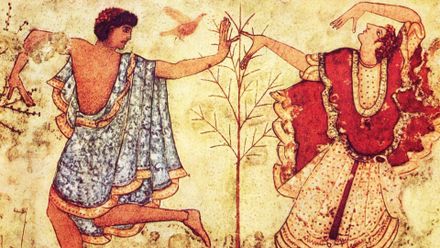
The rise of the Roman civilization; Rome's geography; its traditional origin story; its experience of being ruled by a foreign power, especially by a king holding supreme authority.
S1:E26 • Dec 16, 2011 • 31m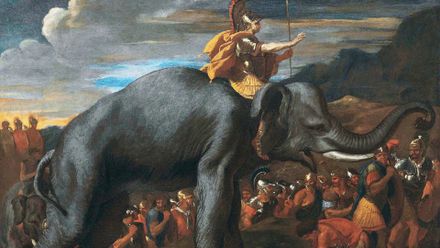
Learning about the series of conflicts between Carthage, Rome's burgeoning Mediterranean rival whose forces are led by Hannibal, and Rome; its impact on Rome as a stepping stone to its ultimate success.
S1:E27 • Dec 16, 2011 • 32m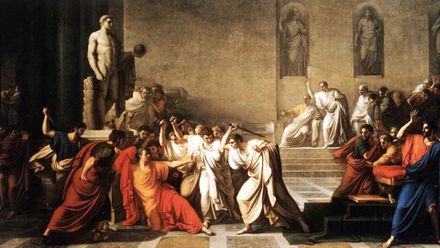
The century between 133 and 31 B.C. is a period when long-simmering tensions and resentments finally reach their boiling point: grasping the consequences; the political assassination of Julius Caesar; the dissolution of the Roman Republic.
S1:E28 • Dec 16, 2011 • 31m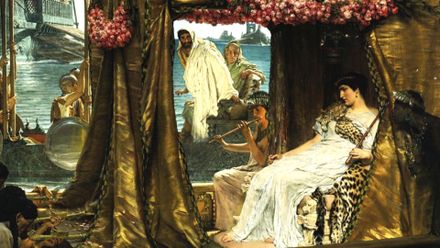
Tracing the struggle involving Brutus-led liberators who wish to restore the republic, Caesar's lieutenant, Marc Antony, and Octavian, his nephew, who is the heir named in his will.
S1:E29 • Dec 16, 2011 • 31m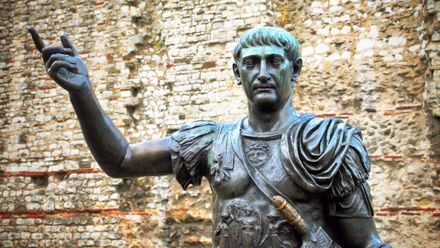
Following the fortunes of the empire during the two Roman centuries after Augustus and Tiberius; delving into the impact of some of Rome's wisest and most conscientious emperors and its deranged tyrants like Caligula and Nero.
S1:E30 • Dec 16, 2011 • 29m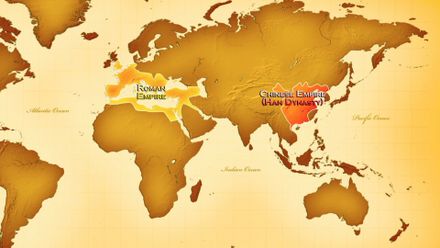
The peak four centuries of Rome's power coincide almost exactly with one of China's most enduring dynasties; a comparison of these empires based on political organization, transportation, military philosophy, ideology and economic stability.
S1:E31 • Dec 16, 2011 • 30m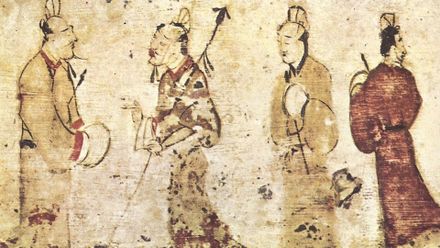
Focusing on the administrative structure that allowed these Chinese and Roman empires to identify and train the members of their evolving bureaucracies; considering the role of the emperor in this comparison.
S1:E32 • Dec 16, 2011 • 30m
Considering the potential problems faced by the Chinese and Roman empires; examining the impact of imperial weakness, incompetence, or even insanity; reflecting on the issues of defending the empire against the encroachments of barbarians.
S1:E33 • Dec 16, 2011 • 29m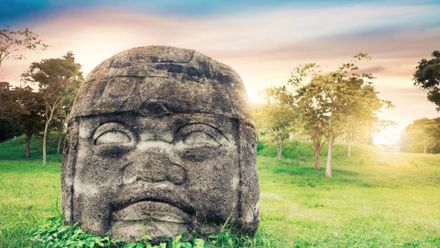
Exploring the habitat in North and South America; following the progress of humans from nomadic hunter-gatherers to the civilizations that would be defined by geography and available resources; the Olmecs of Mexico.
S1:E34 • Dec 16, 2011 • 30m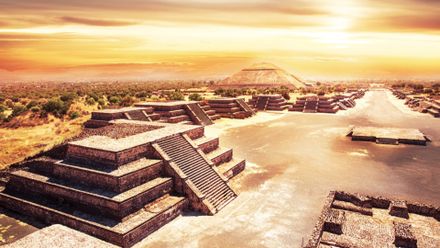
Many cultures from Peru and Mexico leave behind stunning examples of their now-vanished civilizations; various examples of impressive pyramids and tombs to startling examples of artistic pottery, especially those produced by the Moche.
S1:E35 • Dec 16, 2011 • 33m
The achievements of the Maya, who are among the longest-lasting, most geographically extensive, and most culturally sophisticated of all Mesoamerican cultures; the impact of the records of a culture with a written language.
S1:E36 • Dec 16, 2011 • 32m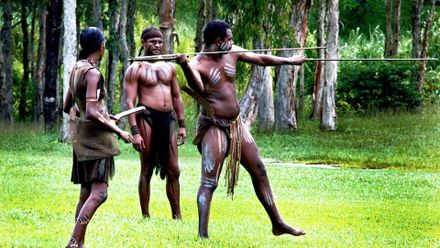
Although civilization almost always tends to be an urban phenomenon, there are exceptions; examining the origins of societies that evolved cultures but did not build cities: the Fenni of Scandinavia and the seafaring peoples of Polynesia.
S1:E37 • Dec 16, 2011 • 30m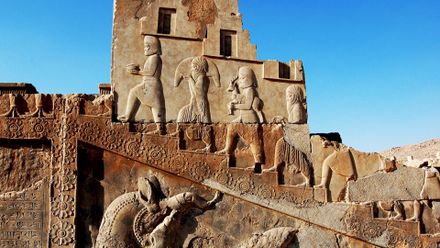
The structures unearthed by archaeologists are more than just evidence of the past or messages to the future; exploring how ancient societies use art and architecture to promote their rule and illustrate their power.
S1:E38 • Dec 16, 2011 • 29m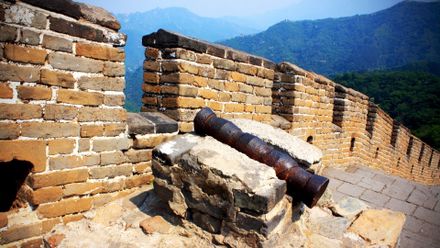
How the empires of the Mediterranean, Asia, and the Americas defend themselves and bring their power to bear on others; comparing the structure, weapons, and tactics of the Roman, Chinese, and Mayan armies.
S1:E39 • Dec 16, 2011 • 29m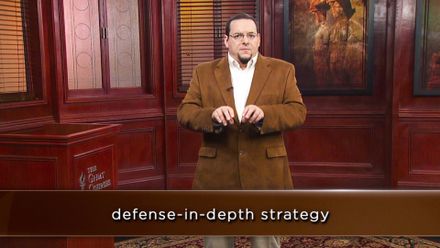
Exploring the century following the Golden Age in Rome; the Five Good Emperors; the empire suffers through political, military, and economic crises that bring it to the brink of collapse; an unexpected recovery; a surprising transformation.
S1:E40 • Dec 16, 2011 • 31m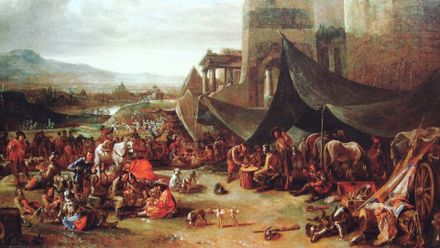
The debate about the reasons for the fall of Rome is arguably the most famous in the Western tradition; a German scholar posits 210 plausible answers; examining the questions and debates about the timeline and reasons.
S1:E41 • Dec 16, 2011 • 29m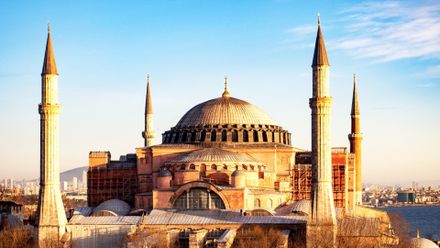
The eastern Roman Byzantine Empire outlasts its counterpart in the West by a thousand years; following the fortunes of this flourishing hub; the most powerful women of antiquity and one of the ancient world's most globally influential legacies.
S1:E42 • Dec 16, 2011 • 29m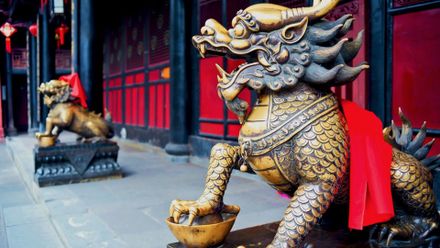
The chaotic three-and-a-half centuries that follow the dissolution of the Han Empire spawn new philosophical and religious yearnings, and the founding of the next great dynasty.
S1:E43 • Dec 16, 2011 • 28m
Examining some of the most impressive aspects of the Tang dynasty; this highly urbanized culture is commonly regarded as one of the cultural pinnacles of Chinese civilization; the sophisticated culture and advanced innovation of the era.
S1:E44 • Dec 16, 2011 • 31m
Grasping how the tribes of the Arabian Peninsula within 100 years of their conversion to Islam are able to conquer half the Mediterranean world; how they manage to establish religious, linguistic and cultural boundaries that persist to this day.
S1:E45 • Dec 16, 2011 • 31m
Gaining new insights into the key church fathers of Christianity's first centuries whose actions, ideas and writings shape the faith; the influential religious movements emerging at this time; monasticism and the cult of sainthood.
S1:E46 • Dec 16, 2011 • 28m
Learning why the word great is not fully justified or applicable in the case of Charlemagne; how his impact in the areas of war, politics, religion, and culture leave a mark on Europe and the world like few others.
S1:E47 • Dec 16, 2011 • 28m
Henri Pirenne, an early 20th-century historian, shines new light on Charlemagne; why it is so important to understand each of the civilizations not as a separate entity, but in the context of all the others.
S1:E48 • Dec 16, 2011 • 28mMore Like This
 TV14 • 1 season
 2025 • PG • 1h 43mDetails
 TVPG • 1 season
 TVPG • 1 season
 TVPG • 1 season
 TV14 • 1 season
 TVPG • 1 season
 TVPG • 1 season
 TVPG • 1 season
 TVPG • 1 season
 TVPG • 1 season
 TVPG • 1 season
 TVPG • 1 season
 TVPG • 1 season
 TVPG • 1 season
 TVPG • 1 season
 TVPG • 1 season
 TV14 • 1 season
 TVPG • 1 season
 TVPG • 1 season