

The Mysterious Etruscans
The Etruscans are the original inhabitants of central Italy; they build cities such as Pompeii, Capu and Orvieto along fortified hilltops; without the Etruscans, much of the Roman world and the foundations of Western civilization largely disappear.
Already subscribed?
Sign in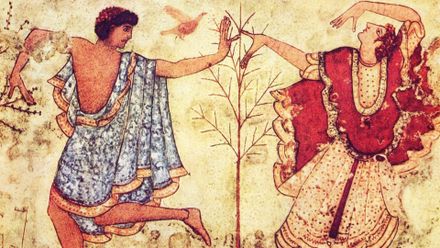
Although much is not known about Etruscans, this introduction shows how they serve as a conduit between the Greeks and the Romans, influencing much of what one thinks of as Western civilization, gaining context for these mysterious people.
S1:E1 • Jan 6, 2016 • 32m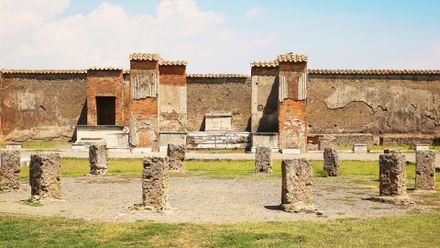
Etruscan cities no longer survive; studying geography and the foundations of cities that are built over the Etruscan developments; three Etruscan cities; what urban development tells about the people and their impact on future civilizations.
S1:E2 • Jan 6, 2016 • 31m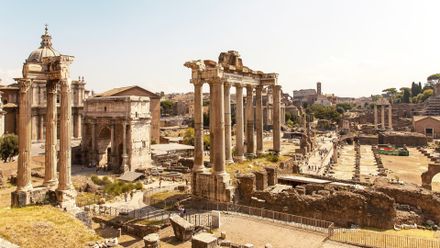
Much of Rome's geography, architecture and artistic inscriptions suggest strong Etruscan influence; three Etruscan kings who rule Rome; Professor Tuck reviews the evidence found in city's major temples; Rome is largely founded as an Etruscan city.
S1:E3 • Jan 6, 2016 • 34m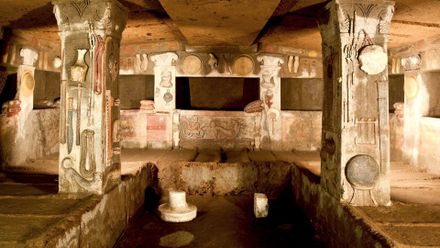
The Etruscan necropolis is a city of the dead, revealing how the culture views the afterlife and social class. This look at the dead visits several ancient tombs to find out how these mysterious people lived and how their culture changed over time.
S1:E4 • Jan 6, 2016 • 32m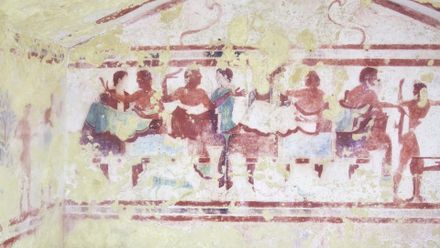
Funeral rites are some of the most conservative components of a culture; looking at a society's funerals; examining Etruscan tomb paintings to learn about their religious rituals; deducing much of their beliefs, cultural priorities and more.
S1:E5 • Jan 6, 2016 • 34m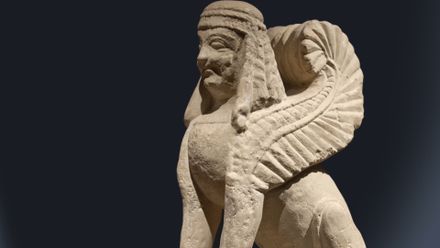
Examining Etruscan wall paintings; reflecting on some key symbols around the transition from the living to the dead; including divers, underworld guides and kings; how the Etruscan afterlife compares to Greek beliefs and mythology.
S1:E6 • Jan 6, 2016 • 29m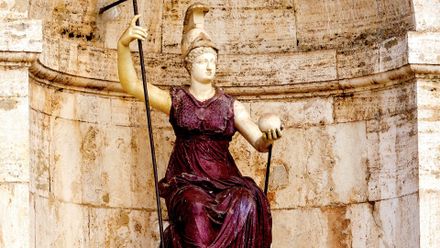
Surveying Etruscan gods, goddesses and their pantheon; how their deities compare to Greek and Roman gods; what these deities indicate about the Etruscan worldview; collective action among the deities mirrors the culture's government and family life.
S1:E7 • Jan 6, 2016 • 32m
One of the long-lasting Etruscan legacies is divination; the Etruscan cosmos; how the interpretation of entrails, the flight of birds and portents such as lightning strikes influence their world; rituals to interpret the world and appease the gods.
S1:E8 • Jan 6, 2016 • 32m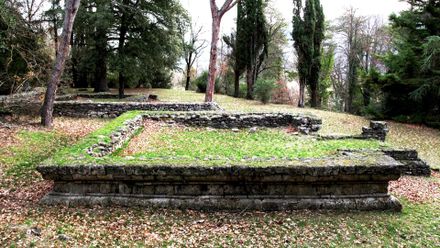
Sanctuaries reflect Etruscan religious beliefs and offer critical insight into their culture and politics; the placement and design of key sanctuaries; contrasting them with Greek temples; Professor Tuck turns to religious art and sculpture.
S1:E9 • Jan 6, 2016 • 32m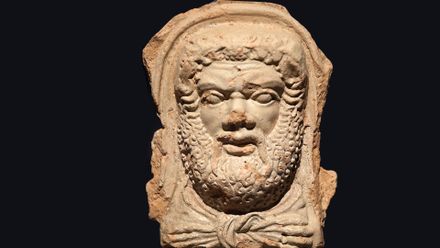
While much of their art incorporates Greek elements, the Etruscans have their distinct myths and legends; some of those stories; heroes such as the Vipinas brothers, a pair of folk heroes rooted in history; the relationship between myth and history.
S1:E10 • Jan 6, 2016 • 32m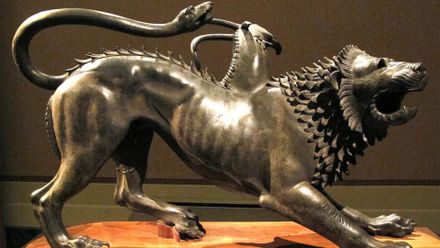
Between the 7th and 3rd centuries B.C., the Etruscans import thousands of pieces of Greek pottery, studying the urns, tomb paintings and other artworks, uncovering how the Etruscans incorporate and reinterpret Greek myths for their own purposes.
S1:E11 • Jan 6, 2016 • 32m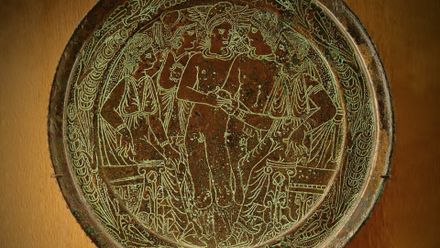
Studying how Greek mythology influences the Etruscans; carvings, sculptural reliefs, bronze works and other media that depict scenes from Greek myths; scenes from the "Odyssey" and the "Iliad"; adapted to Etruscan life in interesting ways.
S1:E12 • Jan 6, 2016 • 32m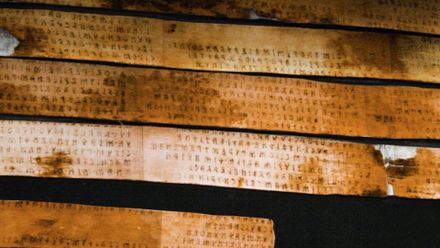
The Etruscan language survives in more than 13,000 texts, from religious transcriptions to legal contracts written in stone; the Etruscans have a primarily oral culture; their writing tends to be analytical and straightforward; much can be deduced.
S1:E13 • Jan 6, 2016 • 32m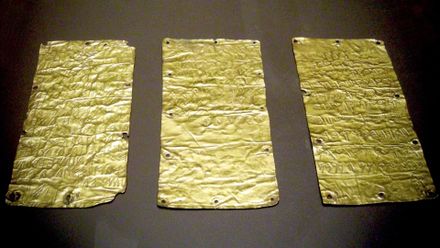
The Etruscan government shifts from tyranny to a city-state democracy; some limitations of their democracy; defense against Roman invaders; how much the Etruscan government and its symbols inform Rome, and therefore much of Western civilization.
S1:E14 • Jan 6, 2016 • 31m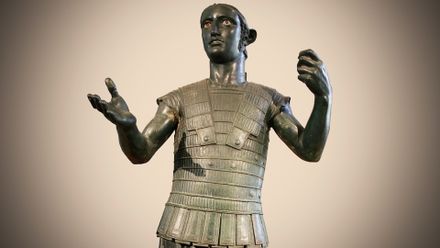
The Etruscan militaries and navies threaten many foreign settlements; yet the military structure, or lack thereof, and an absence of a grand strategy mean that the Etruscan military is a loose confederation; their battle tactics and major conflicts.
S1:E15 • Jan 6, 2016 • 32m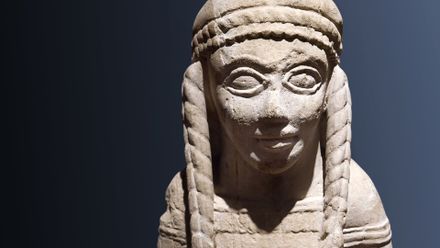
The Etruscans' trade network across the Mediterranean; their imports from the Greeks and Phoenicians include pottery, ivory and glass; arts and crafts such as Greek vases and pottery; what Etruscan trade tells about their politics and society.
S1:E16 • Jan 6, 2016 • 31m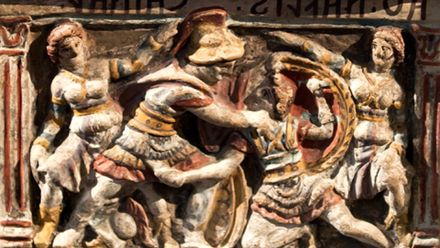
Digging deeper into Etruscan artwork; the world of bronze metalworking and the terra-cotta industry; Professor Tuck shows the patterns to their art, traces the Greek influence and surveys the Etruscan gift for portraiture; their artistry techniques.
S1:E17 • Jan 6, 2016 • 31m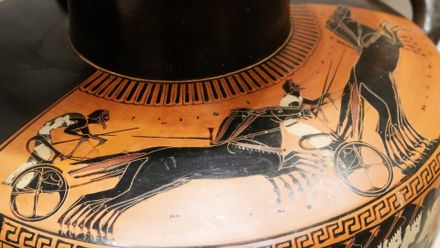
One associates gladiatorial combat with the Romans; it actually originates with the Etruscans, who hold such combats and chariot races as part of religious observances; the exciting world of Etruscan sports; the context surrounding different games.
S1:E18 • Jan 6, 2016 • 30m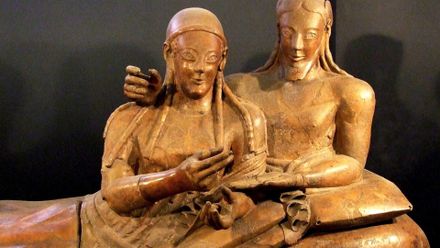
Banquets are a significant social experience in the Etruscan world; delving into the banquet world; the customs for celebrating victories and observing religious events; the inclusion of women in these public events, unique in the ancient world.
S1:E19 • Jan 6, 2016 • 31m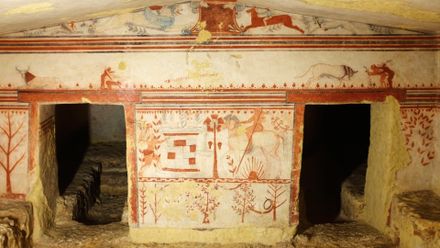
One stark contrast between Etruscan society and the Greek and Roman worlds is the relative equality of Etruscan women to men; they appear in public and even dance in mixed company; they held roles as priestesses and members of society at large.
S1:E20 • Jan 6, 2016 • 31m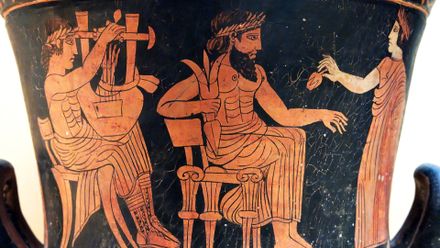
Relative equality between men and women extends to family life; comparing the Etruscan family structure to the Greeks and Romans; Professor Tuck uses tombs and more to depict the Etruscan family, gender roles and the status of children.
S1:E21 • Jan 6, 2016 • 32m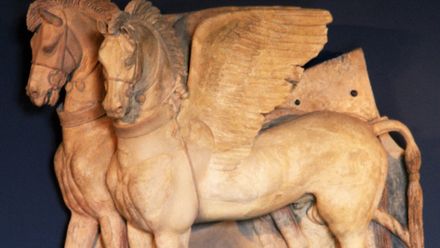
It is assumed that Etruscan culture dies after the rise of Rome; the culture lives on centuries into Roman rule; the history of the Etruscans' end years; the invasion of Rome; resistance and revival movements; their integration into the Roman world.
S1:E22 • Jan 6, 2016 • 30m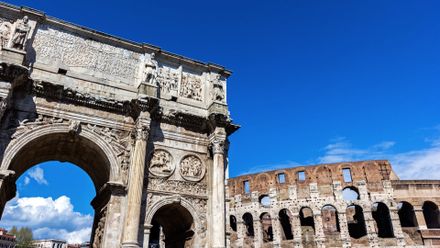
Touring Rome in the era of Augustus; the Etruscans' influence on all things Roman; while Etruscan culture fades away, without the Etruscans, Rome lacks many of its major attributes; from roads to military armor and togas to religion and sport.
S1:E23 • Jan 6, 2016 • 31m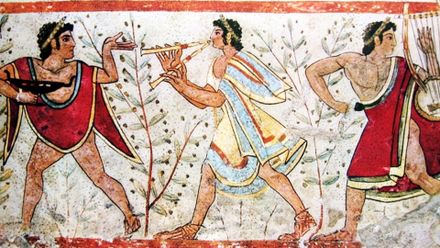
The influence of Etruscan art and architecture in the Renaissance, when many exports of Roman culture are actually Etruscan; what modern DNA research tells about the Etruscans; the limits of one's knowledge about these mysterious people even today.
S1:E24 • Jan 6, 2016 • 34mMore Like This
 TVPG • 1 season
 TVPG • 1 season
 TVPG • 1 season
 2021 • TV14 • 41m 07sDetails
 2016 • TVPG • 43mDetails
 2024 • TV14 • 2h 7mDetails
 TVPG • 1 season
 TV14 • 2 seasons
 TVPG • 1 season
 TV14 • 1 season
 TVPG • 1 season
 TVPG • 1 season
 TVPG • 1 season
 TVPG • 1 season
 TVPG • 1 season
 TVPG • 1 season
 TVPG • 1 season
 PG • 5 seasons
 TVPG • 1 season
 TVG • 1 season