

Language Families of the World
Professor John McWhorter explores the linguistic trails left by generations of humans that lead back to the beginnings of language; utilizing historical theories and cutting-edge research to introduce major language families and their offspring.
Already subscribed?
Sign in
Many linguists believe world languages likely develop from a single source language in the distant past; an introduction to the concept of language families; how languages change over time; what linguistics can teach humans about their own history.
S1:E1 • Feb 1, 2019 • 30m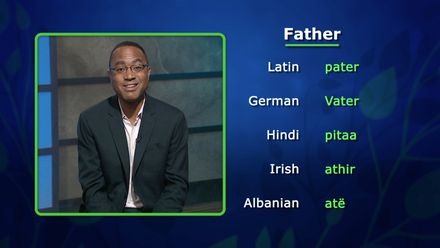
While the Indo-European family of languages is not the first group to be identified as related, it is the family that receives much of the research and classification that becomes the basis of modern linguistics; what defines Indo-European languages.
S1:E2 • Feb 1, 2019 • 28m
Diving into the earliest roots of Indo-European languages with a look at Germanic, Romance, Balto-Slavic, Greek, Albanian and Celtic languages; how Indo-European languages contradict common notions about language; mysteries yet to be solved.
S1:E3 • Feb 1, 2019 • 29m
Tracing back to the branching of the Indo-European tree, when the European languages split from the Indo-Aryan varieties; exploring many variations that evolve; why it can be so difficult to differentiate between a language and a dialect.
S1:E4 • Feb 1, 2019 • 28m
Focusing on the "click" languages, some of the most endangered languages in the world; these endangered languages share a distinctive profile, yet likely do not all come from a single family; exploring where they may have begun; how they work.
S1:E5 • Feb 1, 2019 • 24m
The Niger-Congo family of languages does not adhere to an identified pattern; what links this immense family together; what the essence of the Niger-Congo is; what these languages say about migration patterns; exploring these questions and more.
S1:E6 • Feb 1, 2019 • 29m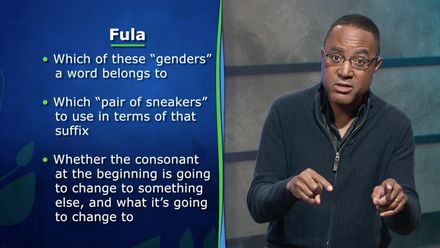
Looking at unique aspects of the Niger-Congo family, including the use of tone; how different languages can spring from the same original materials; seeing how many languages can develop in proximity and share words but be part of different groups.
S1:E7 • Feb 1, 2019 • 30m
Looking at the Afro-Asiatic language family that develops in the Fertile Crescent; focusing on the Semitic branch, which includes Arabic and Hebrew; examining what defines this group of languages; uncovering the roots of the first alphabets.
S1:E8 • Feb 1, 2019 • 30m
Looking at other Afro-Asiatic subfamilies, including the "Berber" subfamily and other subfamilies spoken south of the Sahara; what they can teach people about the nature of language; a look at Somali oral poetry; its complex use of alliteration.
S1:E9 • Feb 1, 2019 • 28m
The Nilo-Saharan family runs between the Afro-Asiatic and Niger-Congo languages in Africa; how linguists know that the Nilo-Saharan languages are related, as they are immensely different from each other; examining the unique features of this family.
S1:E10 • Feb 1, 2019 • 26m
Meeting the Uralic family of languages in Europe; this family stretches across the north of Europe and into Russia and parts of Asia; why Turkish was once thought to be part of this family; how Uralic languages differ from Indo-European and others.
S1:E11 • Feb 1, 2019 • 27m
How linguists establish connections between languages and determine their common roots; looking at the languages of Polynesia to see how changes can be followed backward to reveal connections between languages; the Indo-European and Uralic families.
S1:E12 • Feb 1, 2019 • 29m
Named for the Caucasus Mountains, the Caucasian languages are actually three different families; exploring these grammatically complex languages; understanding how they work; how so many different varieties can spring from a relatively small area.
S1:E13 • Feb 1, 2019 • 26m
The "Big Four" languages of southern India are not part of the Indo-European family, but rather, the Dravidian; what the distribution of Dravidian languages says about where they come from and how they got where they are; their unique features.
S1:E14 • Feb 1, 2019 • 27m
The Altaic languages are spoken across Asia; why there is some debate among linguists as to whether they comprise one family or are made of three separate ones; how these languages function, including nuances like a mood known as "evidentiality".
S1:E15 • Feb 1, 2019 • 28m
Japanese and Korean share some features of Altaic languages, yet some linguists believe they are separate; a brief foray through the Japanese writing system; looking deeper into the language; turning to Korean; comparing it with Asian languages.
S1:E16 • Feb 1, 2019 • 29m
Exploring the Asian languages beyond Japanese and Korean; why Mandarin and Cantonese are a classic example of two different languages being mistaken for dialects, thanks in part to a shared writing system and cultural proximity.
S1:E17 • Feb 1, 2019 • 29m
Chinese is one branch of the Sino-Tibetan family; the other branch, Tibeto-Burman, consists of around 400 languages; the features of languages from both branches; what linguists can assume about the proto-language from which they may have sprung.
S1:E18 • Feb 1, 2019 • 28m
How languages with different origins can still seem to be structurally related; looking at the concept of a Sprachbund; why contact is just as influential as origin when it comes to resemblances between otherwise unrelated languages.
S1:E19 • Feb 1, 2019 • 25m
Investigating the large and widespread Austronesian language family; what connects Austronesian languages to other families; how they differ from European languages; tracing the way Austronesian languages spread across far-flung locations.
S1:E20 • Feb 1, 2019 • 26m
The languages of Polynesia are estimated to be some of the newest in the world; looking back to the earliest cultures of the Polynesian islands to see how the languages likely originate and are disseminated, branching into separate subgroups.
S1:E21 • Feb 1, 2019 • 27m
How some languages end up isolated amidst other unrelated families; looking at pockets of language in Siberia, Spain and Japan that are not related to those that surround them; understanding what the nature of language suggests about these places.
S1:E22 • Feb 1, 2019 • 27m
No one language is older than another; when two languages are forced into proximity, a makeshift fusion of the two can emerge as a new language known as a creole; how a hierarchical, stopgap form of communication can become a true language.
S1:E23 • Feb 1, 2019 • 33m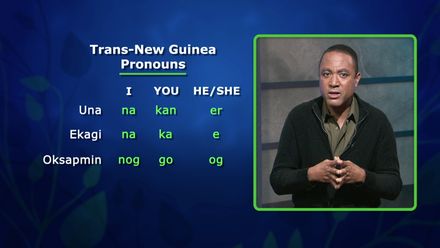
Turning to the linguistically rich island of New Guinea; why it is home to hundreds of languages in a relatively small area; how pronouns allow linguists to find connections between these languages; exploring some of their unusual traits.
S1:E24 • Feb 1, 2019 • 29m
Australia has about a dozen languages that will be passed to generations of children; a look at some of Australia's language families; how separation from a common ancestor and proximity to a different language cause a language to change.
S1:E25 • Feb 1, 2019 • 25m
Continuing the examination of the languages of Australia, including the first Australian language to be documented by Europeans; many of these languages present a case study in language obsolescence and language mixture.
S1:E26 • Feb 1, 2019 • 29m
North America is home to at least 300 distinct languages before English; theories linguists have regarding the relationship of various Native American languages; the origins of humans and their varieties of speech on the North American continent.
S1:E27 • Feb 1, 2019 • 30m
Zooming in on some of the larger language families of North America; what they suggest about language in general; examining languages on the brink of extinction; seeing which languages contribute words currently used in American English.
S1:E28 • Feb 1, 2019 • 26m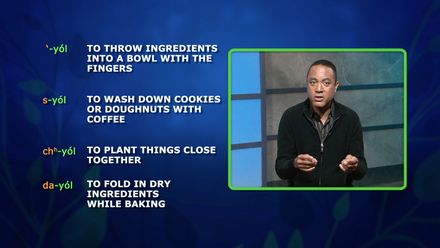
Continuing the journey through the languages of North America, including a language that uses no sounds that require the lips to touch; the unique grammatical features of languages across the continent; what happens when languages die out.
S1:E29 • Feb 1, 2019 • 28m
Following Native American migrations to encounter the language families that move south and take root in Central and South America; experiencing a range of linguistic developments, which include a language variety that incorporates whistling.
S1:E30 • Feb 1, 2019 • 29m
Languages from different families that have been brought together can create a hybrid that belongs to both; every combination happens in different ways and to varying degrees; it looks at several examples of this phenomenon.
S1:E31 • Feb 1, 2019 • 28m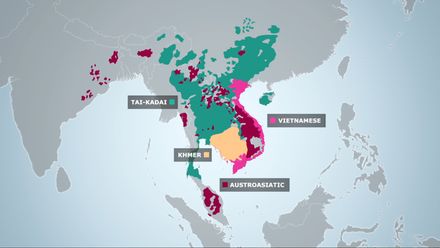
Tracing the relationships between macro language families; how the pursuit of evidence connecting the language families is complicated by time, accidental similarities, lost languages and more; looking at theories that could offer solutions.
S1:E32 • Feb 1, 2019 • 28m
The idiosyncrasies in DNA allow people to trace back to common ancestors, much like language traits allow them to chart language-family relationships; the concept of glottochronology; seeing the linguistic theories that are confirmed by genetics.
S1:E33 • Feb 1, 2019 • 30m
What writing systems say about language; why writing actually tells people about human ingenuity in communication; the cultural importance of language; its preservation and loss; the realities of a more linguistically homogeneous future.
S1:E34 • Feb 1, 2019 • 32mMore Like This
 2025 • TVPG • 1h 30mDetails
 TVPG • 2 seasons
 TVPG • 1 season
 2025 • TVPG • 50m 18sDetails
 2016 • TVPG • 1h 30mDetails
 2014 • TVPG • 44mDetails
 TVPG • 1 season
 TV14 • 1 season
 2010 • TVPG • 45mDetails
 TV14 • 7 seasons
 TVPG • 1 season
 TVPG • 1 season
 TV14 • 1 season
 TV14 • 4 seasons
 TVPG • 1 season
 TVPG • 1 season
 TV14 • 1 season
 TVPG • 1 season
 TV14 • 1 season
 2021 • TV14 • 1hDetails