

Liberty on Trial in America: Cases That Defined Freedom
S1:E23 The Citizens United Case
U.S. candidates' history of spending for elections; why the Supreme Court declares any ban on political spending by corporations to be unconstitutional in 2010; why most polls show strong support for a constitutional amendment to overturn the ruling.
Already subscribed?
Sign in
There is no toleration of religious dissent in the Massachusetts Bay Colony in the 1600s; Anne Hutchinson shares with others her religious ideas and gathers a following; the governor puts her on trial for heresy; the trials and punishment of Anne.
S1:E1 • Jan 3, 2020 • 31m
Freedom of speech is not recognized liberty; speech critical of the powers can land one in legal trouble; the colonial history of press freedom; attempts to influence juries as they try to affect the libel trial of John Peter Zenger.
S1:E2 • Jan 3, 2020 • 29m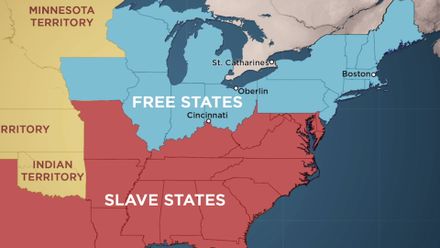
The citizens of the newly formed United States cannot agree on the moral issue of slavery; they are willing to take up its more narrow legal issues; how the legal system supports the institution of slavery; the trials of Anthony Burns and Celia.
S1:E3 • Jan 3, 2020 • 29m
John Brown's plan to end slavery comes to a tragic end at Harper's Ferry, Va.; Brown is charged with treason, murder and slave insurrection; John Brown's trial and execution play a significant role in the eventual end of slavery in the US.
S1:E4 • Jan 3, 2020 • 29m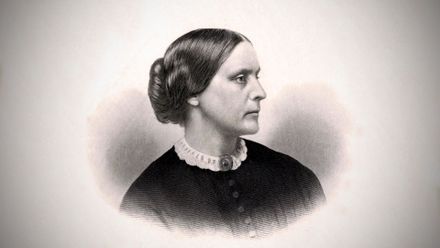
Susan B. Anthony believes she is a citizen of the United States according to the Fourteenth Amendment and has the right to vote; after dropping her ballot into the box at the West End New Depot in Rochester, N.Y., on Election Day, she is arrested.
S1:E5 • Jan 3, 2020 • 30m
Labor tensions are at the boiling point in Chicago; someone throws a bomb at police officers; eight defendants are tried by a jury picked by the bailiff; seven are found guilty; this trial becomes a key event in the history of free speech in America.
S1:E6 • Jan 3, 2020 • 30m
In 1925, Tennessee enacts a law criminalizing the teaching of evolution in any state-supported school; John Scopes serves as a test case for the law; the opinions expressed on both sides; the trial's publicity brings the issue into American homes.
S1:E7 • Jan 3, 2020 • 32m
Dr. Sweet, an African American, buys a home in a white neighborhood of Detroit; a white crowd gathers around the house and one member of the crowd dies; police charge everyone in the Sweet home with premeditated murder; Clarence Darrow's defense.
S1:E8 • Jan 3, 2020 • 31m
Exploring two cases that address whether or not Jehovah's Witnesses can be forced to salute the flag and recite the Pledge of Allegiance in public schools; learning why the Court comes down first on one side of the issue, and then the other.
S1:E9 • Jan 3, 2020 • 28m
In 1942, President Roosevelt signs an order requiring that all Japanese Americans move to "relocation camps"; Fred Korematsu refuses; how Korematsu carries his fight against what he thinks is an "un-American" law all the way to the Supreme Court.
S1:E10 • Jan 3, 2020 • 30m
Learning about Charles H. Houston, the African American lawyer who makes it his life's work to challenge Jim Crow laws; he wins a Supreme Court victory in the case of Gaines v. Missouri; Houston's work influences his successor, Thurgood Marshall.
S1:E11 • Jan 3, 2020 • 31m
Lenny Bruce is considered a trailblazer of American stand-up comedy; in the 1950s and 1960s, he is considered an obscene subversive and is arrested numerous times; it explores the ways in which Bruce and the First Amendment affect each other.
S1:E12 • Jan 3, 2020 • 31m
Richard and Mildred Loving are unable to marry due to the color of their skin; how the case of this couple goes all the way to the Supreme Court; how the Court's ruling eventually leads to marriage equality for same-sex couples as well.
S1:E13 • Jan 3, 2020 • 29m
In the 1960s, the Amish do not believe their children should be required to attend school past the age of 16; how the issue makes it to the Supreme Court; which conflicting liberties are considered; why the Court decides in favor of the parents.
S1:E14 • Jan 3, 2020 • 29m
In 1972, the U.S. Supreme Court rules that capital punishment as then administered is unconstitutional; legal experts believe this will end the death penalty; why this is not the case; the complexities of the law as it relates to capital punishment.
S1:E15 • Jan 3, 2020 • 29m
Whether it is legal to release top-secret documents to the press; whether the government can stop a newspaper from publishing classified material; how these questions affect the country's political life; how they lead to the president's resignation.
S1:E16 • Jan 3, 2020 • 30m
Desperate for an abortion, Norma McCorvey agrees to take the case to court; the famous decision that results; the many other ways in which American courts have intervened in personal decisions related to sterilization, birth control and abortion.
S1:E17 • Jan 3, 2020 • 29m
Well into the 20th century, every state has laws prohibiting at least one sexual act; exploring the numerous lawsuits and trials that eventually extend the protection of privacy to include intimacy, regardless of sexual orientation.
S1:E18 • Jan 3, 2020 • 29m
Whether Americans have the freedom to isolate themselves, express hateful views and stockpile weapons; the story and trial that starts with Randy and Vicki Weaver wanting to separate themselves from society and ends with three dead at Ruby Ridge.
S1:E19 • Jan 3, 2020 • 30m
Jack Kevorkian helps hundreds end their pain and suffering; exploring Dr. Kevorkian's work on behalf of an individual's right to euthanasia; why he believes he is taking a stand for liberty; why he is eventually convicted of second-degree homicide.
S1:E20 • Jan 3, 2020 • 30m
Scout leader James Dale challenges the Boy Scouts of America's authority to use sexual orientation as a basis for exclusion; the Supreme Court sides with the Boy Scouts; examining the reasons for, and effects of, the ruling.
S1:E21 • Jan 3, 2020 • 28m
Whether a city has the right to use eminent domain; how Susette Kelo's refusal to sell her "little pink house" in New London, Conn., leads to a Supreme Court case addressing what she describes as "eminent domain abuse"; why she loses the case.
S1:E22 • Jan 3, 2020 • 29m
U.S. candidates' history of spending for elections; why the Supreme Court declares any ban on political spending by corporations to be unconstitutional in 2010; why most polls show strong support for a constitutional amendment to overturn the ruling.
S1:E23 • Jan 3, 2020 • 30m
Greater liberties for other living beings; how "Tommy" becomes the first chimpanzee to have a suit filed on his behalf; why one judge on the New York Court of Appeals says the issue of fundamental rights for nonhuman animals is not going away.
S1:E24 • Jan 3, 2020 • 34m