

Quantum Mechanics: The Physics of the Microscopic World
S1:E19 Quantum Cloning
Quantum information and quantum computing is Dr. Schumacher's specialty; the concept qubit is the unit of quantum information; learning that unlike classical information, such as a musical recording, quantum information cannot be perfectly copied.
Already subscribed?
Sign in
Quantum mechanics is one of the most successful physical theories ever devised; learning what distinguishes it from classical mechanics, Professor Schumacher explains ground rules for the course, which teaches ideas and methods of quantum mechanics.
S1:E1 • Feb 23, 2009 • 32m
Debating whether the physical world is discrete or continuous; by the 19th century, physicists see a clear demarcation; matter is made of discrete atoms, while light is a continuous wave of electromagnetic energy; a few phenomena are hard to explain.
S1:E2 • Feb 23, 2009 • 32m
Max Planck and Albert Einstein propose ideas to resolve puzzles about light and matter; Planck's discovery that light energy can only be emitted or absorbed in discrete amounts called quanta; Einstein's application of this concept to matter.
S1:E3 • Feb 23, 2009 • 28m
Light propagates through space as a wave, but it exchanges its energy in the form of particles; Louis de Broglie shows that this wave-particle duality also applies to matter; this relationship makes quantum mechanics inherently probabilistic.
S1:E4 • Feb 23, 2009 • 28m
The mystery of why atoms are stable; Niels Bohr suggests that quantum theory explains atomic stability by allowing only certain distinct orbits for electrons; Erwin Schrödinger's powerful equation reproduces the energy levels of Bohr's model.
S1:E5 • Feb 23, 2009 • 30m
One of the most misunderstood concepts in quantum mechanics is the Heisenberg uncertainty principle; Werner Heisenberg's route to this view, which establishes a trade-off between how precisely a particle's position and momentum can be defined.
S1:E6 • Feb 23, 2009 • 30m
Einstein's belief that quantum events can, in principle, be known in every detail, is pitted against Bohr's philosophy of complementarity; the view that a measurement of one quantum variable precludes a different variable from ever being known.
S1:E7 • Feb 23, 2009 • 29m
Presenting quantum mechanics in a simplified form; the mysteries and paradoxes of the Mach-Zehnder interferometer; a thought experiment showing that an interferometer can determine whether a bomb will blow up without necessarily setting it off.
S1:E8 • Feb 23, 2009 • 30m
The interferometer from the previous lecture serves as a test case for introducing the formal math of quantum theory; By learning a few symbols and rules, describing the states of quantum particles; showing how these states change over time.
S1:E9 • Feb 23, 2009 • 31m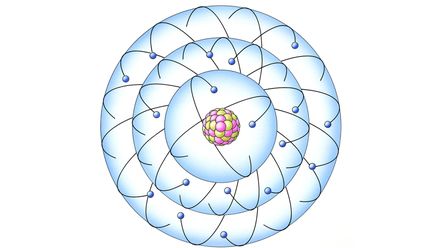
Many quantum particles move through space and also have an intrinsic spin; analyzing spin gives one a simple laboratory for exploring the basic ideas of quantum mechanics; it is one of the key tools for understanding the quantum world.
S1:E10 • Feb 23, 2009 • 33m
Macroscopic objects obey the snowflake principle; quantum particles do not obey this principle; learning that quantum particles come in two basic types; these are bosons, which can occupy the same quantum state and fermions, which cannot.
S1:E11 • Feb 23, 2009 • 31m
The tendency of bosons to congregate in the same quantum state; in a laser, huge numbers of photons are created, moving in the same direction with the same energy; in superconductivity, quantum effects allow electrons to flow without resistance.
S1:E12 • Feb 23, 2009 • 30m
Learning why matter is solid, even though atoms are mostly empty space; the answer is the Pauli exclusion principle, which states that no two identical fermions can ever be in the same quantum state.
S1:E13 • Feb 23, 2009 • 31m
At the fundamental level, bosons and fermions differ in a single minus sign; one way of understanding the origin of this difference is with the Feynman ribbon trick, which Dr. Schumacher demonstrates.
S1:E14 • Feb 23, 2009 • 30m
When two particles are part of the same quantum system, they may be entangled with each other; Einstein and his collaborators Boris Podolsky and Nathan Rosen used entanglement to argue that quantum mechanics is incomplete; charting Bohr's response.
S1:E15 • Feb 23, 2009 • 28m
John Bell shows that a deterministic theory of quantum mechanics such as EPR violates the principle of locality; particles in close interaction cannot be instantaneously affected by events happening in another part of the universe.
S1:E16 • Feb 23, 2009 • 30m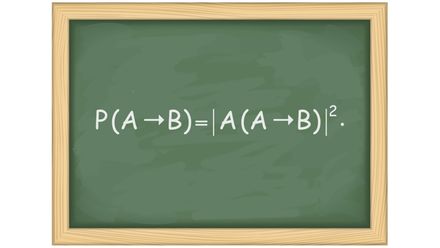
Feynman diagrams are a powerful tool for analyzing events in the quantum world; some diagrams show particles moving forward and backward in time; other particles appear from nowhere and disappear again; all are possible quantum scenarios.
S1:E17 • Feb 23, 2009 • 32m
The quantum vacuum is a rapidly fluctuating medium; it can be observed as a tiny attraction between two metal plates; discovering that vacuum energy may be the source of the dark energy that causes the universe to expand at an ever-accelerating rate.
S1:E18 • Feb 23, 2009 • 31m
Quantum information and quantum computing is Dr. Schumacher's specialty; the concept qubit is the unit of quantum information; learning that unlike classical information, such as a musical recording, quantum information cannot be perfectly copied.
S1:E19 • Feb 23, 2009 • 29m
The uncopyability of quantum information raises the possibility of quantum cryptography, an absolutely secure method for transmitting a coded message; a handful of banks and government agencies use quantum cryptography to secure their data.
S1:E20 • Feb 23, 2009 • 31m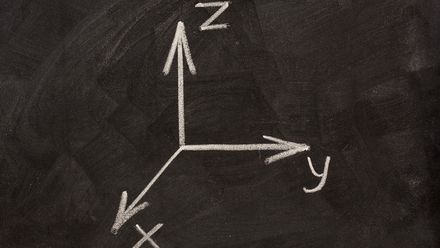
The laws governing quantum information; Charles Bennett proposes basic rules governing the relationships between different sorts of information; probing quantum teleportation, in which entanglement is used to send quantum information instantaneously.
S1:E21 • Feb 23, 2009 • 32m
Exploring the intriguing capabilities of quantum computers, which do not yet exist but are theoretically possible; using the laws of quantum mechanics, such devices could factor huge numbers, allowing them to decipher unbreakable conventional codes.
S1:E22 • Feb 23, 2009 • 30m
The fundamental nature of the quantum world; the Copenhagen, hidden-variable and many-worlds interpretations; the first two reflect Bohr's and Einstein's views, respectively; the last posits a vast universe encompassing every possibility.
S1:E23 • Feb 23, 2009 • 30m
John A. Wheeler's metaphor of the Great Smoky Dragon; a creature whose tail appears at the start of an experiment and whose head appears at the end; what lies between is as uncertain as the mysterious and unknowable path of a quantum particle.
S1:E24 • Feb 23, 2009 • 30m