

The History of the United States, 2nd Edition
S1:E74 The New Frontier and the Great Society
John Kennedy's escalation of the Cold War is offset by a concern for legislating on behalf of the poor and minorities; Kennedy's assassination in November 1963; his successor, Lyndon Johnson, pursues antipoverty and anti-discrimination legislation.
Already subscribed?
Sign in
Columbus's discovery of a New World; Europeans exploit natural and human resources; they write new social, economic, and political scripts for their lives in a place where European ideas of society no longer applied.
S1:E1 • Oct 6, 2003 • 32m
The Spanish tap sources of wealth in the Americas; they obtain it by various methods; they evolve from an extraction society to a settler society; the French attempt extraction incursions to settle in North America but do not succeed.
S1:E2 • Oct 6, 2003 • 32m
The English join the game of settlement and extraction after all other major European nations; settlements around the Chesapeake Bay achieve success with tobacco and the involuntary recruitment of a workforce of African slaves.
S1:E3 • Oct 6, 2003 • 31m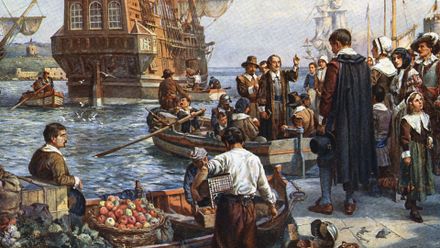
The northern settlements are motivated by ideas; the southern English colonies are motivated by economic self-interest; in New England's case, the ideas are religious; the first Puritans are succeeded by the same slow tendency toward aristocracy.
S1:E4 • Oct 6, 2003 • 32m
Swedes settle in the coastal territory between Chesapeake and Long Island along the Delaware Bay; the Dutch settle along the Hudson River; Dutch settlements develop into a major commercial center; Pennsylvania emerges by the 1750s.
S1:E5 • Oct 6, 2003 • 30m
Cheap labor provides settlements with commercial success; America's immensity of land and lack of labor to develop it requires the forced migration of laborers; a less expensive source of labor are 11 million Africans slaves.
S1:E6 • Oct 6, 2003 • 31m
American music and art are forms of its culture; the European Enlightenment; it is a transition from a religious to a scientific and secular understanding of the world; Cotton Mather, Benjamin Franklin and Jonathan Edwards.
S1:E7 • Oct 6, 2003 • 30m
The stresses of colonial life produce unusual social eruptions that are aimed at regaining a sense of control; the Great Awakening is a revival of radical Protestant religion across New England; it recovers a sense of spiritual significance.
S1:E8 • Oct 6, 2003 • 29m
Britain and France become rivals while establishing dominance in America; the French and Indian War breaks out in 1754; it goes badly for England at first, but the British Empire has greater resources to draw on; the Treaty of Paris in 1763.
S1:E9 • Oct 6, 2003 • 32m
Regulating colonial trade; levying direct taxes in favor of England; legislatures of North American colonies protest; this leads to outright conflict; the suspension of colonial governments; the creation of a Continental Congress.
S1:E10 • Oct 6, 2003 • 31m
The Second Continental Congress in 1776; a resolution declaring independence is adopted by the Congress; the Declaration of Independence is composed by Thomas Jefferson; the Articles of Confederation of 1781; a joint government is created.
S1:E11 • Oct 6, 2003 • 30m
The Continental Army faces losses under George Washington; they abandon land to the British; victory at Saratoga in the summer of 1777 is attained due to British incompetence rather than American planning.
S1:E12 • Oct 6, 2003 • 29m
The Treaty of Paris is signed in 1783; America gains independence; Washington conducts a combined campaign that causes British forces to fall; the British surrender; they reluctantly concede American independence.
S1:E13 • Oct 6, 2003 • 32m
The Articles of Confederation; their ramshackle nature begins to show; a convention is assembled in 1787 to construct a constitution; it proposes a single executive president, a bicameral Congress, and a judiciary.
S1:E14 • Oct 6, 2003 • 33m
Alexander Hamilton is opposed by Thomas Jefferson; Hamilton develops the republic's systems of finance, manufacturing and commerce; Jefferson believes the future of America lies in independent domestic agriculture.
S1:E15 • Oct 6, 2003 • 30m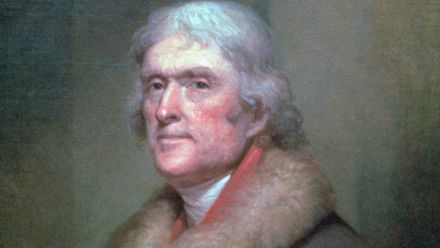
The formation of political parties is a new development; James Madison becomes the organizer of the Democratic-Republicans; Hamilton recruits his Congressional supporters into the Federalist Party; the Federalists elect their candidate.
S1:E16 • Oct 6, 2003 • 29m
Adams squanders his political capital; his first challenge is a foreign policy problem; Hamilton persuades the Federalists to dump Adams before the election of 1800; the Democratic-Republicans win.
S1:E17 • Oct 6, 2003 • 30m
The scope of Jefferson's actions; the federal judiciary, under Chief Justice John Marshall, operates as a restraint for Jefferson; Thomas Jefferson proves incapable of creating a practical set of alternatives to Hamilton's fiscal policies.
S1:E18 • Oct 6, 2003 • 30m
Napoleon offers to sell the entire Louisiana province; Jefferson asks Congress to finance a secret scouting party under Lewis and Clark; Aaron Burr is saved from a treason indictment only by Chief Justice John Marshall.
S1:E19 • Oct 6, 2003 • 28m
The claims of North American Indians; Americans pour into the West in search of cheap land; disheartened Indians are either accommodated, as with the Seneca and Cherokees, or resisted, as in the revolt of Tenskwatawa and Tecumseh.
S1:E20 • Oct 6, 2003 • 29m
Madison sends a request to Congress for a declaration of war; the War of 1812 is a debacle; the Massachusetts legislature passes a peace resolution; the signing of the Treaty of Ghent; a New England separatist movement.
S1:E21 • Oct 6, 2003 • 30m
The War of 1812 collapses the US Treasury and bankrupts businesses; government borrowing soaks up the tiny hoard of American financial capital; Henry Clay becomes a spokesmen for rebuilding the infrastructure of the American economy.
S1:E22 • Oct 6, 2003 • 30m
Immigrants arrive in America; the clearance of Indian resistance; the Northwest Territory is opened by massive government land sales; emigrants, however, chose to stay in the cities they first entered; the American urban population.
S1:E23 • Oct 6, 2003 • 33m
The unpredictable boom and bust of the world market system; the year of the Great Panic; 1819 causes problems for bankers, brokers, National Republicans, and everyone else who has leveraged themselves to the market system.
S1:E24 • Oct 6, 2003 • 32m
Three factors play a role in creating a Christian America; the resiliency of revival; the absorption of virtue; the substitution of millennialism.
S1:E25 • Oct 6, 2003 • 31m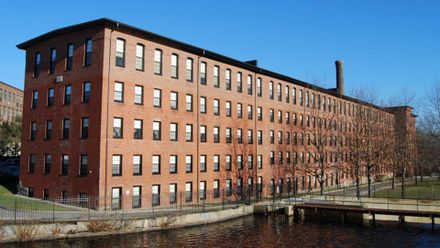
The Industrial Revolution involves invention and reinvention of machines, power, labor and capital; industrial growth cannot go on forever without serious social consequences; the first labor strikes; union organizations.
S1:E26 • Oct 6, 2003 • 29m
Jefferson's Republican Party splits in 1824; the National Republicans; the Democratic-Republicans; John Quincy Adams is a National Republican; the most unpredictable candidate is Andrew Jackson; he did not get a majority.
S1:E27 • Oct 6, 2003 • 31m
The shift in American political consciousness; the movement of the United States from a republic to a democracy; Adams's presidency is one of the worst political disasters in the history of the American presidency.
S1:E28 • Oct 6, 2003 • 30m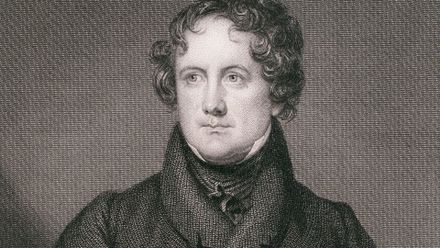
The Second Bank of the United States regulates the economy by controlling the money supply and by promoting national investment; Nicholas Biddle applies to Congress for rechartering; Jackson vetoes the bill; Biddle shortens credit.
S1:E29 • Oct 6, 2003 • 30m
Voters elect William Henry Harrison as the first Whig president; Harrison dies a month after inauguration; his vice president, John Tyler, was an old-line Democrat who promptly reinstalls the Jackson agenda.
S1:E30 • Oct 6, 2003 • 31m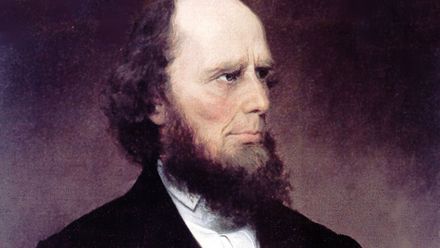
The work of Ralph Waldo Emerson; the Transcendentalists; Romanticism in American literature; the Mercersburg theology; the rhetoric of Whigs and Democrats and the argument over passion.
S1:E31 • Oct 6, 2003 • 30m
The American Republic represents the vanguard of a new age; campaigns to advance American perfection and freedom; the common message is one of optimism; Alexis de Tocqueville, in "Democracy in America," gives a favorable opinion of the future.
S1:E32 • Oct 6, 2003 • 30m
The resurrection of slavery; the success of cotton agriculture; its requirements of labor; Northern abolitionists gather forces in the 1830s; the south demands for protection and extradition of runaways; mob violence.
S1:E33 • Oct 6, 2003 • 31m
Three major conflicts; Americans swarm the Louisiana Purchase territories; fighting with over the province of Texas; combating the Plains Indian tribes; the admission of slavery into the Louisiana Purchase.
S1:E34 • Oct 6, 2003 • 30m
James K. Polk's election; the renewal of Jacksonian expansionism; the use of expansionism to serve the interests of slavery; Polk aggressively pushes American claims to territory along the southern border with Mexico and the Canadian border.
S1:E35 • Oct 6, 2003 • 29m
Slavery in the territories from the Mexican Cession; southern threats of disunion; the sudden death of President Taylor; Henry Clay shapes his last Union-saving compromise; permanently dampening the slavery agitation.
S1:E36 • Oct 6, 2003 • 31m
Manifestations of sectional animosity; the brief hostory of the American Party; Northerners and Southerners increasingly prove willing to believe the worst about the other.
S1:E37 • Oct 6, 2003 • 30m
The failure of national institutions; compromise on slavery and its extension into the territories; the Dred Scott case of 1857; debates between Abraham Lincoln and Stephen A. Douglas; the impact of John Brown's raid on Harpers Ferry in 1859.
S1:E38 • Oct 6, 2003 • 31m
Deep South states secede in response to Lincoln's election; the crisis at Fort Sumter in 1861 convinces the Upper South to secede; opinions about secession in slaveholding states; the formation of the Confederate States of America.
S1:E39 • Oct 6, 2003 • 31m
An analysis of the Civil War; either side can win the Civil War; their strengths and weaknesses.
S1:E40 • Oct 6, 2003 • 30m
The year between the summer of 1862 and the summer of 1863; Americans believe the war will be long and bitter; the major military campaigns; the enormous swings of morale behind the lines in the North and South as each side suffers defeats.
S1:E41 • Oct 6, 2003 • 31m
Diplomacy and the blockade; the difficulty and cost of fielding and maintaining large armies; Union and Confederate conscription; the ways each side raise money; the production and delivery of military supplies.
S1:E42 • Oct 6, 2003 • 30m
Military campaigning in the Confederacy; its impact on industrial and agricultural production; material hardships to its population; the North produces guns and butter; the Republican-dominated Congress passes legislation.
S1:E43 • Oct 6, 2003 • 30m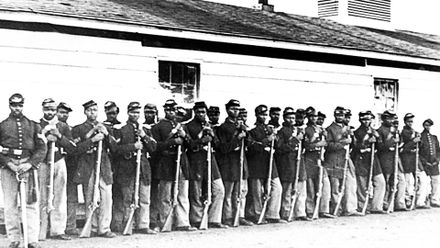
The experiences of African Americans on both sides; black soldiers in US military forces; the experience of hundreds of thousands of black refugees in the South; the weakening of the bonds of slavery in much of the Confederacy.
S1:E44 • Oct 6, 2003 • 31m
The outcome of the war remains uncertain in the summer of 1864; the Union gains ground; the final year of military action; highlighting the roles of Ulysses S. Grant, William Tecumseh Sherman, and Grant and Robert E. Lee at Appomattox.
S1:E45 • Oct 6, 2003 • 30m
Debates in the North; assimilating Confederate states back into the Union; the wartime context; Johnson's early presidency; the final showdown between the president and Congress in the fight over Reconstruction in the South.
S1:E46 • Oct 6, 2003 • 30m
Congress takes control of the Reconstruction policy in 1867; Ulysses S. Grant wins the presidency; the struggle between Johnson and Congress; Reconstruction legislation; state governments under that legislation in former Confederate states.
S1:E47 • Oct 6, 2003 • 31m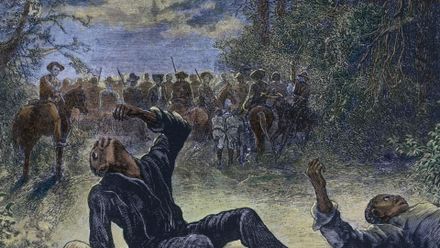
Reconstruction improves aspects of black Southerners' lives; Reconstruction and the white South; the South projects an image of Northern oppression; African Americans in the United States.
S1:E48 • Oct 6, 2003 • 31m
The scale of American industry in the late 19th century; Andrew Carnegie and John D. Rockefeller build a massive corporation; they dominate entire sectors of the economy; the United States becomes one of the three world leaders in industry.
S1:E49 • Oct 6, 2003 • 30m
The first transcontinental railroad is finished in 1869; it cuts travel time from the Mississippi to the West Coast from three months to a week; other transcontinentals; settlement in the remote plains and mountain states.
S1:E50 • Oct 6, 2003 • 30m
The coming of settlers with the railroads makes the Indians' independent life impossible; the near extinction of the buffalo and gold rushes; plain tribes are warrior societies that live to fight; the Battle at Little Bighorn in 1876.
S1:E51 • Oct 6, 2003 • 30m
The Homestead Act encourages farmers to acquire land at almost no cost; those who overcome the loneliness, prairie fires, insect infestations, extremes of climate, and incessant winds build prosperous lives, growing massive annual surpluses.
S1:E52 • Oct 6, 2003 • 30m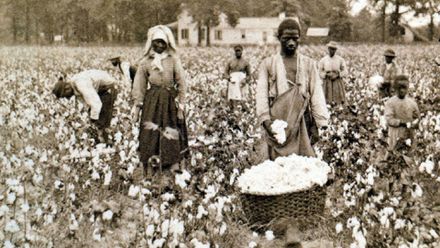
Reconstruction ends in 1876; southerns take political control of the South; passing legislation enforcing racial segregation; the white elite rule unchallenged for much of the next 80 years; most African Americans live by sharecropping.
S1:E53 • Oct 6, 2003 • 31m
Early advocates of suffrage; middle-class Americans emphasize differences between the two sexes; doctors believe political rights for women would make them mannish; Elizabeth Cady Stanton and Susan B. Anthony argue for women's rights.
S1:E54 • Oct 6, 2003 • 31m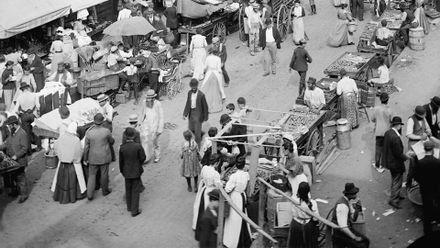
Victorian religion in America is less doctrinal and more sentimental than its Puritan antecedents; traveling revivalists and preachers try to help the poor and reform grim urban conditions while outlawing alcohol.
S1:E55 • Oct 6, 2003 • 31m
Southern cotton sharecroppers, black and white, and Midwestern farmers are falling into debt; cooperative marketing schemes; they turn to politics to legislate for better conditions; the Populist Party enjoys local and state-level successes.
S1:E56 • Oct 6, 2003 • 31m
Late 19th-century Europe is full of stories about America; bad conditions for farmers prompt many of them to emigrate; American prosperity and respectability; fears of race suicide in the 1920s give rise to an immigration restriction policy.
S1:E57 • Oct 6, 2003 • 30m
American cities are often badly planned and become overcrowded with ethnic and linguistic neighborhoods; cities are severely polluted with smoke and ash; worsening public health conditions; reformers try to Americanize urban immigrants.
S1:E58 • Oct 6, 2003 • 31m
The railroad strike of 1877 shows that strikes succeed if they enjoy community support; they fail if business owners use their political influence; bitter union-management confrontations punctuate the 1890s; the American Socialist Party in 1900.
S1:E59 • Oct 6, 2003 • 31m
Progressive reformers in the early 1900s try to increase efficiency in business and government; Roosevelt establishes the principle of presidential initiative in progressive legislative programs; increasing federal government power over the states.
S1:E60 • Oct 6, 2003 • 31m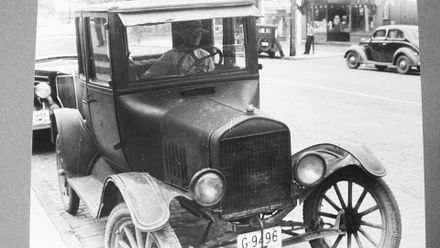
Manufacturers begin to mass-produce products they can sell cheaply and in large numbers through nationwide advertising campaigns; Henry Ford perfects the automobile assembly line in 1914; reducing the price of cars; increased workers' loyalty.
S1:E61 • Oct 6, 2003 • 31m
When Europe goes to war in 1914, America stays aloof; sympathy for Britain is strong among President Wilson's cabinet; the decision to declare unrestricted submarine warfare against American ships; America's army under General Pershing's leadership.
S1:E62 • Oct 6, 2003 • 30m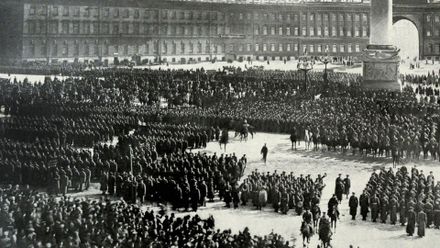
President Wilson travels to Versailles to discover that victorious English and French leaders want vindictive reparations; Wilson is thwarted by the Senate's refusal to join the League; a Red Scare; many Socialists and Communists are deported.
S1:E63 • Oct 6, 2003 • 32m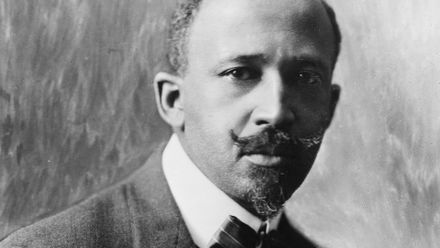
Prohibition creates ideal conditions for organized crime; the Ku Klux Klan targets Catholics and Jews; a brighter side is high levels of employment, improving city conditions; the rapid spread of cars and appliances; the maturing movie industry.
S1:E64 • Oct 6, 2003 • 32m
The collapse of share prices on Wall Street in 1929; from 1929 to 1933, a downward spiral of economic shrinkage, bankruptcies and factory closings occur; drought in the Great Plains states; President Hoover becomes the scapegoat for these disasters.
S1:E65 • Oct 6, 2003 • 31m
Franklin Roosevelt's creation of federal agencies marks a shift of power out of the states and into the federal government; Roosevelt tries to safeguard his political innovations by enlarging the Supreme Court; he oversteps his mandate.
S1:E66 • Oct 6, 2003 • 31m
Hitler's attacks on his European neighbors and his anti-Jewish policies cause many Americans to seek intervention on behalf of Britain; the Japanese attack on Pearl Harbor; America's military forces expand; victory appears remote in early 1942.
S1:E67 • Oct 6, 2003 • 30m
Roosevelt, Churchill and Stalin determine how to engage their forces over Europe and North Africa; the defeat of Germany; the Holocaust's full horror; America transforms into a high-employment economy; women take jobs previously reserved for men.
S1:E68 • Oct 6, 2003 • 32m
Aircraft carriers become the crucial weapon of the Pacific war; by mid-1945, Allied victory in the Pacific is assured; the Japanese refusal to surrender prompts Harry Truman to approve the use of the war's greatest secret weapon, the atomic bomb.
S1:E69 • Oct 6, 2003 • 31m
America and the Soviet Union disagree over the future of eastern Europe; a temporary dividing line drawn through Europe becomes permanent; Soviet possession of nuclear weapons creates a geopolitical stalemate; the proliferation of nuclear weapons.
S1:E70 • Oct 6, 2003 • 30m
Espionage cases heighten fears of Communism; the Truman administration begins to investigate the loyalty of federal employees; anti-Communist fears allow Senator Joseph McCarthy to exploit irrational public fears; post-war Korea and Berlin.
S1:E71 • Oct 6, 2003 • 31m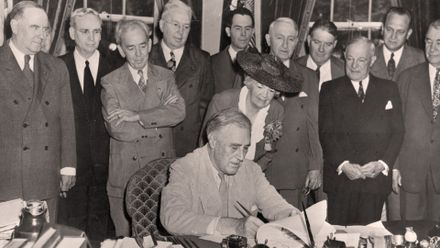
World War II causes a redistribution of income; steady rises in discretionary income; America becomes one of the wealthiest societies; the Soviet Union's victory in the space race; American dedication to education in science and technology.
S1:E72 • Oct 6, 2003 • 31m
The Supreme Court's decisions in the Brown case and the Montgomery bus boycott inaugurate the activist phase of the civil rights movement; disputes over busing and affirmative action; the interracial civil rights coalition break up.
S1:E73 • Oct 6, 2003 • 32m
John Kennedy's escalation of the Cold War is offset by a concern for legislating on behalf of the poor and minorities; Kennedy's assassination in November 1963; his successor, Lyndon Johnson, pursues antipoverty and anti-discrimination legislation.
S1:E74 • Oct 6, 2003 • 31m
Newspapers and other media in 20th-century America inform citizens about their political and social questions; media power transforms the nature of politics, lobbying and even the military, as the armed forces discover to its detriment in Vietnam.
S1:E75 • Oct 6, 2003 • 31m
By 1968, half a million American soldiers are fighting in Vietnam; casualties and TV footage of troops persecuting villagers turn public opinion against the war; President Johnson abandons his re-election plans; the last Americans withdraw in 1973.
S1:E76 • Oct 6, 2003 • 32m
In the late 1960s, the women's liberation movement is formed; the National Organization for Women campaigns successfully for the abolition of gender discrimination in employment; women campaign for the Equal Rights Amendment to the Constitution.
S1:E77 • Oct 6, 2003 • 32m
By the standards of his Republican successors, President Richard Nixon is a center or even liberal Republican; Nixon wins in 1972 against George McGovern; revelations that he had known of a break-in of McGovern's campaign headquarters; Nixon resigns.
S1:E78 • Oct 6, 2003 • 30m
The first Earth Day is celebrated in 1970, the year the Environmental Protection Agency is created; endangered species and scarce water resources become issues of government concern; environmentalists alert the nation to further resource shortages.
S1:E79 • Oct 6, 2003 • 30m
America is a far more religious society than other Western industrial nations; it also tolerates an array of sects and cults; religious groups play a role in the moral-political debates over civil rights, abortion, homosexuality and nuclear weapons.
S1:E80 • Oct 6, 2003 • 32m
Jimmy Carter wins the 1976 presidential race but is presented with economic stagnation, inflation, the Iranian revolution and the Tehran hostage crisis; Ronald Reagan escalates the Cold War by planning space-based weapons; his use of the media.
S1:E81 • Oct 6, 2003 • 31m
The Soviet Union goes through a peaceful transition to democracy; the creation of various new nations with more or less democratic and America-inspired political systems; in the 1990s, old ethnic and religious animosities in Eastern Europe resurface.
S1:E82 • Oct 6, 2003 • 31m
Bill Clinton's administration underlines the difference between America and other Western nations that create cradle-to-grave social welfare states; continued turbulence in the Middle East; the attacks on the World Trade Center and the Pentagon.
S1:E83 • Oct 6, 2003 • 32m
The immense vitality and diversity of American life are sustained by several recurrent themes; compared to its high ideals, America always falls short; compared to the other nations of the world, however, America is more impressive for its successes.
S1:E84 • Oct 6, 2003 • 31m