

Play Ball! The Rise of Baseball as America's Pastime
S1:E12 Black Baseball Before the Negro Leagues
After Emancipation, hopes of baseball becoming a vista of racial harmony are quickly checked; the intersection of baseball and race; the success of Minor League Baseball players; the Negro Leagues were predominantly operated by African Americans.
Already subscribed?
Sign in
Why the year 1920 is considered a pivotal year in baseball; achieving a sense of uniformity in the game; examining the years before 1920, when changes in the game were rapid, dramatic, and often surprising.
S1:E1 • Jun 21, 2019 • 29m
A look back at the beginnings of baseball; how and why the early version of the game evolved in the middle of the 19th century C.E.; learning how early clubs like the Gothams and the Knickerbockers helped repurpose a child's game for urban adults.
S1:E2 • Jun 21, 2019 • 30m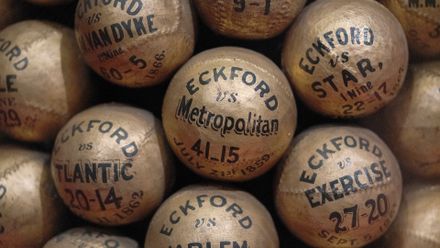
Exploring the rise of amateur baseball clubs in the United States; the outings of Brooklyn's Eckford Club; the rise of the Knickerbocker Club of New York City and the significance of their 1845 decision to write down the rules of the game.
S1:E3 • Jun 21, 2019 • 32m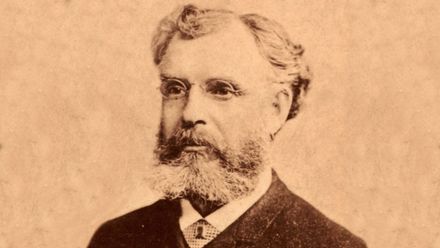
How the game of baseball moved toward professionalism; what made professionalization polarizing; studying future Hall of Famer Harry Wright, who helped pave the way for professional baseball's success by assembling a talented group of players.
S1:E4 • Jun 21, 2019 • 32m
How baseball found a formula for 20th-century success after three tumultuous decades; leagues and associations; the transformations of minor leagues into major ones; the competitive relationships between leagues; the national agreement of 1883.
S1:E5 • Jun 21, 2019 • 32m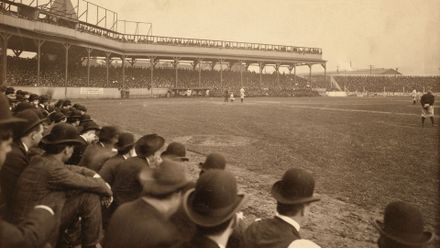
Increasing public confidence in the outcome of competitive baseball; offering a valuable prize to the winners; the turbulent evolution of the post-season series; the first World Series between the Boston Americans and the National League Pirates.
S1:E6 • Jun 21, 2019 • 32m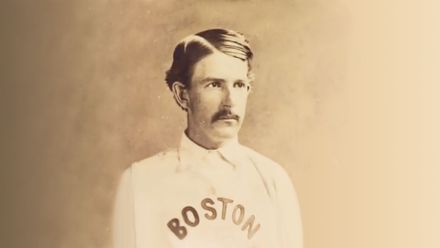
The second half of the 19th century; how advancing technology offered greater access to faraway places; new avenues for baseball; how baseball's popularity continued to spread; the contributions of Jimmy Ryan and Albert Goodwill Spalding.
S1:E7 • Jun 21, 2019 • 30m
The history of ballparks; how ballparks were defined by their surroundings; the rise of infields and outfields; the idiosyncratic dimensions and sizes of 19th-century ballparks; the state-of-the-art architectural elements of 20th-century ballparks.
S1:E8 • Jun 21, 2019 • 32m
Making sense of the litany of rule changes that take place in the 75 years between 1845 (when the Knickerbocker Club of New York City frames the first written rules) and 1920 (when it becomes customary to replace the baseball on a regular basis).
S1:E9 • Jun 21, 2019 • 29m
Face masks, chest protectors, catcher's mitts and fielder's gloves; how protective equipment becomes a part of baseball; complaints by old-time baseball fans that the proliferation of protective equipment robs the sport of skill and courage.
S1:E10 • Jun 21, 2019 • 31m
The role of women in baseball as spectators whose presence is expected to prevent coarse behavior by male fans; colleges like Vassar allow a select number of 19th-century women to play baseball without scorn; the changes that the new woman brings.
S1:E11 • Jun 21, 2019 • 30m
After Emancipation, hopes of baseball becoming a vista of racial harmony are quickly checked; the intersection of baseball and race; the success of Minor League Baseball players; the Negro Leagues were predominantly operated by African Americans.
S1:E12 • Jun 21, 2019 • 32m
A bias against minority groups that contradict the idea of the baseball diamond as a beacon of equality; the setbacks and triumphs of Irish Americans, Jewish players and Native Americans; those with physical handicaps as they fight for inclusion.
S1:E13 • Jun 21, 2019 • 30m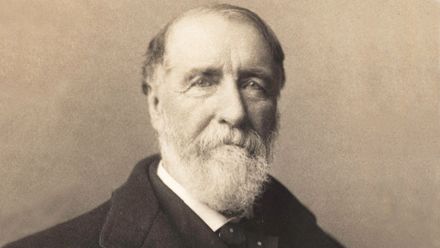
How early newspaper editors cover baseball games and decide what to write about; Henry Chadwick is a monumental figure in early baseball writing; the introduction of the box score helps baseball reporters with their jobs; post-game access to players.
S1:E14 • Jun 21, 2019 • 31m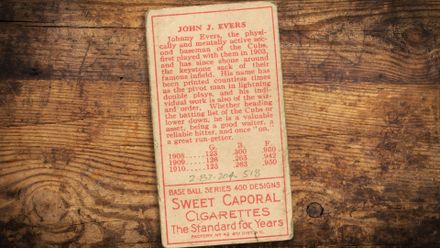
Most baseball fans take batting averages for granted; when statistics are new enough to baseball and are considered glamorous; how early spectators track scores; the problems with emphasizing stats; how these numbers appear on baseball cards.
S1:E15 • Jun 21, 2019 • 31m
Mr. Markusen reveals how baseball grows to become the national pastime; the origins of fans and cranks; the increased emphasis on baseball as a wholesome family experience; the ability of souvenirs and autographs to preserve the ballpark experience.
S1:E16 • Jun 21, 2019 • 31m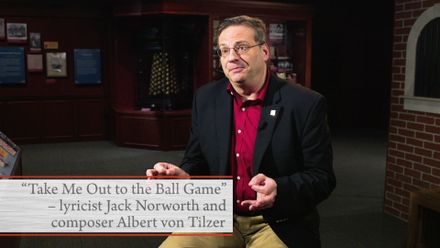
Baseball's longstanding ties to American culture; the story behind baseball's connection to poetry and fiction ("Casey at the Bat"); music ("Take Me Out to the Ballgame"); collectibles (baseball cards); language (terms such as "bush league").
S1:E17 • Jun 21, 2019 • 30m
There is a business side to baseball that goes back to the amateur clubs of the game's earliest years; early resentment about paying for tickets; the rise of advertising to increase fan allegiance; brand-empowering logos, colors and nicknames.
S1:E18 • Jun 21, 2019 • 33m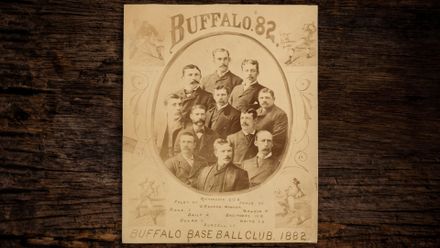
The reserve clause plays a role in every labor war during the first half-century of professional baseball; the events that lead to a fight against the right of teams to reserve players; a struggle to which today's big leaguers are indebted.
S1:E19 • Jun 21, 2019 • 30m
The US presidents ring in the new baseball year by throwing out the first pitch on Opening Day; Taft is the first to throw a pitch; Eisenhower initially underestimates the game's cultural importance; the relationship between presidents and baseball.
S1:E20 • Jun 21, 2019 • 29m
Knowing why fielders throw the ball around the horn after a strikeout; why fans perform the wave; when the seventh-inning stretch became a thing; why managers wear uniforms; the roots of these rituals; the roles they play in baseball.
S1:E21 • Jun 21, 2019 • 28m
World War I encroaches upon the comparatively tranquil national pastime; the talents of baseball-playing military companies; a growing emphasis on physical fitness on the field and patriotism in the stands; the playing of "The Star-Spangled Banner".
S1:E22 • Jun 21, 2019 • 30m
The 1919 Black Sox scandal marks a turning point in how Americans think about the right way to play baseball; the complexity of such baseball scandals; the moral quandaries of both actual deception in the game and merely the appearance of deception.
S1:E23 • Jun 21, 2019 • 30m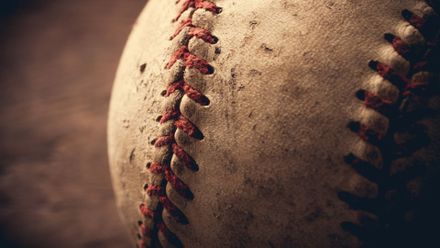
Today, one takes for granted the idea that every ball used during a game is essentially identical; this was not so prior to 1920; early variations of baseballs, including the lemon peel ball, the evolution of batting orders; the foul strike rule.
S1:E24 • Jun 21, 2019 • 33m