

The Skeptic's Guide to Health, Medicine, and the Media
Dr. Roy Benaroch shows how to recognize good reporting and bad reporting when it comes to health information; getting answers to medical questions that take one past the headlines and beyond the way health news is typically reported.
Already subscribed?
Sign in
The pharmaceutical industry and the press's praise of hormone replacement therapy comes to a halt in 2002; what the scientific studies that cause this turnaround say; whether men are falling prey to the same marketing tactics regarding testosterone.
S1:E1 • Feb 1, 2019 • 32m
What happens when the brain slams into the side of the skull; the media's coverage of cases of concussion and Chronic Traumatic Encephalopathy; how selective reporting can lull people into believing an issue has been adequately addressed.
S1:E2 • Feb 1, 2019 • 33m
Using two drugs as case studies, learn how to better understand and evaluate the media description of prescription drugs.
S1:E3 • Feb 1, 2019 • 32m
The changing perceptions of marijuana's safety and usefulness; different stakeholders affect media coverage; the medical use of cannabis in the US is driven by well-designed scientific studies; news reports addressing its efficacy and safety.
S1:E4 • Feb 1, 2019 • 33m
The media focus on weight loss is no surprise; two of every three Americans are overweight; one needs science-backed nutrition and weight-loss advice; reading beneath the headlines to determine if an article's content is salient to one's health.
S1:E5 • Feb 1, 2019 • 30m
Americans turn to alternative-medicine approaches that are never studied; why fish oil supplements are a $1.2-billion industry, despite research that shows no health benefit from their use; individuals continue to turn to stem cell infusions.
S1:E6 • Feb 1, 2019 • 31m
Mentally ill individuals are more likely to become victims of crime than to be violent perpetrators; their depiction in TV and film has skewed perceptions of the risk they pose to society, covering these issues more fairly and accurately.
S1:E7 • Feb 1, 2019 • 31m
No one believes a person who says that they live off air only and never eat; one Breatharian couple receives media coverage; thinking like a skeptic when reading the news; internet clickbait races continue to be faster; real science is slow.
S1:E8 • Feb 1, 2019 • 32m
Follow the fascinating media coverage of baby-food toxins and the new water system in Flint, MI, to discover the reasons for conflicting headlines and stories.
S1:E9 • Feb 1, 2019 • 30m
In 24 episodes, Dr. Roy Benaroch shows you how to recognize good reporting that provides accurate health information and bad reporting that’s incomplete at best and purposely misleading at w
S1:E10 • Feb 1, 2019 • 30m
Life expectancy in the US is decreasing; infant mortality is high compared to other developed nations; scientists and their points of view; whether the media explains the statistics behind their theories; oversimplifying a clickbait headline.
S1:E11 • Feb 1, 2019 • 30m
In 24 episodes, Dr. Roy Benaroch shows you how to recognize good reporting that provides accurate health information and bad reporting that’s incomplete at best and purposely misleading at w
S1:E12 • Feb 1, 2019 • 31m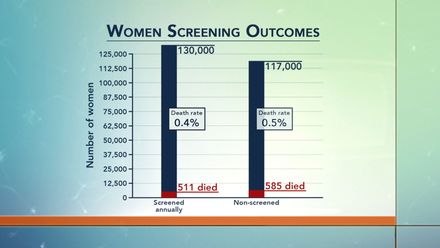
A cancer survivor whose life is saved by early screening; these stories can make one take every early-warning test in sight; cancer screening is full of complexities that rarely make the news; the dangers of overdiagnosing; important screenings.
S1:E13 • Feb 1, 2019 • 30m
In an ideal world, all medications are available and affordable to those who need them; the minutiae of prescription drug pricing creates a significant barrier; pharmaceutical companies work to keep generics out of the market; influencing doctors.
S1:E14 • Feb 1, 2019 • 31m
Discovering how drug companies sometimes develop a drug first, and then identify a disease the drug can address; learning whether the media helps one focus on major health challenges; problems potentially driven by pharmaceutical marketing.
S1:E15 • Feb 1, 2019 • 32m
Opioids have been around for a century before exploding into the crisis one has today; greedy drug companies push greedy doctors to overprescribe; the most common cause of opioid death today; the media's role with respect to educating families.
S1:E16 • Feb 1, 2019 • 33m
The media plays a role in educating the public about hygiene and the avoidance of disease; it also spreads false rumors resulting in real health consequences; what the media gets right and wrong in covering the outbreaks of Ebola and influenza.
S1:E17 • Feb 1, 2019 • 31m
Learning whether the cell phone increases one's risk for cancer; examining the research that supports the risk headlines; making appropriate choices; exaggerating a risk might make for good clickbait; it can also lead to poor decision-making.
S1:E18 • Feb 1, 2019 • 30m
Examine what happens when doctors tragically rely on fraudulent or shoddy science published in reputable medical journals.
S1:E19 • Feb 1, 2019 • 31m
The media exerts an effect on one's concepts of food and health; differentiating between nutrition-related scientific statements and marketing words; the desire to eat healthy foods becomes an unhealthy obsession; media's role in influencing choices.
S1:E20 • Feb 1, 2019 • 30m
Discovering how two antithetical headlines can result from the same scientific report; these overblown and overly simplistic headlines attract readers; they also muddy the waters of these complicated issues; making readers skeptical of science.
S1:E21 • Feb 1, 2019 • 32m
Professor Benaroch walks through finding credible answers to what is the best way to stay young and healthy; how the skeptic's tools help one answer this or any other health question; readers will be surprised where the research takes them.
S1:E22 • Feb 1, 2019 • 30m
In 24 episodes, Dr. Roy Benaroch shows you how to recognize good reporting that provides accurate health information and bad reporting that’s incomplete at best and purposely misleading at w
S1:E23 • Feb 1, 2019 • 30m
The positive role of the popular media in encouraging one to put their cigarettes down, seatbelts on and not mix drinking and driving; media works creatively and effectively in the interest of public health; the issues the media can address today.
S1:E24 • Feb 1, 2019 • 36mMore Like This
 TVPG • 1 season
 TVPG • 1 season
 TVPG • 1 season
 TVPG • 1 season
 TVPG • 1 season
 TVPG • 1 season
 TVPG • 1 season
 TVPG • 1 season
 TVPG • 1 season
 PG • 1 season
 TVPG • 1 season
 TVPG • 1 season
 TVPG • 1 season
 TVPG • 1 season
 TVPG • 1 season
 TVPG • 1 season
 TVPG • 1 season
 TVPG • 1 season
 TVPG • 1 season
 TVPG • 1 season