

Bright Now!
S1:E53 Preparing for Hurricanes
The Surge-Structure-Atmosphere Interaction facility, or SUSTAIN, will help scientists at the Rosenstiel School of Marine and Atmospheric Science better understand the complex interactions between a hurricane and the ocean below it.
Already subscribed?
Sign in
Analysis of the cause of the Amazon's devastating fires, how they might impact the climate and whether the environment will be able to recover.
S1:E1 • Sep 3, 2025 • 10m
Experts reveal what makes specialty coffee taste the way it does.
S1:E2 • Jan 1, 2019 • 10m
The staff of South Africa's Manyoni Private Game Reserve passionately care for some of the world's most exotic and endangered wild animals, from treating elephant foot infections to testing cheetahs for tuberculosis.
S1:E3 • Dec 5, 2025 • 17m
Cutting-edge technology is used to fight wildfires to save lives and property.
S1:E4 • Dec 5, 2025 • 9m


Exploring how the music festival documentary film "Woodstock" was made with producer Dale Bell.
S1:E7 • Dec 5, 2025 • 10m

The Green Bank Observatory in West Virginia, home of the world's largest steerable radio telescope, has been receiving a mysterious signal from deep space.
S1:E9 • Sep 3, 2025 • 11m
Parasites carry a bad reputation, but are an essential part of healthy ecosystems throughout the world; learn how these unappreciated species are part of our ecology and evolution.
S1:E10 • Sep 3, 2025 • 11m

New science reveals what 40 trillion non-human microorganisms hosted by each person do and how understanding them can help people live healthier lives.
S1:E12 • Oct 7, 2019 • 9m
The 50-year-old anesthetic ketamine might be a new tool for fighting depression and suicide.
S1:E14 • Oct 14, 2019 • 14m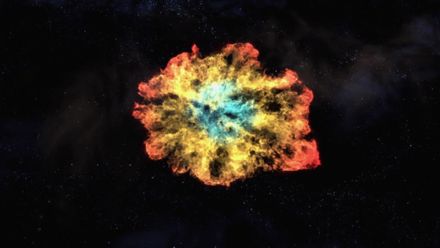
Discovered on Oct. 19, 2017, 'Oumuamua is the first known object to have come from outside the solar system.
S1:E15 • Oct 19, 2019 • 11m
Colorful nudibranchs, or sea slugs, have a remarkable range of adaptations to survive in the ocean, from stinging cells to harvesting the power of the sun, spraying sulfuric acid and turning their bodies into drift nets.
S1:E16 • Oct 21, 2019 • 9m
Doctors, chefs and nutritionists explain how going green with fresh ingredients and flavors in daily meals will improve health.
S1:E17 • Sep 3, 2025 • 15m

Professional scouts are compared to high-tech tools used to evaluate youth baseball players.
S1:E19 • Sep 3, 2025 • 11m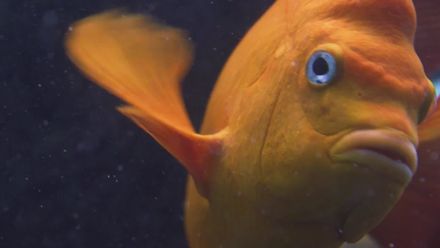
Balancing the ecosystem of kelp forests, which harbor a greater diversity of plants and animals than almost any other ocean community.
S1:E20 • Sep 3, 2025 • 10m
Footage of people's everyday lives on both sides of the Berlin Wall before it fell Nov. 9, 1989.
S1:E21 • Sep 3, 2025 • 14m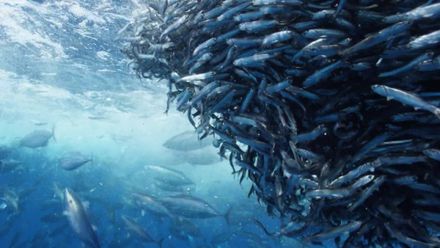
Life blooms in unexpected ways in California, from desert wildflowers to jellyfish colonies off Monterey.
S1:E22 • Sep 3, 2025 • 13m
Missions lay the groundwork for solar sails space travel technology.
S1:E23 • Sep 3, 2025 • 12m
Observing alien-like octopuses in the Pacific Ocean, from a feeding frenzy at the bottom of the sea to a mother tending thousands of eggs.
S1:E24 • Sep 3, 2025 • 12m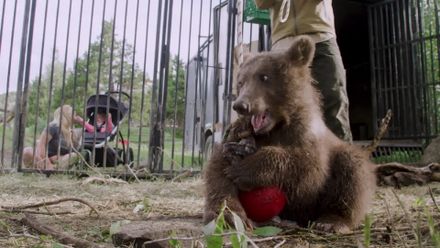
Casey Anderson, who was once faced with the decision of leaving an orphaned grizzly bear cub to die in the wild or saving it, is faced with making that same decision again.
S1:E25 • Sep 3, 2025 • 11m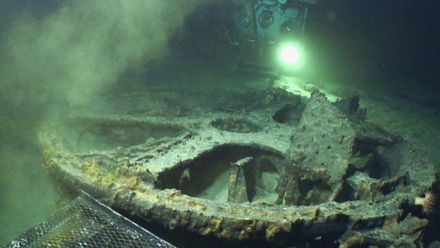


Ohio bicycle mechanics Orville and Wilbur Wright change the world by flying the world's first successful airplane in 1903.
S1:E28 • Sep 3, 2025 • 11m
Underwater photographer Peter Kragh explores the coast of California and reveals some of the most spectacular life found under the sea.
S1:E29 • Sep 3, 2025 • 9m

The Hadzabe of Tanzania, considered one of the last hunter-gatherer tribes on the planet, pass the knowledge of this way of life to the next generation.
S1:E31 • Jan 1, 2019 • 14m
A look at whether science can be used to alter chicken embryos to resemble a Tyrannosaurus rex.
S1:E32 • Jan 1, 2019 • 12m
Nature documentary about the continent of Antarctica.
S1:E33 • Oct 6, 2025 • 11m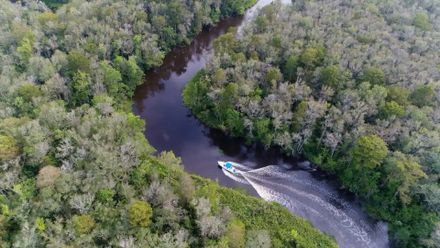
The search in the swamps of Alabama for the final ship to bring slaves to the United States.
S1:E36 • Sep 3, 2025 • 11m
Wildlife filmmaker Rene Araneda tours Torres del Paine National Park in Chile, a beautiful place that is home to some of the most wondrous creatures on the planet.
S1:E37 • Apr 2, 2025 • 8m
A sneak peek at the cutting-edge science and sophisticated production techniques featured in the special "Pompeii: Disaster Street."
S1:E38 • Jan 1, 2019 • 15m
The science of creating and educating a genius may bring contributions to society.
S1:E39 • Sep 3, 2025 • 10m
Surprising new insights into what it takes to be funny.
S1:E41 • Sep 3, 2025 • 12m
On the 50th anniversary of Apollo 13, Cmdr. Jim Lovell and NASA engineers recall the ingenuity and superhuman efforts that turned a potential space flight disaster into an extraordinary fight for survival.
S1:E42 • Jan 1, 2020 • 23m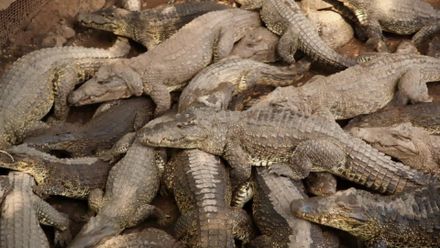
People try to save the unique Cuban crocodile from extinction.
S1:E43 • Sep 3, 2025 • 10m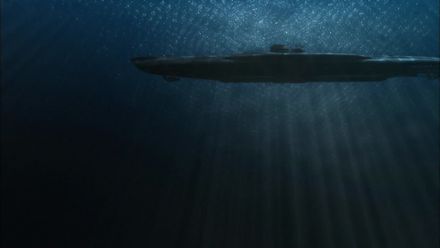
A mysterious World War II wreck discovered off the coast of Italy by archeologists could be the wreck of the U-455, the last missing German U-boat.
S1:E44 • Sep 3, 2025 • 13m
The forgotten ships that made possible the liberation of France during World War II.
S1:E45 • Sep 3, 2025 • 12m
The ambitious projects under development to save Tokyo, the most populated urban zone on the planet that is built on a fault line, and threatened by flooding and several active volcanoes.
S1:E46 • Sep 3, 2025 • 11m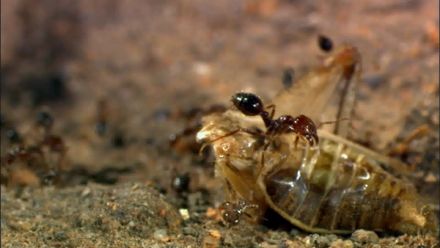
A fire ant colony can contain up to 40 million ants, all of which defend their territory.
S1:E47 • Sep 3, 2025 • 10m
Since the 1980s, the lionfish has conquered massive territories within the ocean.
S1:E48 • Sep 3, 2025 • 13m
Nearly a century after disappearing from its natural habitat, the German wolf makes a comeback that might be attributable to an unlikely ally: the military.
S1:E49 • Sep 3, 2025 • 10m
A glimpse at what happens at zoos and aquariums behind closed doors.
S1:E51 • Sep 3, 2025 • 13m
Shark expert Jim Abernethy conducts stunning, cage-free dives with the ocean's greatest predators to demonstrate they are not mindless, man-eating monsters.
S1:E52 • Sep 3, 2025 • 11m
The Surge-Structure-Atmosphere Interaction facility, or SUSTAIN, will help scientists at the Rosenstiel School of Marine and Atmospheric Science better understand the complex interactions between a hurricane and the ocean below it.
S1:E53 • Sep 3, 2025 • 11m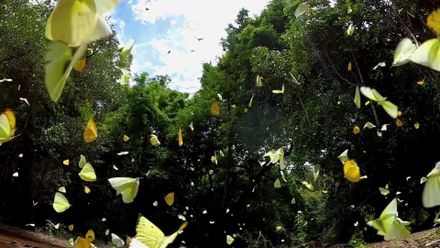
Investigating the cause of an alarming decline in insect populations that could devastate all life on Earth and whether anything can be done to stop it.
S1:E55 • Sep 4, 2025 • 24m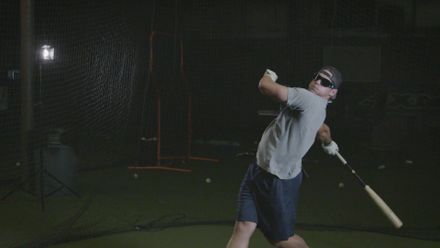
The next generation of major league baseball stars are using cutting-edge science and technology to drive their performance to unprecedented heights.
S1:E56 • Sep 3, 2025 • 14m
Wildlife tracker Tyler Johnerson explores the deadly rivalry between native mountain lions and reintroduced wolves in Yellowstone National Park.
S1:E57 • Sep 3, 2025 • 11m
Despite people's obsession with flavor, taste is the most overlooked sense; surprising new discoveries change the understanding of taste, and how it has evolved to keep people alive.
S1:E58 • Sep 3, 2025 • 13m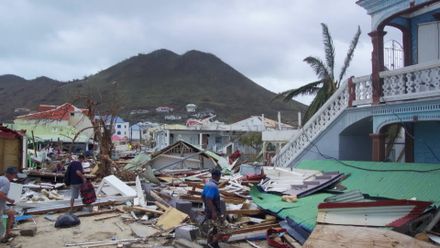
Explaining how weather forecasts have become so reliable with advancing technologies.
S1:E59 • Sep 3, 2025 • 12m
Modern-day balloonists re-create the first crossing of the English Channel, which took place Jan. 7, 1785.
S1:E60 • Aug 14, 2020 • 13m
Examining human survival mechanisms that modern science is only beginning to understand.
S1:E62 • Sep 3, 2025 • 12m
A team of maritime archaeologists descends 700 feet off the coast of North Carolina in search of the U-576, a German submarine that went down in a historic 1942 battle, possibly trapping 45 Nazi sa...
S1:E62 • Jan 1, 2020 • 20m
Scientists and conservationists make efforts to save the Iberian Lynx, widely regarded as the world's most endangered cat.
S1:E68 • Sep 3, 2025 • 13m
A look at the tiny insects with incredible capabilities that are locked in a struggle to survive in the surface film of most lakes and ponds.
S1:E69 • Sep 4, 2025 • 19m
For decades, it was thought that ADHD primarily affected boys and men, but new research reveals the impact the disorder can have on women, leading to effective treatments for millions who may be suffering in silence.
S1:E70 • Sep 3, 2025 • 11m

Astrobiologist and author Lewis Dartnell explores what it would take to stay alive following a global cataclysm, and what knowledge would be needed to rebuild civilization.
S1:E72 • Sep 3, 2025 • 15m
The history and wildlife of Lake Okeechobee, one of the largest freshwater lakes in the United States, and the source of life for South Florida's magnificent Everglades.
S1:E73 • Jan 1, 2020 • 14m
Top trappers working for the Florida Fish and Wildlife Conservation Commission go to battle against dangerous alligators lurking in the lush lakes and canals of Palm Beach.
S1:E74 • Jan 1, 2020 • 12m
In 1938, an American researcher captures 500 macaque monkeys and brings them to an uninhabited Caribbean island to study the primate population roaming free in a giant open-air laboratory.
S1:E75 • Sep 3, 2025 • 10m
Scientists and citizens armed with cutting-edge technology battle swarms of locusts devouring everything in their path from Africa to India.
S1:E76 • Sep 4, 2025 • 18m
Author David Quammen predicted the coronavirus pandemic nearly a decade ago in his best-selling book, "Spillover"; now, he shows us how the same remote Montana lab that spawned his work is on the front line to combat COVID-19.
S1:E78 • Sep 3, 2025 • 12m
The history of President Trump's Mar-a-Lago estate, built in Florida in the 1920s by Majorie Merriweather Post, who hoped one day that it would become a winter White House.
S1:E79 • Sep 3, 2025 • 11m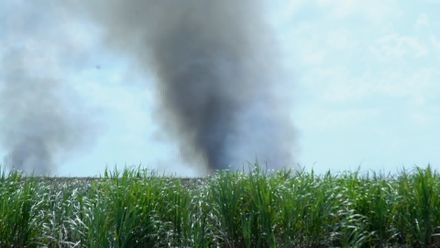
"Muck City" Florida is one of the biggest sugar-producing regions on the planet, but the traditional practice of cane field burning at harvest is sparking a heated debate.
S1:E80 • Jan 1, 2020 • 13m
Examining whether blockchain technology is safe as it sweeps the globe, moving from high-flying cryptocurrencies like Bitcoin to more traditional sectors of the economy.
S1:E81 • Dec 31, 2020 • 21m