
The Mind Shift
S1:E4 Episode 4
Gloria Chan Packer discusses separating work and family; Courtney Stephens discusses melancholy; Dan Harris discusses self care; Leah Garcés discusses making allies; Anees Bahji discusses eating disorders.
Free with ads
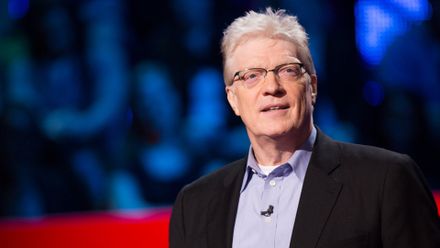
In a funny, stirring talk, Sir Ken Robinson outlines 3 principles crucial for the human mind to flourish -- and how current education culture works against them.
S1:E1 • May 10, 2013 • 19m
"Keep Your Goals to Yourself" by Derek Sivers; "Try Something New for 30 Days" by Matt Cutts; "How to Shift Your Mindset and Choose Your Future" by Tom Rivett-Carnac; "Debunking the Myths of OCD" by Dr. Natascha M. Santos.
S1:E2 • Sep 5, 2022 • 7m
Relationship therapist Esther Perel examines why people cheat, and unpacks why affairs are so traumatic. In infidelity, she sees something unexpected — an expression of longing and loss.
S1:E3 • May 21, 2015 • 21m
Gloria Chan Packer discusses separating work and family; Courtney Stephens discusses melancholy; Dan Harris discusses self care; Leah Garcés discusses making allies; Anees Bahji discusses eating disorders.
S1:E4 • Jan 23, 2023 • 20m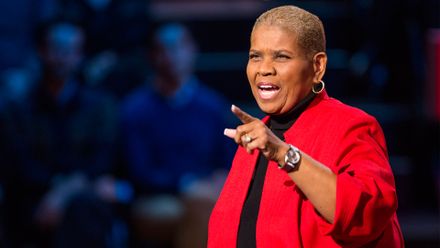
Rita Pierson, a teacher for 40 years, once heard a colleague say, "They don't pay me to like the kids." Her response: "Kids don't learn from people they don't like."
S1:E5 • May 3, 2013 • 8m
Richard Dawkins urges all atheists to openly state their position -- and to fight the incursion of the church into politics and science. A fiery, funny, powerful talk.
S1:E6 • Apr 16, 2007 • 29m
What was the greatest invention of the industrial revolution? Hans Rosling makes the case for the washing machine.
S1:E7 • Mar 21, 2011 • 9m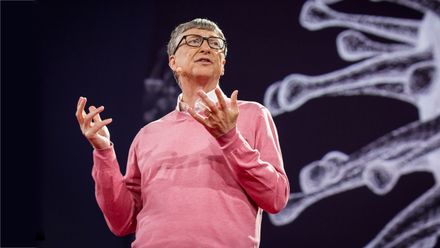
In 2014, we avoided a global outbreak of Ebola, thanks to health workers and luck. We know what we should have done better. Now's the time, Bill Gates says, to put all our good ideas into practice.
S1:E8 • Apr 3, 2015 • 8m
Growing up in North Korea, Hyeonseo Lee thought her country was "the best on the planet." It wasn't until the famine of the 90s that she began to wonder. Hers is a harrowing tale of survival and hope.
S1:E9 • Mar 20, 2013 • 12m
Bill Gross got curious about why some start-ups succeeded and others failed. He found that one factor stands out from the others and surprised even him.
S1:E10 • Jun 1, 2015 • 7m
When you look at sporting achievements, it seems like humans have gotten faster, better and stronger in nearly every way. Yet as David Epstein shows, we might want to lay off the self-congratulation.
S1:E11 • Apr 29, 2014 • 15m
What's it like to grow up within a group who demonize everyone else? Megan Phelps-Roper shares personal experience along with some sharp ways we can learn to engage across ideological lines.
S1:E12 • Mar 6, 2017 • 15m
Ric Elias had a front-row seat on Flight 1549, the plane that crash-landed in the Hudson River in New York in January 2009. What went through his mind as the doomed plane went down?
S1:E13 • Apr 22, 2011 • 5m
Why do people see the Virgin Mary on a cheese sandwich or hear demonic lyrics in "Stairway to Heaven"? Michael Shermer shows how we convince ourselves to believe -- and overlook the facts.
S1:E14 • Nov 8, 2006 • 13m
Why did Anna Rosling Rönnlund send photographers to document the stoves, bed, toilets, toys and more in households from every income bracket around the world?
S1:E15 • Jan 18, 2018 • 12m
A native of Turkey, Elif Shafak has experienced firsthand the devastation that a loss of diversity can bring -- and she knows the revolutionary power of plurality in response to authoritarianism.
S1:E16 • Oct 13, 2017 • 22m
In this call to action, 16-year-old climate activist Greta Thunberg explains why, in 2018, she walked out of school and protested outside the Swedish parliament, grabbing the world's attention.
S1:E17 • Jan 30, 2019 • 11m
Bill Gates hopes to solve some of the world's biggest problems using a new kind of philanthropy. In a passionate and, yes, funny 18 minutes, he asks us to consider two big questions and how we might answer them. (And see the Q&A on the TED Blog.)
S1:E18 • Feb 5, 2009 • 20m
In a talk about frayed relationships and the death of a loved one, Elizabeth Lesser shares her healing process of putting aside pride and defensiveness to make way for soul-baring and truth-telling.
S1:E19 • Dec 8, 2016 • 16m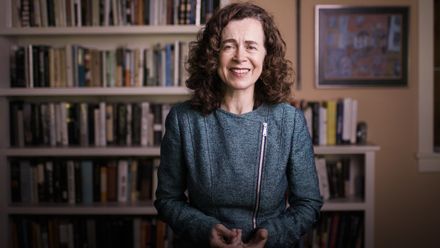
Business is screwed if we don't fix climate change, says economist Rebecca Henderson. Hear what a reimagined capitalism, in which companies pay for the climate damage they cause, could look like.
S1:E20 • Oct 10, 2020 • 8m
Author Matt Ridley shows how, throughout history, the engine of human progress has been the meeting and mating of ideas to make new ideas.
S1:E21 • Jul 14, 2010 • 16m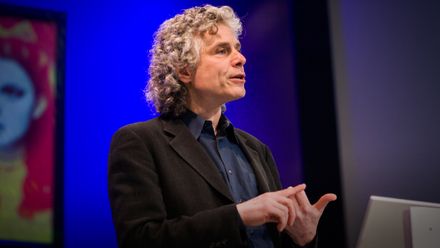
Steven Pinker argues that, though it may seem illogical and even obscene, given Iraq and Darfur, we are living in the most peaceful time in our species' existence.
S1:E22 • Sep 10, 2007 • 19m
For years Sergeant Kevin Briggs patrolled Golden Gate Bridge, a popular site for suicide attempts. He gives a powerful piece of advice to those with loved ones who might be contemplating suicide.
S1:E23 • May 14, 2014 • 14m
For the first time, we are forced to consider the risk of destabilizing the entire planet, says scholar Johan Rockström. Hear his plan for putting the planet back on the path of sustainabilitys.
S1:E24 • Oct 10, 2020 • 8m
We have seen advances in every aspect of our lives -- except our humanity, says Luma Mufleh who founded the first accredited school for refugees in U.S. She shares stories of hope and resilience.
S1:E25 • Jun 23, 2017 • 14m
Would you pay two percent more for the carbon-neutral version of the products you buy and use every day? Jens Burchardt explains why curbing climate change doesn't have to break the bank.
S1:E26 • Apr 8, 2021 • 11m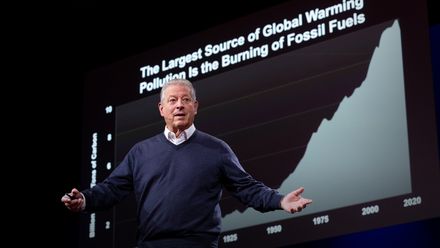
A net-zero future is possible, but first we need to flip a mental switch to truly understand that we can stop the climate crisis if we try, says Nobel laureate Al Gore.
S1:E27 • Nov 2, 2021 • 16m
Facebook COO Sheryl Sandberg looks at why a smaller percentage of women than men reach the top of their professions -- and offers 3 powerful pieces of advice to women aiming for the C-suite.
S1:E28 • Dec 21, 2010 • 15m