

Redefining Reality: The Intellectual Implications of Modern Science
No subject is bigger than reality itself and nothing is more challenging to understand; what counts as reality has been undergoing continual revision for centuries; the quest to pin down what is real is both philosophical and scientific.
Already subscribed?
Sign in
The metaphysical concept of reality and how it leads to a scientific worldview; the scientific picture of reality changes as theories are refined or overthrown; the germ theory of disease and philosopher Thomas Kuhn's idea of paradigm shifts.
S1:E1 • Jun 26, 2015 • 32m
Defining reality as understood by the ancient Greeks; revolutionary ideas about reality proposed by Plato, Aristotle, Copernicus, Galileo and Kepler; Newton inspires the Age of Enlightenment; closing with the Romantic backlash of the 19th century.
S1:E2 • Jun 26, 2015 • 33m
Mathematics hits the rocks of uncertainty in the 19th and 20th centuries; the discoveries of non-Euclidean geometries and the incompleteness theorem of Kurt Gödel; "Alice in Wonderland" sheds intriguing light on this view of reality.
S1:E3 • Jun 26, 2015 • 31m
Until 1905, physical reality consists of absolute space, absolute time and the luminiferous aether; Einstein's special theory of relativity overthrows this deeply ingrained view; cultural figures such as Kurt Vonnegut draw on this legacy.
S1:E4 • Jun 26, 2015 • 31m
Relativity is incomplete until Einstein formulates a general theory of relativity that incorporates gravity; this breakthrough demolishes the idea of gravity as a force; the concept of warped spacetime; strange predictions such as black holes.
S1:E5 • Jun 26, 2015 • 27m
Investigating the underlying reality that governs the universe; learning whether the universe is eternally the same or is it changing and unstable; this debate culminates in the contest between the steady-state theory and the big bang model.
S1:E6 • Jun 26, 2015 • 29m
Atoms are the bedrock of ordinary matter; a century ago, many scientists are reluctant to accept their existence; chemical elements come in countable units; the backstory of the atomic hypothesis; its triumph and the complications that ensue.
S1:E7 • Jun 26, 2015 • 30m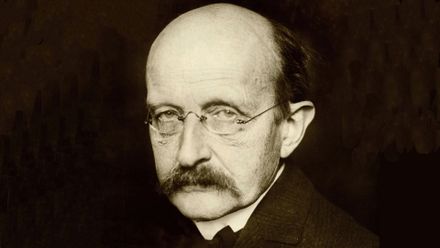
The subject of quantum mechanics was pioneered by scientists probing atomic structure in the early 20th century; Max Planck, Niels Bohr, Werner Heisenberg and Erwin Schrödinger; Heisenberg uncertainty principle; the Schrödinger wave function.
S1:E8 • Jun 26, 2015 • 29m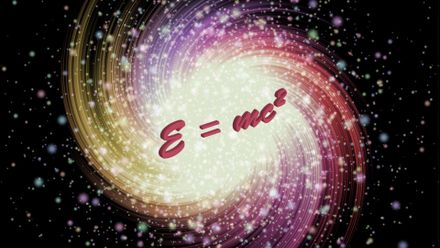
Quantum field theory leads to a synthesis called the standard model of particle physics, which is confirmed by the discovery of the Higgs boson; the implications of this theory for one's understanding of reality; its impact on the visual arts.
S1:E9 • Jun 26, 2015 • 31m
Traditional attempts to understand the world assume that it is regular, simple, periodic and predictable; nature gives scientists a richer picture of reality through chaos theory; chaos is a previously unimagined complexity within the universe.
S1:E10 • Jun 26, 2015 • 29m
Learning what happens when the accepted picture of reality is overthrown; this happens in the late 20th century, when scientists suddenly discover dark matter and dark energy, which together dwarf the contribution of ordinary matter to the cosmos.
S1:E11 • Jun 26, 2015 • 29m
Science has been on a mission to unite disparate phenomena under the umbrella of more comprehensive theories; the search for a grand unified theory that unifies the workings of quantum forces; a theory of everything that quantizes gravity.
S1:E12 • Jun 26, 2015 • 31m
Descartes holds the dualistic view that the mind and body are separate; materialists counter that brain processes produce the mind; discovering what physics has to say about free will; the famous thought experiment involving Schrödinger's cat.
S1:E13 • Jun 26, 2015 • 31m
One of the complete transformations of reality in history; the new picture of life that emerges from the evolutionary theory of Charles Darwin and Alfred Russel Wallace; their influence on William Golding's Lord of the Flies and on TV reality shows.
S1:E14 • Jun 26, 2015 • 30m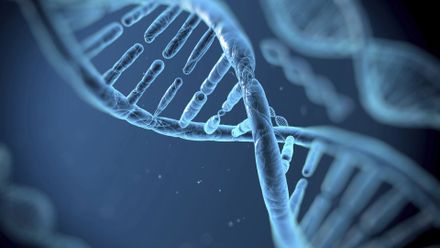
The mechanism that drives evolution is not discovered until long after Darwin's death; clues lead researchers first to the cell nucleus, then to chromosomes and genes; finally to the DNA molecule as the agent of heredity; genetics and human identity.
S1:E15 • Jun 26, 2015 • 32m
The quest to understand human behavior inspires researchers to study the mind; the theories of Sigmund Freud, who gives the world a new vocabulary, including concepts like ego, id and superego; Freud's legacy is enduring in the horror film genre.
S1:E16 • Jun 26, 2015 • 30m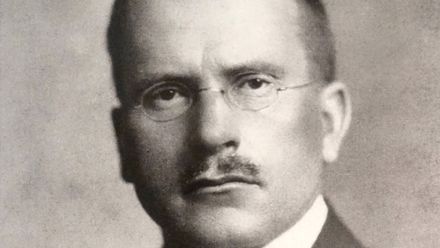
The many directions psychology takes before World War II; Carl Jung extends Freud's ideas to encompass a universal collective unconscious; the behaviorists focus on observable behavior, an approach that influences advertising and public relations.
S1:E17 • Jun 26, 2015 • 30m
The Holocaust raises serious questions about the mind and its relation to authority; three experiments test the limits of human autonomy; Solomon Asch's group think study, Stanley Milgram's obedience study and Philip Zimbardo's Stanford prison study.
S1:E18 • Jun 26, 2015 • 30m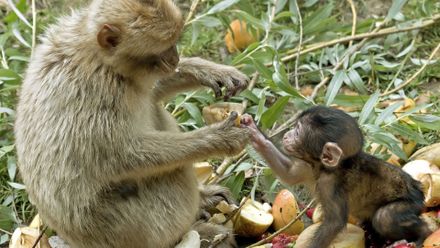
Freudian psychology sees mothers as the wellspring of neuroses; contrasting this view with Harry Harlow's studies of maternal caregiving and Carol Gilligan's theory of differing moral development in females and males; the novel "Frankenstein".
S1:E19 • Jun 26, 2015 • 31m
Analyzing the contributions of genetics, environmental factors and social interaction to one's effective functioning as members of the species; how CT, MRI, and PET imaging technologies provide windows into brain structure and activity.
S1:E20 • Jun 26, 2015 • 28m
If the human brain is the result of evolutionary processes, then many shared psychological traits must have adaptive advantages; exploring this view, known as evolutionary psychology; it can be illustrated by a simple logic problem.
S1:E21 • Jun 26, 2015 • 32m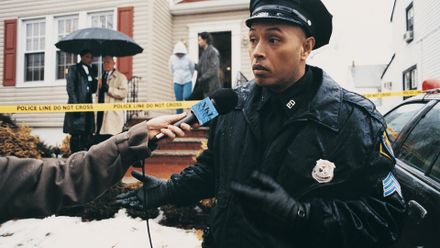
Culture imprints itself on our brains through socialization; the insights that sociology provides, from Auguste Comte to Herbert Spencer, Karl Marx and Emile Durkheim, who suggests that crime has an unappreciated positive role in society.
S1:E22 • Jun 26, 2015 • 29m
In the early 20th century, crisis is a popular word in book titles; it reflects a widespread anxiety about a rapidly changing world; contrasting assessments of the stability of society from sociologists; the analysis by industrialist Andrew Carnegie.
S1:E23 • Jun 26, 2015 • 30m
Learning what differences between groups are real and what differences are as arbitrary as a political boundary; addressing this question regarding race, which is considered rooted in biological reality; this view is conclusively overthrown.
S1:E24 • Jun 26, 2015 • 33m
Probing social reality by looking at the concept of progress; social optimists and pessimists believe that society is progressing, but they see different causes; exploring the idea that Western culture is doomed to collapse under its own weight.
S1:E25 • Jun 26, 2015 • 31m
Money is a powerfully real phenomenon; money, goods and services are exchanged in the economy; the ideas of John Maynard Keynes and the results of modern psychological research challenge two assumptions of classical economic theory.
S1:E26 • Jun 26, 2015 • 30m
Applying the reality-analyzing tools one has learned to the problem of life; the close connection between life and sunlight; the startling exception to this rule: the fauna that flourish around volcanic vents in the dark ocean depths; life's origins.
S1:E27 • Jun 26, 2015 • 29m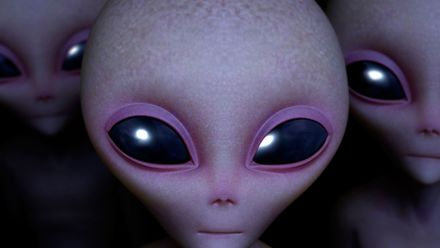
Fiction writers lead the way in exploring the prospects of life beyond Earth; scientists catch up and look for extraterrestrial organisms using a variety of ingenious techniques; they narrow the search; tantalizing clues which have already turned up.
S1:E28 • Jun 26, 2015 • 27m
Reality for the individual ends at death; medical technology makes that endpoint increasingly hard to define; knowing what it means to die and the complications that ensue if one develops brain transplants or finds the secret of immortality.
S1:E29 • Jun 26, 2015 • 31m
Modern technology transforms procreation, birth and parenting; given the different donor and surrogate options, it is perfectly possible to have a child with five biologically contributing parents; the implications of this revolution; human cloning.
S1:E30 • Jun 26, 2015 • 29m
Exploring the history of genetic engineering, which has roots in the imaginary hybrid creatures of ancient myth; real hybrids are made by splicing genes for desired traits into the genome of an organism; how this brave new technology is being used.
S1:E31 • Jun 26, 2015 • 30m
The availability of cosmetic surgery, psychoactive chemicals, performance-enhancing drugs and other treatments; people are free to redefine themselves to overcome their limitations; a trend that is rapidly transforming what it means to be human.
S1:E32 • Jun 26, 2015 • 32m
Prosthetics, eyeglasses, and other aids are seen as less-than-ideal substitutes for normal human abilities; now, technology enhances one well beyond what is considered normal; the superhuman traits currently available; the era of the cyborg arrived.
S1:E33 • Jun 26, 2015 • 29m
The evolution of artificial intelligence from basic calculating machines to computers that can vanquish chess masters; the distinction between weak AI, such as a chess-playing machine, and strong AI, which is a machine that has a human-like mind.
S1:E34 • Jun 26, 2015 • 30m
Personal computers, email, and the Internet represent a major departure in the evolution of computer technology; the exciting birth of personal computing in the 1970s; exploring the nature of the virtual world where more and more people now reside.
S1:E35 • Jun 26, 2015 • 29m
Today's networked culture is a dream come true for researchers in fields from marketing to sociology to epidemiology; big data puts potentially everyone and everything under the microscope of analysis; a comprehensive view of the intricate reality.
S1:E36 • Jun 26, 2015 • 34mMore Like This
 TVPG • 1 season
 TVPG • 1 season
 TVPG • 1 season
 TVPG • 1 season
 TVPG • 1 season
 TVPG • 1 season
 TVPG • 1 season
 TVPG • 1 season
 TVPG • 1 season
 TVPG • 1 season
 TVPG • 1 season
 TVPG • 1 season
 TVPG • 1 season
 TVPG • 1 season
 TVPG • 1 season
 TVPG • 1 season
 TVPG • 1 season
 TVPG • 1 season
 TVPG • 1 season
 TVPG • 1 season