

Maya to Aztec: Ancient Mesoamerica Revealed
Season 1
The rise and fall of the Maya and Aztec civilizations that ruled vast stretches of pre-Columbian America; the enthralling history of these sophisticated societies and their religions, governments, social organizations and more.
Already subscribed?
Sign in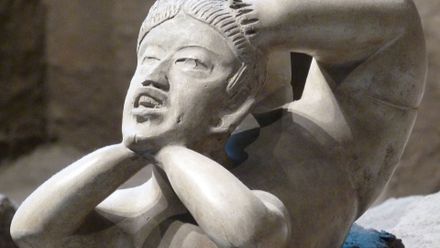
Surveying the geography, cultures and time span to be covered; discussing the organization of a study and its key concepts; learning and understanding important places, civilizations and events in Mesoamerica.
S1:E1 • Mar 6, 2015 • 31m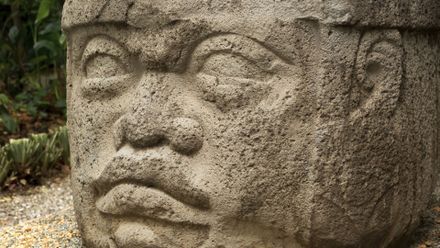
The Olmecs at the dawn of the Mesoamerican civilization; how the Olmecs represent one of only six cradles of early civilization in world history; how they were discovered; investigating three sites where they lived.
S1:E2 • Mar 6, 2015 • 32m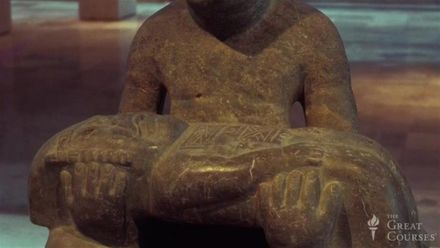
Delving into Olmec art; searching for clues about who the Olmecs were and what preoccupied them; the mysteries of giant sculpted heads, jaguar carvings and full-bearded figures depicting men who some think were foreigners.
S1:E3 • Mar 6, 2015 • 28m
Investigating other cultures that thrived in Mesoamerica at the time of the Olmecs, such as the Zapotecs in the Oaxaca Valley; probing intriguing archeological evidence that raises the question of who influenced whom.
S1:E4 • Mar 6, 2015 • 33m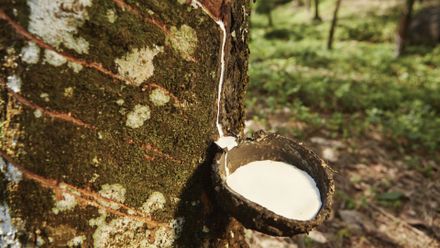
The botany of Mesoamerica and how it benefited not just the people of the region, but eventually the entire world; the native vegetation and its impact on global diet and culture, from corn and chocolate to vanilla and chili peppers.
S1:E5 • Mar 6, 2015 • 34m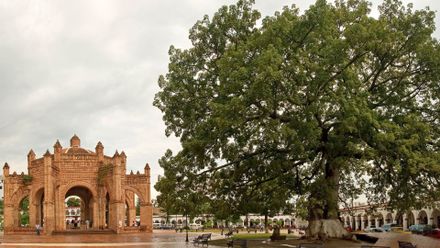
Tracing the origin of the Maya civilization to a dramatic change in the nature of public monuments; studying early Maya highland cities such as Izapa, with its amazing religious carvings; Kaminaljuyu and the dawn of the Classic Maya period.
S1:E6 • Mar 6, 2015 • 30m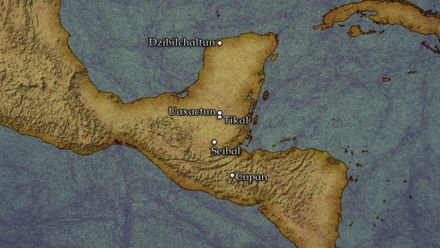
The Peten rainforest in northern Guatemala, where hundreds of Maya settlements lie hidden, including some of the oldest Maya cities ever built; the discovery and excavation of El Mirador, called the cradle of Maya civilization.
S1:E7 • Mar 6, 2015 • 30m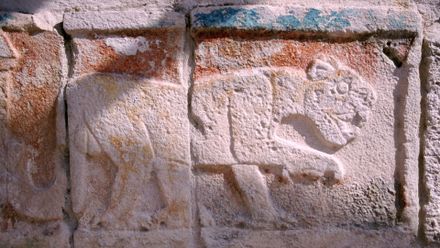
An ancient Maya story of creation that was translated from a secret copy by a Spanish priest in the year 1701; the Popol Vuh according to the surviving translation, as the original has long since disappeared.
S1:E8 • Mar 6, 2015 • 33m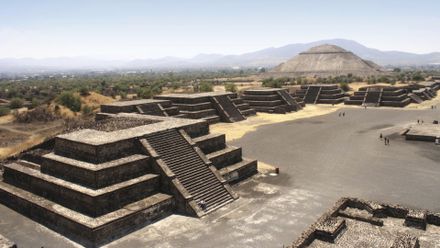
At its height around 400 AD, Teotihuacan is the most populous city in the western hemisphere; exploring this metropolis; focusing on its pyramids of the Sun and Moon; the role they play in the violent ritual life of the Classic Maya period.
S1:E9 • Mar 6, 2015 • 28m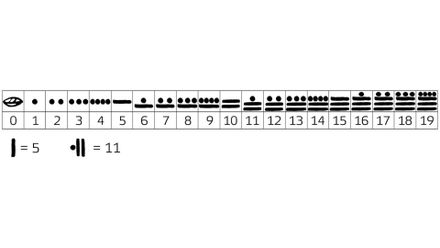
Studying the power of Maya mathematics, which is a positional, base-twenty system that lends itself to calculation and the expression of very large numbers; its use of the zero placeholder; solving problems the way the Maya do.
S1:E10 • Mar 6, 2015 • 31m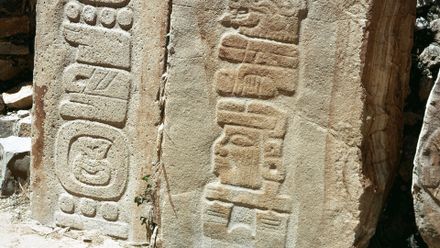
Unlocking the secrets of the Maya calendar, which is unlike any other in the world; it has nested cycles of time keyed to human, seasonal and astronomical patterns; looking back to their year zero; the special importance of the number 1,195,640.
S1:E11 • Mar 6, 2015 • 33m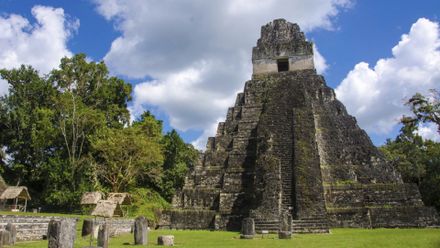
Charting the rise and fall of Tikal, which is one of the great Maya cities until it is mysteriously abandoned around 900 AD; overgrown by jungle, it sits forgotten for a thousand years; Tikal's tumultuous history; its dramatic rediscovery.
S1:E12 • Mar 6, 2015 • 31m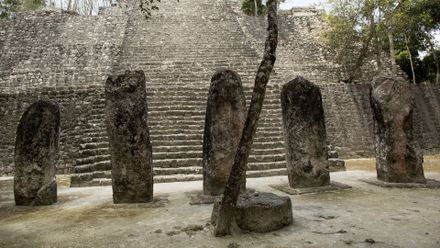
Maya hieroglyphs are an elaborate writing system, bearing messages that are a mystery until recent decades; Dr. Barnhart describes the detective work that goes into deciphering the script; his own studies with pioneer codebreaker Linda Schele.
S1:E13 • Mar 6, 2015 • 32m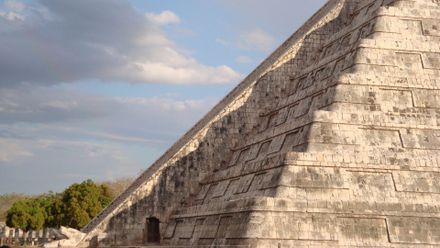
Discovering that many of the Maya's buildings are oriented to view the rising and setting of celestial bodies; others are designed to interact with sunlight, creating tricks of light and shadows; what these alignments may signify.
S1:E14 • Mar 6, 2015 • 32m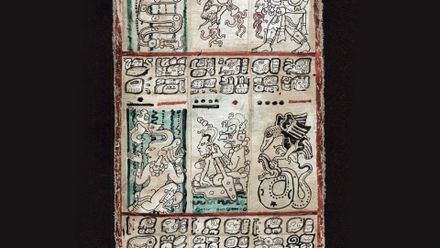
Studying the Dresden Codex, an ancient Maya book; its complex calculations of the motions of Venus and the timing of solar eclipses; turning to its pages on divination, which defy understanding until Dr. Barnhart contributes a key insight.
S1:E15 • Mar 6, 2015 • 31m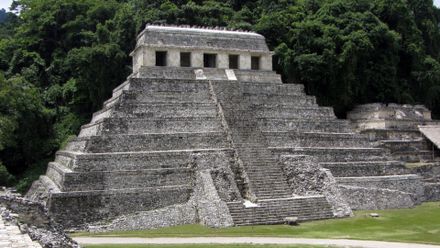
Discovering the tomb of Pakal the Great, the most renowned ruler of the city of Palenque; tracing the history of Palenque, which excels in architectural sophistication, hieroglyphic inscriptions and astronomical knowledge.
S1:E16 • Mar 6, 2015 • 31m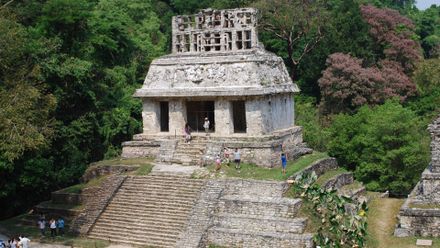
The Maya's art and architecture reflect a sophisticated understanding of geometry; investigating the geometric ratios that the Maya use over and over; how these relate to nature and the practices of other ancient civilizations.
S1:E17 • Mar 6, 2015 • 31m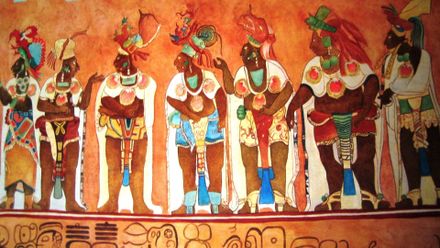
Learning about Maya life through their art; studying such works as the sarcophagus lid on the tomb of Pakal; according to a best-selling book, the lid depicts an ancient astronaut on a rocket ship; Dr. Barnhart decodes its real meaning.
S1:E18 • Mar 6, 2015 • 29m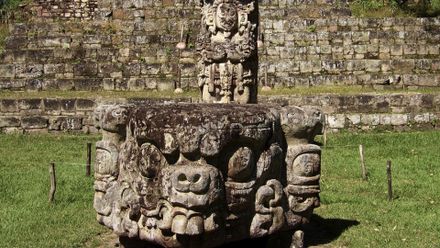
Visiting Copán, a preserved city on the edge of the Maya world; this illustrious site has been continuously excavated since the 19th century; Dr. Barnhart himself does fieldwork helping to unearth tombs of the city's most notable rulers.
S1:E19 • Mar 6, 2015 • 33m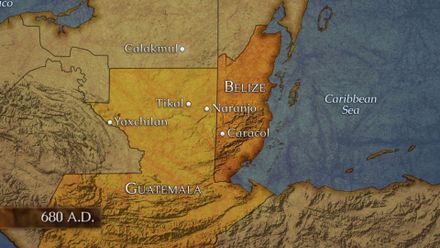
Maya hieroglyphs tell of a mysterious Snake Kingdom, which long eluded archaeologists; this city is Calakmul, located in the Petén rainforest of southern Mexico. Researchers are learning its long history of warfare with its militant neighbors.
S1:E20 • Mar 6, 2015 • 31m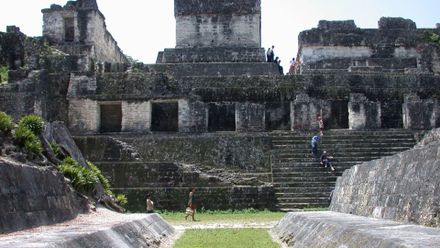
Created 3,500 years ago and still played today, the Mesoamerican ball game is the New World's first organized team sport; it re-enacts mythology, symbolizes war and pleases the gods; investigating where it is played; its rules and variations.
S1:E21 • Mar 6, 2015 • 29m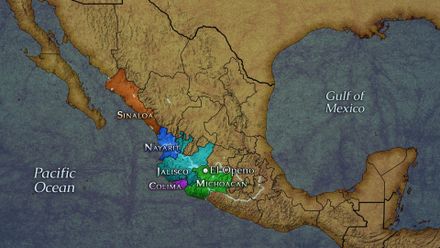
Surveying the cultures that flourished in west Mexico at the time of the Maya, their shaft tombs, pottery and other artifacts have links to South America. The today's Voladores "flying" traditional dance originated centuries ago in this region.
S1:E22 • Mar 6, 2015 • 31m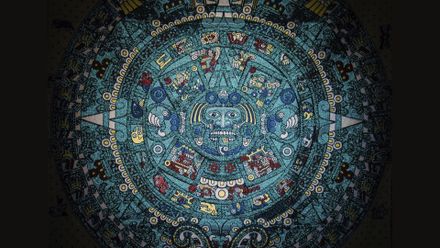
Why many Maya cities are abandoned in the 9th century A.D., bringing an end to the Classic period; examining theories that trace this collapse to war, drought, environmental damage or volcanic eruption; hearing Dr. Barnhart's solution to the puzzle.
S1:E23 • Mar 6, 2015 • 28m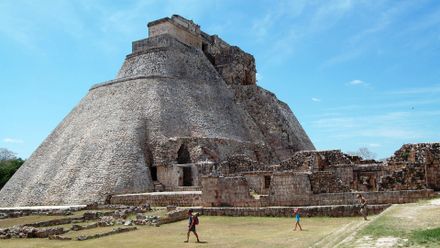
The Maya region goes through a transitional phase known as the Terminal Classic; studying the changes that emerge in new Maya cities, which see innovations in government, religion, art and architecture; focusing on the city of Uxmal.
S1:E24 • Mar 6, 2015 • 28m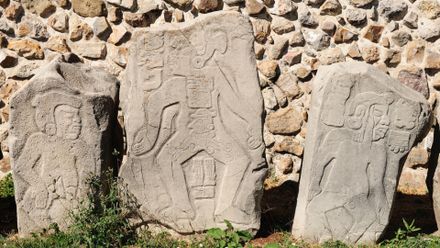
Journeying to Oaxaca to explore Monte Alban, one of the most beautiful ruins in all of Mesoamerica; charting the city plan, monuments and art of this center of Zapotec civilization, which dominated the Valley of Oaxaca for over a thousand years.
S1:E25 • Mar 6, 2015 • 30m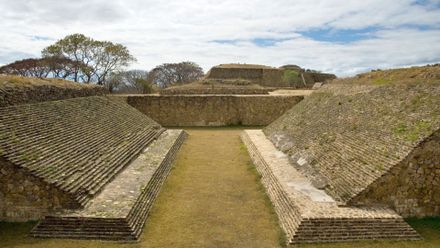
Tomb 7 at Monte Alban contains an extraordinary number of gold artifacts; learning about the Mixtec culture that produces these treasures, along with many other impressive objects such as illustrated codices of their history and mythology.
S1:E26 • Mar 6, 2015 • 29m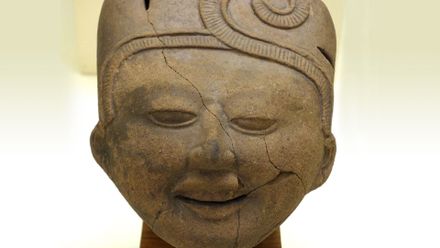
The Great Pyramid of Cholula is one of the astonishing feats of the Veracruz civilization, which flourished in the modern state of Veracruz during the Terminal Classic period, focusing on Cholula and El Tajín, two prominent cities of this culture.
S1:E27 • Mar 6, 2015 • 28m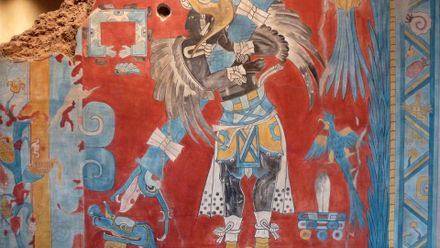
Viewing the murals at Cacaxtla in central Mexico; looking at the Temple of the Feathered Serpent in Xochicalco; like the Cacaxtla murals, it represents the influence of the vanished Teotihuacan and classic Maya cultures.
S1:E28 • Mar 6, 2015 • 30m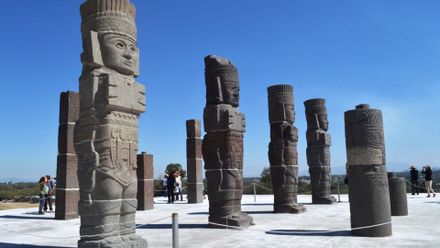
The Aztecs claim that their civilization descends from the mighty Toltecs; whether the Toltecs are as magnificent as the Aztecs believe; joining the hunt for this elusive empire, which is headquartered at the modest town of Tula.
S1:E29 • Mar 6, 2015 • 32m
Traveling to the ancient Maya city of Chichen Itza; focusing on its Toltec-Maya phase; the city's striking similarities to Tula; Dr. Barnhart presents a theory on what these connections imply about the history of Chichen Itza.
S1:E30 • Mar 6, 2015 • 32m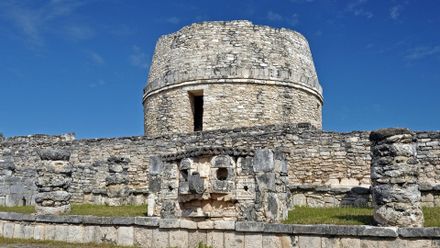
As Chichen Itza declines, a city named Mayapan rises to power; Mayapan copies Chichen Itza's buildings; it experiments with a more representative form of government; the architecture, social structure and daily life of this new regional capital.
S1:E31 • Mar 6, 2015 • 28m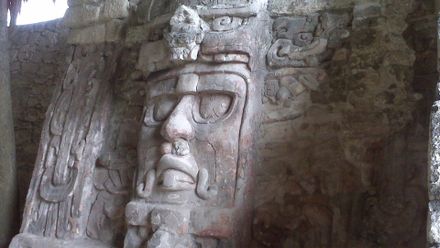
Delving into Mesoamerican religion; tracing the evolution of gods and religious practices from the Olmecs to the Maya and finally to the Aztecs; learning the names, roles and origins of the principal deities.
S1:E32 • Mar 6, 2015 • 32m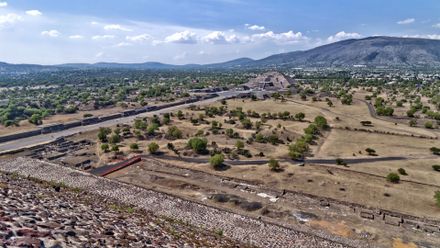
How a vagabond group of wanderers becomes the most powerful civilization in North America; the history of the Aztecs; looking behind their self-image to discover their likely beginnings; the secret of their political, economic and military success.
S1:E33 • Mar 6, 2015 • 28m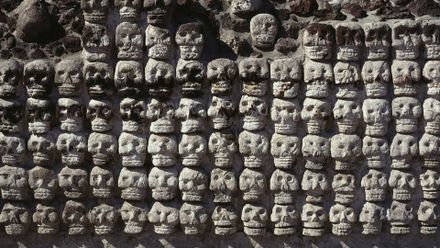
Seeing Tenochtitlan through the eyes of a visitor during the height of Aztec power, when the city's quality of life is unrivaled virtually anywhere in the world; modern Mexico City, built atop Tenochtitlan, preserves isolated ruins of the grandeur.
S1:E34 • Mar 6, 2015 • 30m
Entering the daily life of a typical Aztec by drawing on contemporary accounts by Spanish soldiers, priests and literate Aztecs; discovering the culture's social organization, marriage customs, public festivals and rituals of human sacrifice.
S1:E35 • Mar 6, 2015 • 32m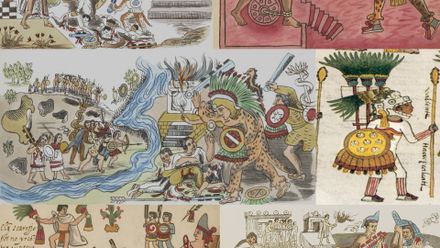
By the time of European contact, the Aztec empire was the most extensive in Mesoamerican history; studying the Aztecs' methodical approach to conquest and the structure of their empire, which was more like Alexander the Great's than imperial Rome's.
S1:E36 • Mar 6, 2015 • 29m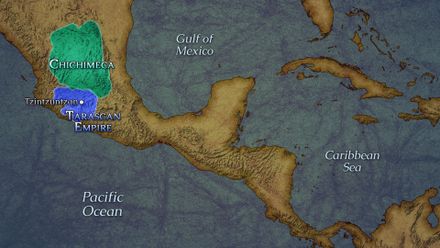
The Tarascans are second only to the Aztecs in the extent of their realm. Their empire and culture compare to Aztec civilization, with conflicting clues that point to the origin of the Tarascans, who consider themselves newcomers to Mesoamerica.
S1:E37 • Mar 6, 2015 • 30m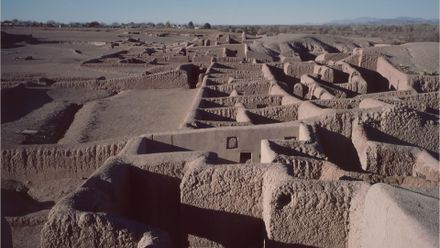
On the frontier between Mesoamerica and the American Southwest stands the ruin of Paquime; Dr. Barnhart offers a hypothesis on whether Paquime is connected with the Pueblo culture to the north or with the Aztecs and Tarascans to the south.
S1:E38 • Mar 6, 2015 • 31m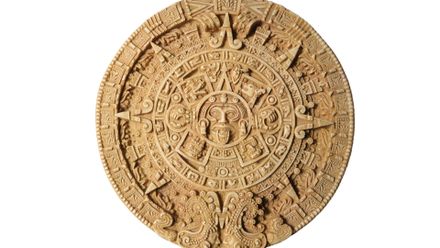
Touring some of the masterpieces of Aztec art, including the Calendar Stone and Stone of Tizoc; beholding the Statue of Coatlicue; poring over the Codex Mendoza, which is a beautifully illustrated history of the Aztec nation.
S1:E39 • Mar 6, 2015 • 28m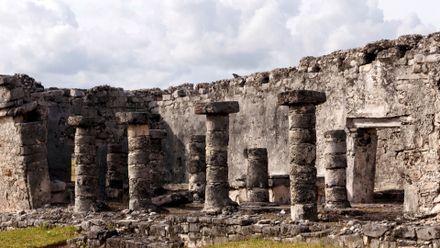
Archeologists call the last phase of pre-Columbian culture before the arrival of the Spanish the Late Post-Classic period; getting a snapshot of this waning era by visiting the ruins of Tulum, a Maya seaport that hints at a final Aztec incursion.
S1:E40 • Mar 6, 2015 • 30m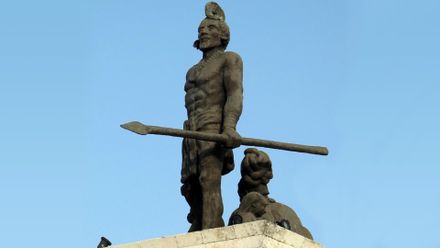
Reviewing the events that bring an expedition led by Christopher Columbus to the New World; tracing Columbus's later contact with Mesoamerica; following the arrival of Spanish conquistadors, including Vasco Núñez de Balboa and Hernán Cortés.
S1:E41 • Mar 6, 2015 • 28m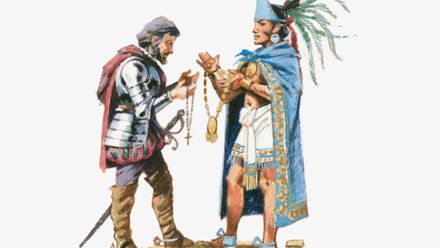
Hernán Cortés's defeat of the Aztec empire is one of the greatest military victories in history; how the conquistador manages this coup with just a few hundred Spanish troops, aided by native allies and a secret weapon he does not know he has.
S1:E42 • Mar 6, 2015 • 34m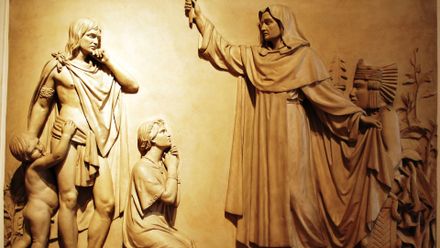
The Spanish turned their eyes to the rest of Mesoamerica; following the decades of military campaigns needed to subdue the Maya. This conquest included the wholesale destruction of Maya books and ritual objects by the Franciscan monk Diego de Landa.
S1:E43 • Mar 6, 2015 • 31m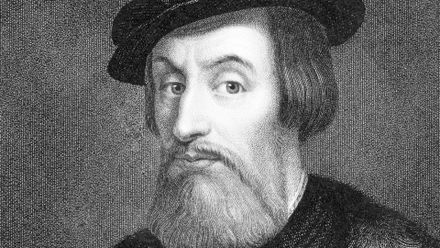
Studying the fortunes of the Itza, the last independent Maya kingdom; isolated between two Spanish-dominated areas, the Itza defend their domain for almost two centuries after the initial Spanish contact; the stratagem that vanquishes them in 1697.
S1:E44 • Mar 6, 2015 • 29m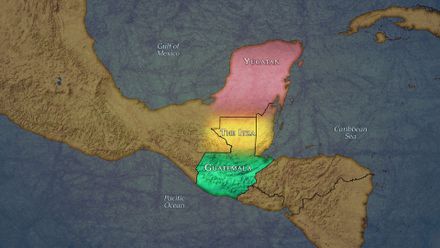
Tracing the resistance of the Maya to foreign domination, culminating in the Caste Wars of Yucatán; this pits native Maya people against the Mexican army; it lasts for over half a century; although Mexico prevails, the resistance continues.
S1:E45 • Mar 6, 2015 • 31m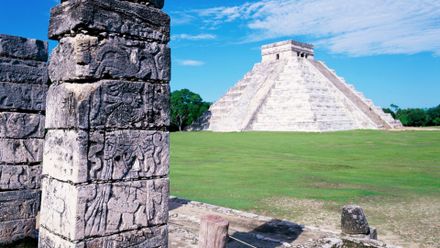
Exploring the many areas where native culture still survives in modern Mexico; focusing on the Zapotec, Huichol and Nahua peoples; learning that traditions that have survived for thousands of years are now threatened by various technologies.
S1:E46 • Mar 6, 2015 • 29m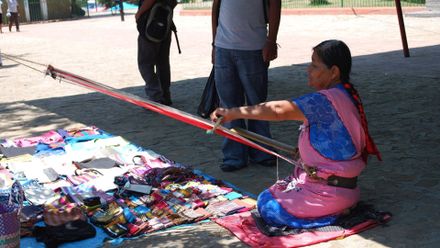
Despite centuries of assimilation and persecution, Maya culture still thrives; investigating its survival in Guatemala, where 80 percent of the population is Maya; Dr. Barnhart describes his own observations from extensive visits to the country.
S1:E47 • Mar 6, 2015 • 29m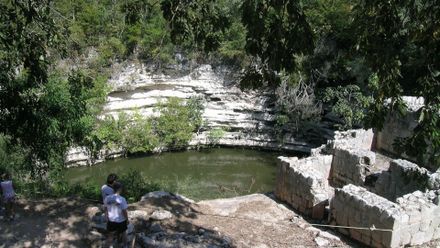
Exploring the current frontiers of Mesoamerican archeology; the most promising avenues for future research; many major cities are yet to be excavated or discovered; Dr. Barnhart closes by discussing the top three projects on his wish list.
S1:E48 • Mar 6, 2015 • 35mMore Like This
 TVPG • 1 season
 TVPG • 1 season
 TVPG • 1 season
 TVPG • 1 season
 TVPG • 1 season
 TVPG • 1 season
 TVPG • 1 season
 TVPG • 1 season
 TVPG • 1 season
 TVPG • 1 season
 TVPG • 1 season
 TVPG • 1 season
 TVPG • 1 season
 TV14 • 1 season
 TVPG • 1 season
 TVPG • 1 season
 TVPG • 1 season
 TVPG • 1 season
 TVPG • 1 season
 TVPG • 1 season