

Understanding Russia: A Cultural History
S1:E16 The October 1917 Revolution
The Bolshevik seizure of power during the October Revolution and its aftermath; the Bolsheviks' attempt to implement a utopian vision through the barrel of a gun; the revolution creates a system where violence is a typical tool of statecraft.
Already subscribed?
Sign in
The heart of Russian history and culture; examining many themes; the enormity of Russia's geography; its desire for power; its search for an organic cultural identity; exploring the beginnings of Russia in the land known as Rus'.
S1:E1 • Sep 14, 2018 • 31m
Ivan the Terrible's reign is a cultural and historical symbol of Russian leadership; how he uses cultural symbols to create a spectacle of autocracy; knowing to what extent he sets the standard for subsequent centuries of the Russian leadership.
S1:E2 • Sep 14, 2018 • 31m
Examining the relationship between the Russian state and the Russian Orthodox Church; assessing how religion, as practiced by the Russian masses, changes church institutions; the extraordinary influence of the Russian church on state culture.
S1:E3 • Sep 14, 2018 • 32m
Learning what makes the Russian ruler Peter deserving of the title Great; looking at how he transforms a minor power on the periphery of Europe into a formidable empire; how he spearheads transformations to create a new European capital.
S1:E4 • Sep 14, 2018 • 31m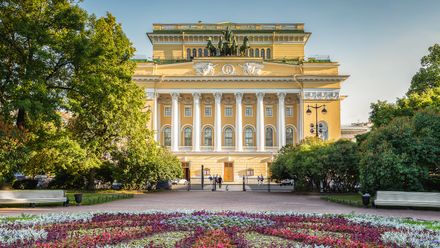
Modern Russian culture is born in the city of St. Petersburg, built on the shores of the Gulf of Finland; the dawning of the Russian Elizabethan Age, a time of extravagance and cultural energy; it produces wonders in architecture and opera.
S1:E5 • Sep 14, 2018 • 31m
The political alliance the Russian nobility forges with the Romanov regime brings Russian expansion; Professor Hartnett explores some fissures in the tsarist system that lead to popular resentment of the Russian nobility; ripe for revolution.
S1:E6 • Sep 14, 2018 • 31m
Russian popular culture can be described as a culture of sentimentality rooted in religious devotion and the agricultural calendar; exploring superstitions, folk tales and Stenka Razin's myth of rebellion; Russian baths, vodka and nesting dolls.
S1:E7 • Sep 14, 2018 • 30m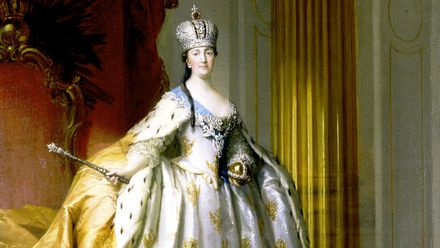
The powerful legacy of Catherine the Great, who extends the empire westward; she accomplishes what even Peter the Great has been unable to do; learning how Catherine fuels Enlightenment-inspired developments in politics, architecture and more.
S1:E8 • Sep 14, 2018 • 32m
To understand the poet Alexander Pushkin's literary significance, one must understand the Russia in which he lived, exploring how Pushkin intersects with significant events and trends, and how he created "Eugene Onegin" and "The Bronze Horseman".
S1:E9 • Sep 14, 2018 • 33m
The reign of Alexander II; learning why his promising reign ends so violently; whether Alexander II shapes developments in literature and culture; Russia's last great tsar inaugurates a violent confrontation between the state and its people.
S1:E10 • Sep 14, 2018 • 31m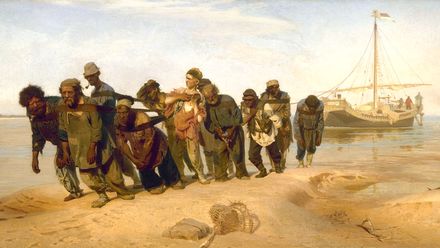
The age of artistic realism, whose artists are among the most celebrated in all of Russian culture; studying composers like Nikolai Rimsky-Korsakov, writers like Ivan Turgenev and painters like Ilya Repin; how artists find their muse.
S1:E11 • Sep 14, 2018 • 32m
By the end of the 19th century, Russian artists made Russian culture among the most exceptional; a closer look at the cheeky apathy of Anton Chekhov's plays, the Bolshoi Theater and the Ballets Russes; decorative arts from the House of Fabergé.
S1:E12 • Sep 14, 2018 • 32m
The tsars' development of a grand Eurasian empire; the commonalities Russian colonizers share with their Western counterparts; exploring incursions into Alaska and Siberia; examining the Napoleonic and Russo-Turkish wars; the policy of Russification.
S1:E13 • Sep 14, 2018 • 32m
The Romanov dynasty's rise to power in 1613 to its end in 1917; a tale filled with adventure, intrigue and heartbreak; this period sees the Decembrist revolution, the assassination of Tsar Alexander II and the machinations of Grigori Rasputin.
S1:E14 • Sep 14, 2018 • 32m
On Oct. 26, 1917, a new era in Russian history begins; the October Revolution; exploring the events that led up to this epoch-making moment; the devastation of World War I; the repressive rule of Tsar Nicholas II; the ideas of Vladimir Lenin.
S1:E15 • Sep 14, 2018 • 33m
The Bolshevik seizure of power during the October Revolution and its aftermath; the Bolsheviks' attempt to implement a utopian vision through the barrel of a gun; the revolution creates a system where violence is a typical tool of statecraft.
S1:E16 • Sep 14, 2018 • 31m
Professor Hartnett reveals how Lenin and the Communist Party aim to win over the Soviet people through a cultural battle; this battle is won through a militarized economy, propaganda radio, the renaming of streets and Lenin's secular sainthood.
S1:E17 • Sep 14, 2018 • 33m
The Bolsheviks attack Russia's traditional religious, sexual and social norms, examining how the Soviets build a new proletarian culture that has powerful ramifications for education, women, religion, folk songs and even cinema.
S1:E18 • Sep 14, 2018 • 33m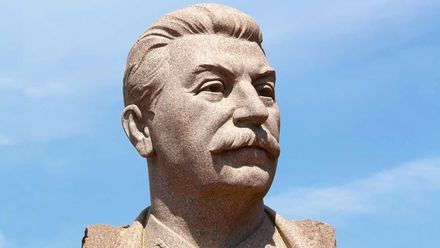
Stalin and his cadre aspire to transform everyday Russian life in ways that bring forth horrors; this is a period where the creative work and cultural influence of writers, composers and painters are suppressed by the mandates of Socialist Realism.
S1:E19 • Sep 14, 2018 • 31m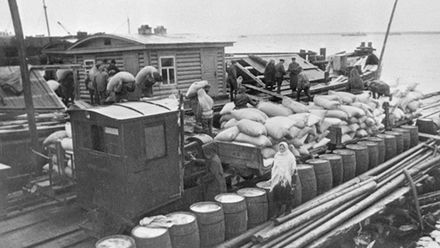
By the time World War II ends, the Soviets lose 27 million men, women and children; examining Soviet life during the Great Patriotic War; investigating how culture, including poetry and film, is used in service of the war effort.
S1:E20 • Sep 14, 2018 • 31m
Nikita Khrushchev emerges from the power struggles after Stalin's death; examining Khrushchev's liberalization of culture; exploring its limits; the continuation of anti-Semitism from Stalin's era, embraced under the guise of "anti-cosmopolitanism".
S1:E21 • Sep 14, 2018 • 33m
What everyday Soviet life is like during the Khrushchev and Brezhnev periods; how and where people live; how they spend their leisure time; answers to these and other questions reveal the degree to which politics affect apolitical areas of life.
S1:E22 • Sep 14, 2018 • 32m
Exploring the culture of intellectual dissent in Russian history, Professor Hartnett reveals how Russia's intellectuals and artists play a unique, important role in challenging the status quo of autocratic rule, often at the expense of their freedom.
S1:E23 • Sep 14, 2018 • 32m
On Dec. 25, 1991, the Soviet Union comes to an end; following the road that leads to this moment under the policies of perestroika and glasnost; concluding with a look at the rise of Vladimir Putin, a new popular leader.
S1:E24 • Sep 14, 2018 • 30m