

An Economic History of the World Since 1400
S1:E15 18th Century Agriculture and Production
The relationship between agriculture and production changed in part because of the increased concentration of labor in the cities.
Already subscribed?
Sign in
Differences between economic history and a history of economics; the primary concerns of current economic historians; watershed economic moments of the last 500 years; why modern economic history begins around 1400.
S1:E1 • Aug 28, 2016 • 31m
Examining the state of the global economy circa 1400, when Europe was at the bottom of the economic success ladder; the broad economic outlines of China, India, and the Islamic world; how Europe laid groundwork for the new capitalist world system.
S1:E2 • Aug 28, 2016 • 30m
How Europe's manorial societies helped develop the structures and institutions that would lead to the medieval commercial revolution; what daily life was like on a manor; medieval trade fairs; how wool-cloth production redefined northwestern Europe.
S1:E3 • Aug 28, 2016 • 30m
Examining how the Black Death shut down trade routes, lowered economic productivity, disrupted supply and demand, depressed land value and ultimately made the medieval feudal system untenable.
S1:E4 • Aug 28, 2016 • 31m
After the Black Death, urban revolts placed a strong emphasis on the rights of European peasants, which also led to the creation of guilds and monopolies that reflected the self-interests of those in control of urban power structures.
S1:E5 • Aug 28, 2016 • 29m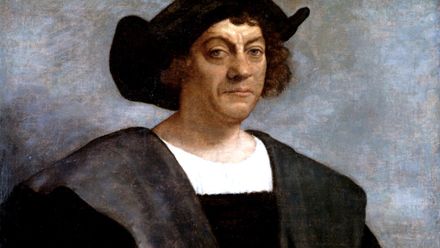
Examining what the age of exploration meant to the European economy; the voyages of explorers like Columbus and Magellan; why Asians didn't succeed at discovering a sea route to the West; new European commercial systems created in the Americas.
S1:E6 • Aug 28, 2016 • 31m
By 1500, the Iberian kingdoms of Portugal and Spain opened up immense possibilities for the backwater European economy to take the lead on the world stage; the landmark Treaty of Tordesillas; the link between slaves, gold, and spices.
S1:E7 • Aug 28, 2016 • 30m
The creation of large, state-sponsored joint-stock companies in the 17th century including the Bourse in Antwerp and the Exchanges in London and Amsterdam; importance of merchant manuals.
S1:E8 • Aug 28, 2016 • 30m
Plantations are the heart of several European colonies that rely on a mass-produced cash crop and an inexpensive labor force; how the Europeans solve labor supply problems; the origin of race-based slavery and reasons for its longevity.
S1:E9 • Aug 28, 2016 • 32m
According to Adam Smith, if labor creates value, then the amount of wealth in the world could increase by the collective efforts of a nation; the dawn of mercantilism redefines how rulers use economic policy to further the process of state building.
S1:E10 • Aug 28, 2016 • 29m
The British East India Company and the Dutch East India Company monopolized trade in parts of the world.
S1:E11 • Aug 28, 2016 • 29m
The printing press helped shape the modern economy of the Western world by making the rapid spread of information possible.
S1:E12 • Aug 28, 2016 • 31m
The industrial revolution of the 17th and 18th centuries changed consumption patterns and consumer behavior.
S1:E13 • Aug 28, 2016 • 31m
China and Europe's similar economic development between 1500 and 1800; reasons behind the industrialization of Europe and China's system; examining China's robust economy and the different economic trajectories of the two regions.
S1:E14 • Aug 28, 2016 • 31m
The relationship between agriculture and production changed in part because of the increased concentration of labor in the cities.
S1:E15 • Aug 28, 2016 • 31m
Learning about Great Britain's burgeoning textile trade and what it reveals about the nation's place at the heart of the Industrial Revolution; how inventors solve problems; the role of the steam engine in large-scale industrial production.
S1:E16 • Aug 28, 2016 • 30m
Western Europe learns how to make better and cheaper iron products during the Industrial Revolution; examining various processes from the smelting process of iron to Henry Cort's inventions and the construction of early iron-frame buildings.
S1:E17 • Aug 28, 2016 • 29m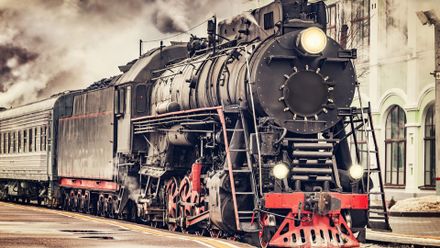
Professor Harreld introduces the power sources in use during the Industrial Revolution other than coal; examining the dramatic evolution of the steam engine as a new power source and its irrevocable impact on the progression of the world economy.
S1:E18 • Aug 28, 2016 • 29m
The Second Industrial Revolution is marked by the invention of interchangeable parts and a strong bond between science and technology.
S1:E19 • Aug 28, 2016 • 32m
Learning about how industrialization was a disruptive but helpful force; how it led to the breakdown of working-class families; its impact on the destabilization of wages, working conditions and the rise of class consciousness.
S1:E20 • Aug 28, 2016 • 30m
Cornelius Vanderbilt is a major influence on the Industrial Revolution, learning about his wealth and clout, the origin of his railroad empire that sparked the rise of modern management hierarchies and established the idea of a self-made individual.
S1:E21 • Aug 28, 2016 • 32m
Peasants' rights, new farm technology and science were factors in the transformation of Europe and America's agriculture.
S1:E22 • Aug 28, 2016 • 31m
19th-century innovations like railroads, steamships and telegraphs helped create the globally-connected world of the 21st century.
S1:E23 • Aug 28, 2016 • 31m
The population of Europe tripled by 1910, and cities like Paris experienced rapid urbanization and a large influx of immigrants.
S1:E24 • Aug 28, 2016 • 31m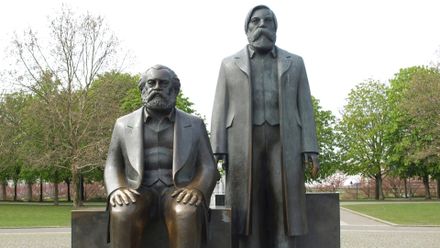
The Haymarket affair in Chicago illustrates the social tensions that were generated by industrialization.
S1:E25 • Aug 28, 2016 • 30m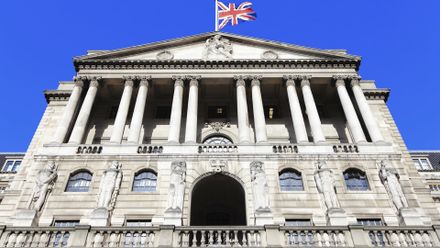
Banking revolutions in Europe; the development of insurance companies; central banks and economic environment.
S1:E26 • Aug 28, 2016 • 31m
In the late 19th century, the uneven economic development caused by industrialization leads some countries to resent the capitalist systems of the West.
S1:E27 • Aug 28, 2016 • 32m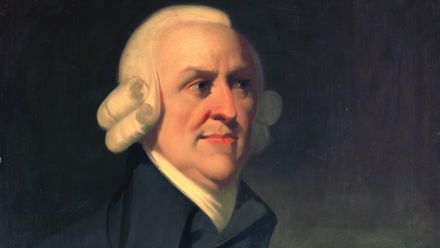
Examining free trade and its impact on various nations; how the public perceives the idea of free trade; reasons behind Great Britain's championing of free trade; the economic crisis of 1870 and its reversal of free-trade ideals.
S1:E28 • Aug 28, 2016 • 31m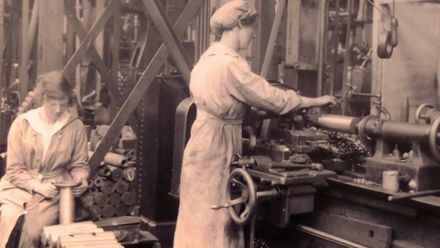
The economic importance of mail-order catalogs; the first department stores in Europe and the United States; the birth of modern advertising.
S1:E29 • Aug 28, 2016 • 31m
Europe and the United States gain control over much of Asia, Africa and the Middle East; examining the treaties that decide the fate of civilizations; theories of social Darwinism; nationalistic competition among industrialized countries.
S1:E30 • Aug 28, 2016 • 31m
World War I put an end to free-trade policies, and years that followed experienced declining production and a return to protectionism.
S1:E31 • Aug 28, 2016 • 31m
Professor Harreld explains the socialist ideology of Karl Marx and Friedrich Engels and socialism in the 20th century; learning about Marx's stages of development; how Lenin steers Russia on the path of war communism and Stalin's subsequent reign.
S1:E32 • Aug 28, 2016 • 31m
U.S. isolationism plays a part in the world's economic struggle to thrive in the years after World War I.
S1:E33 • Aug 28, 2016 • 32m
The macroeconomic theories of John Maynard Keynes changed the economic thinking of the early 20th century; tariffs and cartels affected free trade.
S1:E34 • Aug 28, 2016 • 31m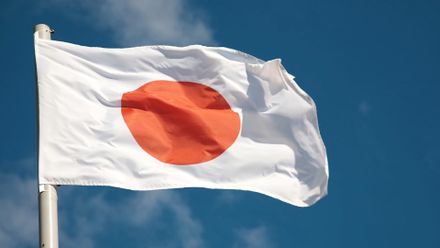
Japan controls Manchuria after the Great Depression, but it does little to solve Japan's economic problems.
S1:E35 • Aug 28, 2016 • 30m
The Marshall Plan was a major step to re-introducing the world to the free-trade policies prevalent before World War I.
S1:E36 • Aug 28, 2016 • 30m
Newly-disputed colonial territories experienced a battle between communist and capitalist economic systems after World War II.
S1:E37 • Aug 28, 2016 • 30m
The economies of Japan, Taiwan, Hong Kong, South Korea and Singapore were stronger than ever 10 years after World War II.
S1:E38 • Aug 28, 2016 • 31m
The origins of state-sponsored welfare; how the Great Depression generated the welfare state; the welfare race.
S1:E39 • Aug 28, 2016 • 31m
The golden age of American capitalism is the 1950s and 1960s; charting the development of American economic exceptionalism aided by the U.S. automobile industry; examining how American exceptionalism is shaped by the Cold War.
S1:E40 • Aug 28, 2016 • 32m
The developing countries of the Middle East begin to play a larger role in world economic affairs during the last quarter of the 20th century.
S1:E41 • Aug 28, 2016 • 30m
Economic events lead to the formation of the European Union in 1993 after the development of early supranational organizations such as the European Coal and Steel Community.
S1:E42 • Aug 28, 2016 • 30m
An overview of the political economy of foreign trade looks at various forms of international trade and some of the world's most influential trade organizations, such as NAFTA.
S1:E43 • Aug 28, 2016 • 31m
The Soviet Union collapses in 1989 due to the communist system's inability to offer a viable alternative to the market economy.
S1:E44 • Aug 28, 2016 • 30m
Some parts of the world have not experienced successful economic development; different types of foreign aid currently exist.
S1:E45 • Aug 28, 2016 • 31m
The new frontiers of the world economy; how India, by promoting its wealth of human capital, and China, by promoting foreign investment, become two of the world's great economic powers; considering the influence of political figures.
S1:E46 • Aug 28, 2016 • 33m
A look at how information exchange has changed over the last 500 years affected the way the world does business.
S1:E47 • Aug 28, 2016 • 30m
World economics continues to evolve as it faces a new phase of globalization and the reorientation of capitalism toward debt-driven growth.
S1:E48 • Aug 28, 2016 • 35m