

Introduction to Machine Learning
Taught by Professor Michael L. Littman of Brown University, this series teaches machine-learning programs; exploring how to write them in the Python programming language.
Already subscribed?
Sign in
Professor Littman's bird's-eye view of machine learning; an example involving medical diagnosis; a machine-learning program for a video green screen, used in television and film; contrasting it with a traditional program to solve the same problem.
S1:E1 • Nov 6, 2020 • 31m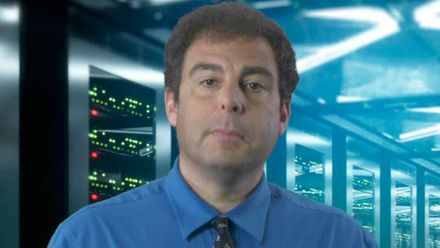
The examples use the Python programming language; Dr. Littman shows how to run programming examples from a web browser, which avoids the need to install the software on a computer; more processing power than is available on a typical home computer.
S1:E2 • Nov 6, 2020 • 17m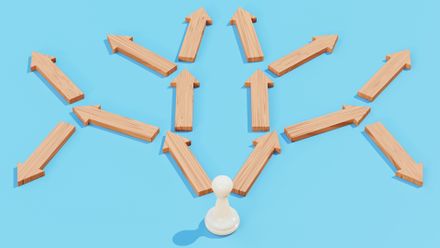
Whether machine learning beats a rhyming rule, taught in school, for determining whether a word is spelled with an ie or an ei; a decision tree is a convenient tool for approaching this problem; using Python to build a decision tree for predictions.
S1:E3 • Nov 6, 2020 • 31m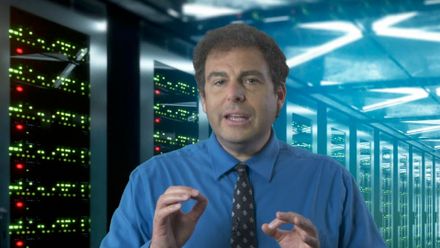
Learning from images and auditory information; tackling the task using a form of computation called a neural network; the characteristics of this powerful tool; comparing decision-tree and neural-network approaches to recognizing handwritten digits.
S1:E4 • Nov 6, 2020 • 30m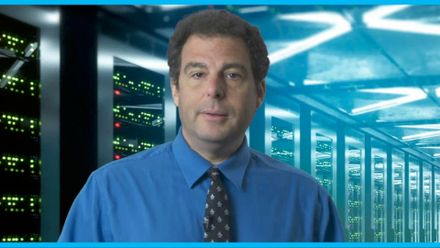
Taking a deeper dive into neural networks by working through a simple algorithm implemented in Python; the green-screen problem from the first episode; building a learning algorithm that places the professor against a new backdrop.
S1:E5 • Nov 6, 2020 • 29m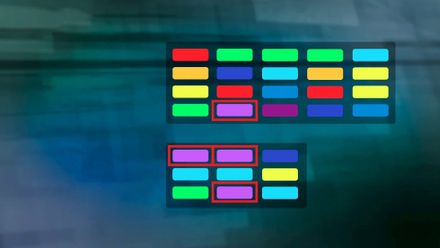
Understanding the content of an email to know that it is spam; machine learning does so with the Naive Bayes approach; a simple application of Bayes' theorem to a simplified model of language generation; going backward from effects to their causes.
S1:E6 • Nov 6, 2020 • 29m
Not knowing the best machine learning strategy to solve a new problem; a handy approach is a genetic algorithm; applying the principles of evolution to artificial intelligence, employing natural selection over many generations to optimize results.
S1:E7 • Nov 6, 2020 • 28m
The nearest neighbor algorithm works on the principle that adjacent elements in a dataset are likely to share similar characteristics; determining a comfortable combination of temperature and humidity in a house; the problem of malware detection.
S1:E8 • Nov 6, 2020 • 29m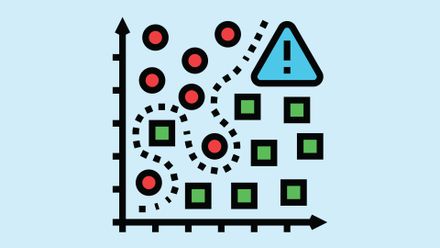
A risk common to the basic classes of machine learning is overfitting; a tendency to model training data too well, which can harm the performance on the test data; avoiding this problem; the difference between real signals and spurious associations.
S1:E9 • Nov 6, 2020 • 28m
The risks when applying machine learning algorithms to real-life problems; how survival statistics from a boating disaster can lead to false conclusions; cases that reveal hidden biases in the way data is interpreted; understanding what is happening.
S1:E10 • Nov 6, 2020 • 28m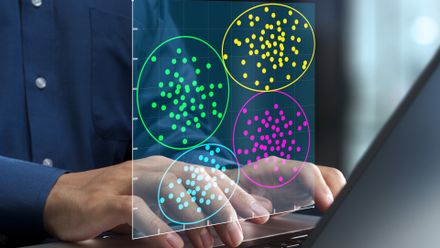
Seeing how a combination of labeled and unlabeled examples can be exploited in machine learning; specifically by using clustering to learn about the data before making use of the labeled examples.
S1:E11 • Nov 6, 2020 • 27m
Recommender systems are ubiquitous, from book to movie tips; three different approaches to this problem; Professor Littman's dilemma as an expert reviewer for conference paper submissions; Netflix's prize for an improved recommender algorithm.
S1:E12 • Nov 6, 2020 • 30m
Arthur Samuel popularizes the term machine learning for his checkers-playing program; the strategies for the board game Othello; today's algorithms for improving play; game-playing tactics for games which are a hotbed for machine-learning research.
S1:E13 • Nov 6, 2020 • 30m
The ImageNet challenge helps revive the field of neural networks through the deep learning method; the problem of image recognition and the steps deep learning takes to solve it; training a computer to distinguish foot files from cheese graters.
S1:E14 • Nov 6, 2020 • 27m
Debugging a deep-learning program; the software is a neural net classifier designed to separate pictures of animals and bugs; fixing the bugs in the code to find the bugs in the images; diagnostic steps relating to the representational space.
S1:E15 • Nov 6, 2020 • 30m
Problems of language processing; how a computer guesses the word one is typing and possibly misspelling; word embeddings define the meanings of words using vectors in high-dimensional space, a method that involves techniques from linear algebra.
S1:E16 • Nov 6, 2020 • 30m
How computers not only read a text but how they can also generate it; the current state of machine translation, which rivals the skill of human translators; how algorithms handle a game, where a given phrase is expanded piecemeal to create a story.
S1:E17 • Nov 6, 2020 • 29m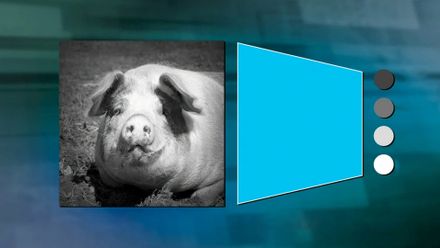
The creative process involving an idea generator and a discriminator; two approaches to image generation; a target image of a pig serves as the discriminator; in the second, the discriminator is programmed to identify a pig's general characteristics.
S1:E18 • Nov 6, 2020 • 29m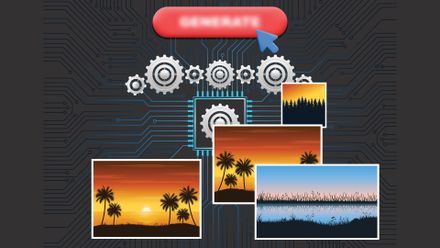
A new approach to image generation and discrimination pits both processes against each other in a generative adversarial network; the technique produces a new image based on a reference class; its potential for creativity and, unfortunately, fraud.
S1:E19 • Nov 6, 2020 • 30m
The problem of speech recognition and the quest, to program computers for this task; algorithms that machine learning uses to create today's speech recognition systems; training with deep-learning software; the prospect of conversing computers.
S1:E20 • Nov 6, 2020 • 30m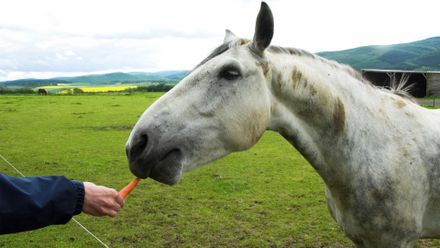
Machine learning can a give a demonstration, predict what one wants and suggest improvements; inverse reinforcement turns the tables on the following logical relation; if you are a horse and like carrots, go to the carrot.
S1:E21 • Nov 6, 2020 • 29m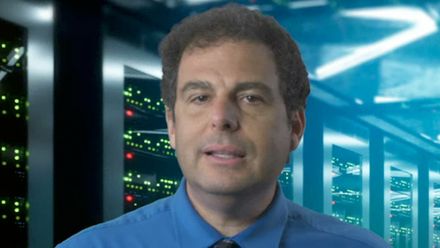
Causal inference is a new tool in machine learning; it addresses a key limitation of classical methods: the focus on correlation to the exclusion of causation; a problem of causation: the link between cigarette smoking and cancer; other cases.
S1:E22 • Nov 6, 2020 • 30m
The deep-learning revolution that takes place around 2015, conquering worries about overfitting data due to the use of too many parameters; the breakthrough that paves the way for deep networks that can tackle hard, real-world learning problems.
S1:E23 • Nov 6, 2020 • 30m
Machine learning is a cause and a cure for privacy concerns; two notorious cases where de-identified data is unmasked; the role of a computer security analyst; pattern recognition and compromised medical records; strategies for thwarting an attack.
S1:E24 • Nov 6, 2020 • 31m
Meta-learning uses algorithms that learn how to learn, making it possible to solve otherwise unmanageable problems; one approach reasons about discrete problems using satisfiability solvers; another allows programmers to optimize continuous models.
S1:E25 • Nov 6, 2020 • 34mMore Like This
 TV14 • 1 season
 TVPG • 1 season
 2025 • 47mDetails
 TVPG • 1 season
 TVPG • 1 season
 TVPG • 2 seasons
 TVPG • 1 season
 TVPG • 1 season
 TVPG • 1 season
 TVPG • 1 season
 TVPG • 1 season
 TVPG • 1 season
 TVPG • 1 season
 TVPG • 1 season
 TVPG • 1 season
 TVPG • 1 season
 TVPG • 1 season
 TVPG • 1 season
 TVPG • 1 season
 TVPG • 1 season