

Music as a Mirror of History
S1:E19 Holst: Ode to Death (1919)
Gustav Holst's "Ode to Death" responds to the suffering of World War I; the conflict's underlying causes; a clash between archaism and modernity; the melding of Holst's music with Walt Whitman's elegiac text; Holst's impression of loss and waste.
Already subscribed?
Sign in
How Thomas Morley's madrigals engage with English self-perception and myth; how Leoš Janáček and Frédéric Chopin respond to political events; how magnified emotions feed artistic creation; how artists convert terrible human experiences into art.
S1:E1 • Jul 22, 2016 • 47m
How music and history intersect in the career of George Frideric Handel; the circumstances in which George Ludwig of Brunswick-Lüneburg becomes King George I of England; his patronage of Handel, whose success leads to the creation of masterpieces.
S1:E2 • Jul 22, 2016 • 44m
How European events shape Mozart's music and personal circumstances; the threat of the Ottoman Empire; the Turkish vogue in European art and fashion; the Turkish elements in Mozart's opera, "The Abduction from the Harem"; Mozart's decline and death.
S1:E3 • Jul 22, 2016 • 44m
How events beginning in revolutionary Paris inspire the content of Haydn's "Mass in the Time of War"; the French Revolution's drama; the rise of Napoleon; the threat his war machine poses to Vienna; the character of Haydn's mass within this context.
S1:E4 • Jul 22, 2016 • 44m
How Beethoven identifies with Napoleon; the clashes after the French Revolution; the military conflicts between Napoleon and the Habsburg empire; the meanings in Beethoven's "Farewell Sonata", which depicts the departure of the composer's patron.
S1:E5 • Jul 22, 2016 • 45m
Tracing Beethoven's animosity toward the French; the unfolding debacle of Napoleon's Peninsular War against Portugal and Spain; how Beethoven comes to compose "Wellington's Victory", which is both a success and an aberration in his musical output.
S1:E6 • Jul 22, 2016 • 46m
Tracing the evolution of Paris from the 17th century to the 19th century; how the city becomes a magnet for artists and intellectuals and the spawning ground for European revolutions; the political events that inspire Berlioz's marching song.
S1:E7 • Jul 22, 2016 • 44m
A failed political insurrection in Warsaw leaves a mark on the music and spirit of Frédéric Chopin; the history of invasions, "partitions" and occupations of Poland; Chopin's early life; the November Uprising that fuels the writing of his "étude".
S1:E8 • Jul 22, 2016 • 46m
The origins of the storyline of Glinka's "A Life for the Tsar" in Russia's Time of Troubles; Glinka's role in a community dedicated to bringing Russian art and literature to prominence; how "A Life for the Tsar" embodies Russian pride and patriotism.
S1:E9 • Jul 22, 2016 • 43m
The story behind Vienna's "Radetzky March"; the triumphs and tribulations of the Habsburg dynasty; the 1848 rebellion in which Johann Strauss Senior and Junior take opposing sides; Strauss Senior's celebration of the Field Marshal Count Radetzky.
S1:E10 • Jul 22, 2016 • 45m
Exploring the 19th-century Hungarian nationalist movement as a prelude to a fateful episode in the life of Johannes Brahms; how Brahms's meeting with Hungarian violinist Eduard Remenyi ignites the composer's love affair with Hungarian gypsy music.
S1:E11 • Jul 22, 2016 • 42m
Louis Moreau Gottschalk's early life in New Orleans; the cultures that shape his music; his career as a touring composer-piano virtuoso; his work for the North during the Civil War; the events that spark the creation of his piano piece, "The Union".
S1:E12 • Jul 22, 2016 • 47m
In the creation of his opera, "Nabucco", Giuseppe Verdi plays a key role in the movement for Italian unification; the 19th-century rebellions that led to wars of independence; how "Nabucco" came to be identified with Italy's quest for nationhood.
S1:E13 • Jul 22, 2016 • 45m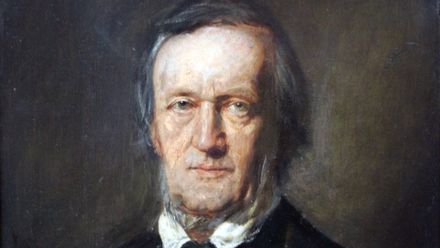
Wagner's "The Ring" functions as a critique of 19th-century European society; Wagner's embrace of anti-capitalist rhetoric; how the characters of "The Ring" represent the ills of industrial societies; Wagner's vision of a new "age of man".
S1:E14 • Jul 22, 2016 • 46m
The industrial and economic rise of the United States in the 19th century; the Chicago Columbian Exposition of 1893; the participation of Antonín Dvořák; the impact of Dvořák's residency in the U.S., which produces his symphony, "From the New World".
S1:E15 • Jul 22, 2016 • 47m
How Mily Balakirev personifies the quest for a Russian musical aesthetic; how this quest reflects a conflict between pro-Western and "Slavophile" schools of thought in Russia; how Balakirev influences a group of young, influential composers.
S1:E16 • Jul 22, 2016 • 48m
The life and music of composer Leos Janacek; the history of German-Czech relations dating from the 17th century; the Czech national revival of the 19th century; how the events of a political demonstration in 1905 inspire Janacek's "Piano Sonata 1".
S1:E17 • Jul 22, 2016 • 47m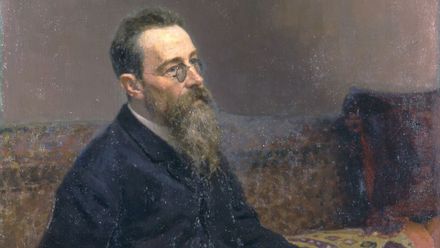
Revealing Rimsky-Korsakov's "The Golden Cockerel" as political commentary; studying the opera's fairy-tale plot in parallel with two events in Russian history; key excerpts from the opera; how its narrative works as an indictment of Tsarist Russia.
S1:E18 • Jul 22, 2016 • 45m
Gustav Holst's "Ode to Death" responds to the suffering of World War I; the conflict's underlying causes; a clash between archaism and modernity; the melding of Holst's music with Walt Whitman's elegiac text; Holst's impression of loss and waste.
S1:E19 • Jul 22, 2016 • 48m
Assessing Berg's operatic masterwork; investigating the aftermath of World War I in Germany; its imprint on the opera; how Berg's own wartime experience links him with the life of Franz Wozzeck, the protagonist of the opera.
S1:E20 • Jul 22, 2016 • 45m
The terrors of Soviet Russia's Stalinist regime; uncovering how many people, including Shostakovich, are forced to lead double lives; the composition of "Symphony No. 13" during the post-Stalin "Thaw"; the use of poet Yevgeny Yevtushenko's texts.
S1:E21 • Jul 22, 2016 • 47m
Tracing the Depression-era movement of populism in American art; how Copland's "Symphony No. 3" captures the mood of the country following three victories; how the artistic politics of the postwar decades relegate the Symphony to temporary obscurity.
S1:E22 • Jul 22, 2016 • 50m
The atrocities committed against Poland during World War II by Hitler's and Stalin's regimes; Henryk Gorecki's life in wartime and in the repressed era that follows; hearing the "Symphony of Sorrowful Songs" that expresses the Polish experience.
S1:E23 • Jul 22, 2016 • 49m
George Crumb's anti-war string quartet; tracing its writing in the political climate that leads the U.S. into the Vietnam War; how the attempted policy of "containment" crumbles; how Crumb captures the heartbreak of this event with "Black Angels".
S1:E24 • Jul 22, 2016 • 51m