

Plant Science: An Introduction to Botany
S1:E18 The Complexity of Grasses and Grasslands
The grassland ecosystem covers one-third of the land area of the planet; how grasses have developed unusual adaptations related to their specific mechanism of photosynthesis; the role of grasses in the development of human society.
Already subscribed?
Sign in
While every child knows the difference between an elephant and a giraffe, few people of any age can name different plants; learning about various species of plants that provide countless resources.
S1:E1 • Apr 28, 2017 • 30m
Scientists are discovering various similarities between plants and humans; humans, as well as plants, thrive in moderate temperatures, have a circadian rhythm of rest and require water for life; learning about the hearing developed by plants.
S1:E2 • Apr 28, 2017 • 31m
A group of plants called bryophytes develop two special adaptations that allow them to inhabit dry land; the environmental and commercial importance of these plants; how ancient species combat the threat of modern competitors.
S1:E3 • Apr 28, 2017 • 35m
Botanists still struggle to unravel the full evolutionary history of ferns, their staggering reproductive and colonization power, and how ferns are found in low-light and bright-light environments from the arctic regions to the tropics.
S1:E4 • Apr 28, 2017 • 30m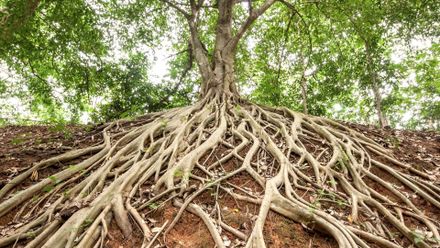
The root is an important part that is necessary for the survival of the plant; how the roots physically support the plant, absorb water and minerals and store carbohydrates while relying on symbiosis with bacteria and fungi.
S1:E5 • Apr 28, 2017 • 32m
Learning about how the pressure flow hypothesis models the movement of sugars through a plant's phloem and xylem; the structures that determine whether an organism will grow in height or girth; how the stem is also a site of photosynthesis.
S1:E6 • Apr 28, 2017 • 30m
How plants use hormones to determine when to shed their leaves or grow new ones and the similarities with human development; learning about the hormones that affect leaf growth and abscission; Charles Darwin's discovery.
S1:E7 • Apr 28, 2017 • 32m
How green plants generate their mass by synthesizing food from carbon dioxide and water via the energy from sunlight with the help of appropriate enzymes; how photosynthesis separates plants from animals.
S1:E8 • Apr 28, 2017 • 31m
Learning about the pigments that interact with sunlight to serve as chemical clocks for flowering plants; the roles played by messenger RNA and temperature and their impact on climate change.
S1:E9 • Apr 28, 2017 • 32m
The effectiveness of spores for plant reproduction and the evolution of alternatives; seeds, which are packages of embryonic roots, stems and leaves, lie dormant until conditions are right; learning about cycads, ginkgos and gnetophytes.
S1:E10 • Apr 28, 2017 • 29m
Conifers have adapted to snow, wind, fire and low-nutrient soils; learning about the unique properties of conifers that allow them to claim the largest forest on Earth; conifers are the source of various cancer drugs.
S1:E11 • Apr 28, 2017 • 30m
The evolution of flowering plants and how they displaced other species; the different types of flowering plants; learning about the unique reproductive mechanisms that led to this explosion of speciation in such a relatively short time.
S1:E12 • Apr 28, 2017 • 33m
Learning about the special evolutionary relationship between flowers, insects and mammals; how the morphology, color and scent of flowers relate to the body shape and sense organs of animals due to their coevolution.
S1:E13 • Apr 28, 2017 • 31m
Learning about the difference between nuts, fruits and seeds; why so many foods carry misleading common names; the similarities between humans and fungi.
S1:E14 • Apr 28, 2017 • 30m
The evolution of the seed as an advantage for land plants; how flowering plants produce a fruit around that seed, aiding in germination and dispersal; learning about the ways in which seeds are dispersed.
S1:E15 • Apr 28, 2017 • 30m
How seagrasses, mangroves and other aquatic plants tolerate low light levels, anaerobic and nutrient-poor sediments; their benefits to surrounding ecosystems and their provision of habitats and protection for animals.
S1:E16 • Apr 28, 2017 • 30m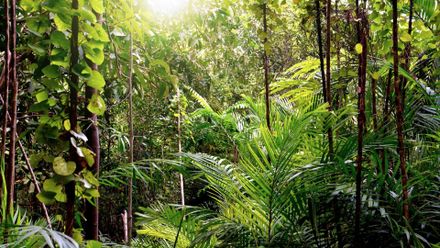
Tropical regions are the most diverse ecosystems that house shade-adapted plants and epiphytes; learning about the ways in which bromeliads, orchids and lianas survive in this diverse ecosystem.
S1:E17 • Apr 28, 2017 • 30m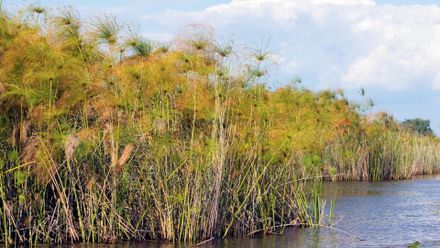
The grassland ecosystem covers one-third of the land area of the planet; how grasses have developed unusual adaptations related to their specific mechanism of photosynthesis; the role of grasses in the development of human society.
S1:E18 • Apr 28, 2017 • 29m
The ecological advantages of shrubs; how shrubs are able to communicate through volatile organic compounds released by the leaves; how they prevent other plants from growing nearby.
S1:E19 • Apr 28, 2017 • 28m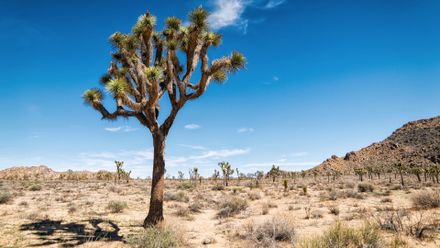
Desert plants have adapted to a lack of water and developed an alternative pathway to photosynthesis by storing carbon dioxide at night to use during the day to prevent daytime water loss.
S1:E20 • Apr 28, 2017 • 32m
Trees are a wonderful example of convergent evolution; how trees have adapted to weather conditions; how the tree roots of some trees can forage through the soil for nutrients.
S1:E21 • Apr 28, 2017 • 31m
The growing season of alpines and the weather conditions in which they survive; how the unique rosette and cushion morphologies allow alpine plants to thrive; how heliotropism aids in pollination.
S1:E22 • Apr 28, 2017 • 29m
Some plant species eat animals while others possess poison-injecting hairs; learning about the invasive species that have taken over millions of acres and hampered species diversity, animal habitat, and entire economic systems.
S1:E23 • Apr 28, 2017 • 30m
Genetically modified organisms are lauded for solving numerous agricultural problems and reviled for other reasons; learning about future possibilities and the dilemmas posed by this type of plant science.
S1:E24 • Apr 28, 2017 • 40m