

Understanding the Human Body: An Introduction to Anatomy and Physiology
S1:E7 Nervous System-Anatomy of the Brain
Examining the anatomy of the brain—its principal components and its main anatomical divisions.
Already subscribed?
Sign in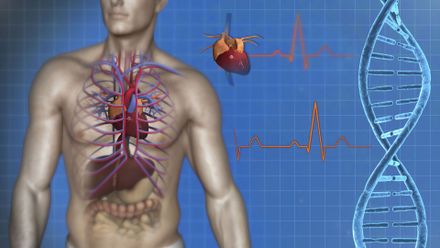
Examining the anatomy of the fist-sized muscle that pumps blood through the body.
S1:E1 • Jan 26, 2004 • 47m
Examining the functioning of the cardiac cycle and the heart's conduction system.
S1:E2 • Jan 26, 2004 • 46m
Identifying and describing the structure of the vessels that form vessel networks.
S1:E3 • Jan 26, 2004 • 45m
Studying the physiology of the large blood vessels and how they control blood flow.
S1:E4 • Jan 26, 2004 • 45m
Reviewing the anatomy of the structures through which air enters the body and passes into the lungs.
S1:E5 • Jan 26, 2004 • 45m
Exploring the four areas where respiration occurs and the consequences of blocking this respiration.
S1:E6 • Jan 26, 2004 • 46m
Examining the anatomy of the brain—its principal components and its main anatomical divisions.
S1:E7 • Jan 26, 2004 • 45m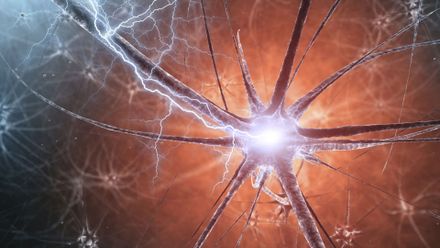
Reviewing the functions of the nervous system and of nervous tissue.
S1:E8 • Jan 26, 2004 • 45m
Examining the anatomy and functions of the spinal cord.
S1:E9 • Jan 26, 2004 • 46m
Examining the autonomic nervous system, which controls the body's basic functions.
S1:E10 • Jan 26, 2004 • 45m
Examining the anatomy of the eyeball, its functions and the photoreceptors of the retina.
S1:E11 • Jan 26, 2004 • 45m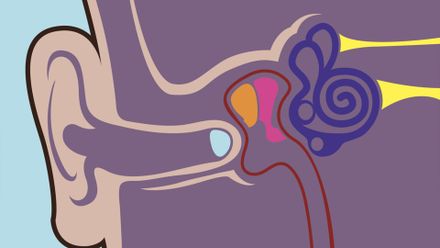
Examining the anatomy of the external ear, the eardrum, the tympanic cavity and the labyrinth.
S1:E12 • Jan 26, 2004 • 45m
Exploring memory and brain pathology and providing information about anesthesia and pain.
S1:E13 • Jan 26, 2004 • 46m
Learning about the structures through which food passes before its conversion into nutrients.
S1:E14 • Jan 26, 2004 • 46m
Exploring the processes of digestion, absorption of nutrients and excretion of waste products.
S1:E15 • Jan 26, 2004 • 45m
Examining the anatomy of the pancreas, liver and gallbladder.
S1:E16 • Jan 26, 2004 • 45m
After reviewing the exocrine pancreas, then turn to the liver and the functions it performs.
S1:E17 • Jan 26, 2004 • 45m
Exploring the anatomy of the organs in which nutrients and water are extracted for use by the body.
S1:E18 • Jan 26, 2004 • 44m
Examining the physiology of the small and large intestines and the rectum.
S1:E19 • Jan 26, 2004 • 45m
Examining the differences between the endocrine and nervous systems and the properties of hormones.
S1:E20 • Jan 26, 2004 • 46m
Reviewing the four cell types composing the endocrine pancreas and insulin-related disorders.
S1:E21 • Jan 26, 2004 • 45m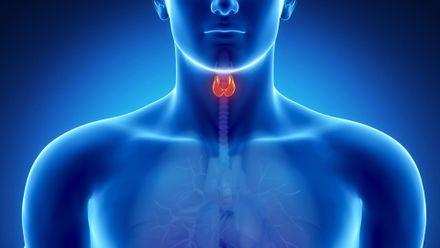
Examining the thyroid gland and the parathyroid glands.
S1:E22 • Jan 26, 2004 • 45m
Examining the anatomy of the kidneys, the ureters and the bladder.
S1:E23 • Jan 26, 2004 • 45m
Focusing on the physiology of the nephron and how it filters many of the blood's components.
S1:E24 • Jan 26, 2004 • 45m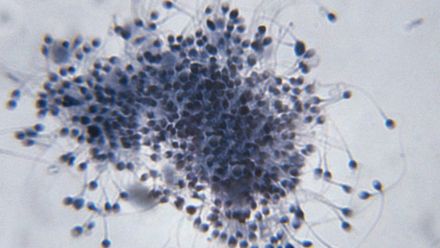
Examining the gross anatomy of the male reproductive system.
S1:E25 • Jan 26, 2004 • 45m

Examining the physiology of genetic inheritance.
S1:E27 • Jan 26, 2004 • 45m
Examining the physiology and physics of the muscles.
S1:E28 • Jan 26, 2004 • 44m
Examining how muscles operate as levers in conjunction with the bones.
S1:E29 • Jan 26, 2004 • 45m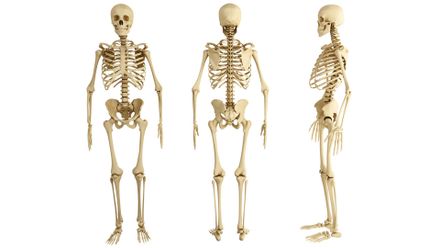
Examining musculoskeletal systems divisions and functions.
S1:E30 • Jan 26, 2004 • 46m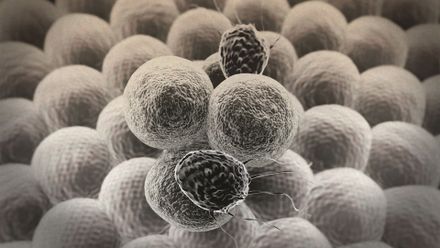
Examining the body's defense mechanisms against invaders.
S1:E31 • Jan 26, 2004 • 45m
Learning how the fragility that enables evolution also risks cancer mutations.
S1:E32 • Jan 26, 2004 • 47m