

Law School for Everyone
S1:E37 The Calamitous World of Tort Law
Starting a tour of torts with an exam question Professor Cheng gives to his students; one that introduces the history, complexity and oddities of this aspect of law; learning the behaviors tort law expects; the harms one can be held responsible for.
Already subscribed?
Sign in
Using a 1963 Supreme Court case, Gideon v. Wainwright, as a window into the relationship between litigation and the American legal system; exploring why this particular system is adopted; why one teaches law in America the way one does.
S1:E1 • Sep 22, 2017 • 32m
Approaching legal doctrine actively and critically; Professor Shadel teaches how to read cases with an eye for particular concepts every good lawyer must keep in mind; the role of precedent; inductive and deductive reasoning skills; use of analogies.
S1:E2 • Sep 22, 2017 • 30m
All lawyers have responsibilities to their clients and to the integrity of the justice system; the bounds of a lawyer's responsibility; knowing what is confidential; considering challenges arising in the State of Florida v. George Zimmerman.
S1:E3 • Sep 22, 2017 • 31m
The case of George Zimmerman; exploring the nature of trial strategy that takes place away from the jury's eyes; learning how lawyers operate before a trial; how a jury is selected; examining how media coverage impacts the courtroom proceedings.
S1:E4 • Sep 22, 2017 • 30m
A powerful opening statement requires credibility, persuasion and logic; using the George Zimmerman and O.J. Simpson trials as case studies; going inside the art of crafting palpable opening statements that grab the jury's attention.
S1:E5 • Sep 22, 2017 • 31m
Direct examination is popularized by countless TV crime dramas; learning how it works in a real courtroom; knowing how lawyers figure out whom to put on the witness stand; questions they should ask; preparing witnesses for their day in court.
S1:E6 • Sep 22, 2017 • 29m
During a trial, any lapse in a lawyer's attention could be costly; entering the task of voicing objections; looking at some common types of evidentiary issues that might call for objections; learning why lawyers get only one shot at raising one.
S1:E7 • Sep 22, 2017 • 29m
Learning why innocent people are sometimes convicted of crimes they did not commit; often, it is because a jury is persuaded by problematic evidence; exploring how lawyers navigate troubled legal waters; uncovering three kinds of flawed evidence.
S1:E8 • Sep 22, 2017 • 30m
Exploring how lawyers cross-examine a witness without losing control and without offending the jury; learning tips for effective cross-examination; studying the cross-examination skills of attorney Roy Black; the process of conducting impeachments.
S1:E9 • Sep 22, 2017 • 30m
Closing arguments are a chance for lawyers to connect all the dots for the jury; studying one powerful example of a successful closing argument; Johnnie Cochran's on behalf of O.J. Simpson; reviewing things a lawyer should not do when closing a case.
S1:E10 • Sep 22, 2017 • 29m
People often criticize the system of appellate review in the United States; learning how appellate courts operate; studying how lawyers file appellate briefs or make oral arguments for an appeal; Professor Shadel guides through the appellate process.
S1:E11 • Sep 22, 2017 • 30m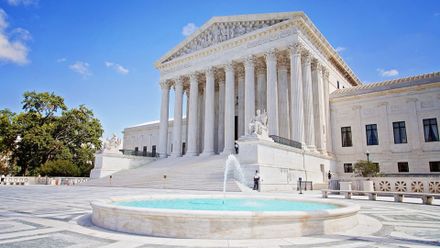
A case argued before the Supreme Court of the United States is significant; considering the history and evolution of the Supreme Court; gaining insights into how political and ideological dynamics within the Court affect the cases brought before it.
S1:E12 • Sep 22, 2017 • 34m
To understand how criminal law works, one has to understand what a crime is; the purposes of criminal law; knowing why textualism is important to distinguish the bygone era of common-law crimes from those of the 21st century; defining a crime.
S1:E13 • Sep 22, 2017 • 36m
Exploring the basic requirement of mens rea; learning how criminal intent is traditionally defined; the relationship between malice and motive; what happens when a defendant claims to lack a guilty mind; criminal liability without fault.
S1:E14 • Sep 22, 2017 • 31m
According to Professor Hoffmann, homicides are unique crimes; examining the pyramid of homicidal crimes, including involuntary manslaughter, second-degree murder and first-degree murder; considering real-world examples; a case of assisted suicides.
S1:E15 • Sep 22, 2017 • 32m
Understanding how criminal law tries to balance between the rights of the threatened and those who are threats; issues such as the retreat doctrine, the battered spouse syndrome and stand your ground laws; the use of deadly force by the police.
S1:E16 • Sep 22, 2017 • 31m
The U.S. federal government's power to prohibit and punish crimes is relatively constrained; Professor Hoffmann reveals the important distinctions in scope, meaning and effect between state criminal law and federal criminal law in the United States.
S1:E17 • Sep 22, 2017 • 34m
Exploring the cruel and unusual punishments clause of the Eighth Amendment in search of why the Supreme Court has had so much trouble applying this provision to real-world criminal cases; Eighth Amendment considered as a constitutional enigma.
S1:E18 • Sep 22, 2017 • 34m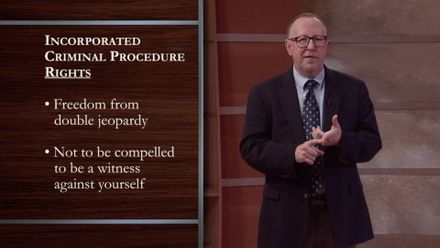
The Scottsboro case is an important one in the history of American criminal procedure law; learning where the Supreme Court finds the legal authority to force states to provide all criminal defendants with fundamental rights.
S1:E19 • Sep 22, 2017 • 33m
Looking at the Fourth Amendment; studying government searches and privacy rights; considering the scope of the Fourth Amendment; learning what defines search and seizure; uncovering the role of modern technology's impact on the Fourth Amendment.
S1:E20 • Sep 22, 2017 • 33m
Learning how search warrants work and whether police can enter a home without a warrant; exclusionary rule, which states that evidence seized in violation of the Fourth Amendment be excluded from criminal prosecutions; standard of probable cause.
S1:E21 • Sep 22, 2017 • 33m
According to the Fifth Amendment, "no person...shall be compelled to be a witness against himself."; examining the history of this core aspect of the Bill of Rights; learning how the amendment works; knowing what pleading the fifth actually requires.
S1:E22 • Sep 22, 2017 • 34m
One of the most famous words in American criminal justice are "You have the right to remain silent."; probing the background of the Supreme Court's Miranda decision; Professor Hoffmann discusses two key issues central to the controversial decision.
S1:E23 • Sep 22, 2017 • 33m
Ninety percent of all criminal cases do not end in a trial but in a plea bargain; reviewing plea bargains and criminal trials and how they complement one another; learning how and why do plea bargains dominate American justice; the jury system.
S1:E24 • Sep 22, 2017 • 36m
Learning what makes civil procedure different from other law subjects taught in the first year; using a hypothetical lawsuit and two Supreme Court cases; exploring the issues and questions any system of litigation faces; clearing a person's name.
S1:E25 • Sep 22, 2017 • 32m
Professor Smith discusses the power of the courts to hear a case and to render a judgment; two different types of jurisdiction; subject-matter jurisdiction refers to the court's authority to hear cases concerning a particular subject matter.
S1:E26 • Sep 22, 2017 • 32m
A court does not have jurisdiction over the defendant; the doctrine of personal jurisdiction has not been constant over time; the importance of the Pennoyer ruling; knowing when an out-of-state defendant should be subject to personal jurisdiction.
S1:E27 • Sep 22, 2017 • 32m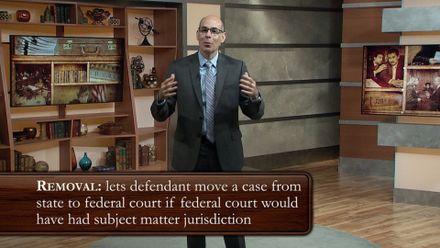
Examining how the approach of personal jurisdiction has evolved into its modern standard; the limits this approach places on the power of a plaintiff to haul a defendant into court far from the defendant's home; International Shoe Co. v. Washington.
S1:E28 • Sep 22, 2017 • 33m
Pleading is the process by which parties inform one another, and the court, of their allegations, claims and defenses; the first step in the pre-trial process; the rules that govern pleading; the rules governing pleading can make or break a suit.
S1:E29 • Sep 22, 2017 • 32m
Lawsuits today often involve multiple plaintiffs suing multiple defendants on multiple claims; understanding this kind of complex litigation; the rules governing joinder, when claims and parties can be joined in one suit; learning the class action.
S1:E30 • Sep 22, 2017 • 31m
The discovery process is important because it allows parties access to information to support their claims and defenses; defining the scope of discovery and terms like substantial need and work product; using the process to wear down plaintiffs.
S1:E31 • Sep 22, 2017 • 31m
Considering the mechanisms of a motion for summary judgment, by which a judge can resolve a suit with something less than a complete trial, two important cases highlight the nuances of this type of motion: Celotex v. Catrett and Denman v. Spain.
S1:E32 • Sep 22, 2017 • 31m
Juries play a key role even in cases that do not end up having a trial before a jury; considering the virtues and drawbacks of having juries decide issues in civil suits, exploring the scope of this right as guaranteed by the Seventh Amendment.
S1:E33 • Sep 22, 2017 • 32m
Knowing whether a particular rule of state law is procedural or substantive; a case between two taxicab transfer companies offers an extreme and fascinating illustration of the procedural problems that can arise between federal and state courts.
S1:E34 • Sep 22, 2017 • 33m
Considering the rules that prevent parties from relitigating matters that courts have already decided; learning the difference between prior litigation and subsequent litigation; several important cases offer illuminating insights.
S1:E35 • Sep 22, 2017 • 32m
Different courts play different roles in the legal system; considering when a party is allowed to appeal a decision by a trial court; studying the standards of review that appellate courts apply when reviewing trial court decisions.
S1:E36 • Sep 22, 2017 • 33m
Starting a tour of torts with an exam question Professor Cheng gives to his students; one that introduces the history, complexity and oddities of this aspect of law; learning the behaviors tort law expects; the harms one can be held responsible for.
S1:E37 • Sep 22, 2017 • 32m
No one is legally obligated to help, regardless of what religious and ethical authorities may advise; the concept of affirmative duty; learning why this rule exists; examining legislative efforts to change it; reviewing some exceptions to the rule.
S1:E38 • Sep 22, 2017 • 29m
The concepts of reasonable care; the legal system uses the concept of the reasonable person to determine it; reviewing the meaning of reasonable care; the definition of fault; the relationship between reasonable care and cost-benefit analysis.
S1:E39 • Sep 22, 2017 • 29m
Lawyers define rules as the alternative to flexible, case-specific standards; rules have their advantages and disadvantages over standards; they all take power and discretion away from the jury. Professor Cheng uses an example of speed limits.
S1:E40 • Sep 22, 2017 • 29m
Factual causation seems to be one of the most scientific and value-neutral doctrines in tort law; learning why determinations about causation are not easy, but matter; considering whether the causation question is more philosophical than scientific.
S1:E41 • Sep 22, 2017 • 32m
Cases involving legal causation and the foreseeability test are the favorites of many law professors, using the case of Palsgraf v. Long Island Railroad, discovering why legal causation is so intricately linked to policy and moral responsibility.
S1:E42 • Sep 22, 2017 • 31m
Looking at vicarious liability, a tort doctrine that states an employer is strictly liable for torts committed by employees during the scope of their employment; a related tort doctrine which concerns multiple parties contributing to a tort.
S1:E43 • Sep 22, 2017 • 31m
The focus is on negligence or other culpable conduct on the part of the plaintiff; learning what the tort law says about what happens when a plaintiff is at fault; knowing how much of a two-way street is an issue like safety.
S1:E44 • Sep 22, 2017 • 30m
Exploring traditional strict liability through the lens of damage caused by animals and damage caused by ultra-hazardous blasts and explosions; examining whether or not strict liability is different from conventional negligence.
S1:E45 • Sep 22, 2017 • 33m
Tort law is not fixed in stone but evolves to meet a changing society; the development of modern products liability law; walking through some elegant cases in torts to determine why products liability has promoted litigation on a massive scale.
S1:E46 • Sep 22, 2017 • 32m
Professor Cheng dives into modern products liability doctrine; learning the kinds of product defects that qualify for this treatment; knowing the kinds of products and manufacturers that qualify; understanding how the cases are resolved.
S1:E47 • Sep 22, 2017 • 33m
Learning about punitive damages and why one has them; knowing how the legal system can rein in out-of-control juries; looking to a case that has long been the symbol of a legal system run amok; Liebeck v. McDonald's Restaurants.
S1:E48 • Sep 22, 2017 • 34m