

Introduction to Astrophysics
S1:E7 Black Holes
Using analytical skills to probe the strange properties of black holes; calculating the Schwarzschild radius, which is the boundary beyond which no light can escape; determining the size of the giant black hole at the center of our galaxy.
Already subscribed?
Sign in
Defining the difference between astrophysics and astronomy; studying the vast range of scales in astrophysics; getting the big picture in a breathtaking series of exponential jumps from the Earth to countless clusters of galaxies.
S1:E1 • Nov 30, 2018 • 33m
Zooming in on the microcosmos; why elementary particles are just as central to astrophysics as stars and galaxies; reviewing the four fundamental forces of nature; performing a calculation that explains why atoms have to be the size they are.
S1:E2 • Nov 30, 2018 • 32m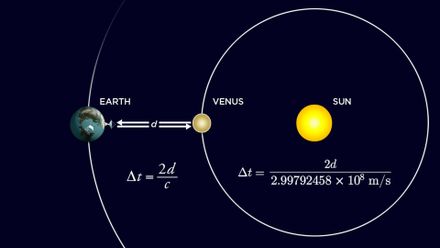
How astrophysicists map the universe; focusing on the tricky problem of calculating distances; how a collection of overlapping techniques provide a "cosmic distance ladder" that works from nearby planets to stars and far distant galaxies.
S1:E3 • Nov 30, 2018 • 31m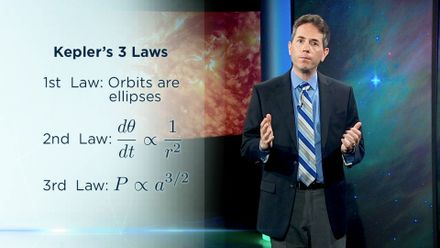
The connection between Isaac Newton's laws of motion and the earlier laws of planetary motion discovered empirically by Johannes Kepler; Kepler's third law is the ideal method for measuring the mass of practically any phenomenon in astrophysics.
S1:E4 • Nov 30, 2018 • 32m
Discovering the law of gravity just as Newton might have; analyzing Kepler's laws with the aid of calculus; a graphical method for understanding orbits; the conservation laws of angular momentum and energy in light of Emmy Noether's theory.
S1:E5 • Nov 30, 2018 • 35m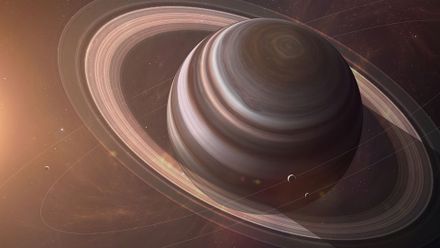
Learning why the rings around Saturn and the much fainter rings around Jupiter, Uranus and Neptune are roughly at the same relative distances from the planet; knowing why large moons are only found in wide orbits; an analysis of tidal forces.
S1:E6 • Nov 30, 2018 • 32m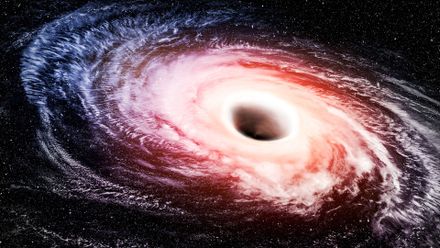
Using analytical skills to probe the strange properties of black holes; calculating the Schwarzschild radius, which is the boundary beyond which no light can escape; determining the size of the giant black hole at the center of our galaxy.
S1:E7 • Nov 30, 2018 • 32m
Investigating electromagnetic waves, which consist of photons from gamma-ray to radio wavelengths; a dense collection of photons is comparable to a gas obeying the ideal gas law; this law, together with other laws, explains the cosmos.
S1:E8 • Nov 30, 2018 • 34m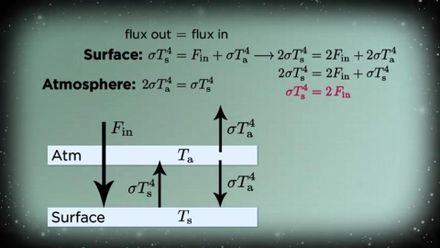
Surveying representative planets in the solar system with an astrophysicist's eyes; knowing why Mercury does not have an atmosphere and why Venus is so much hotter than Earth; analyzing such riddles with the Stefan-Boltzmann law and other principles.
S1:E9 • Nov 30, 2018 • 32m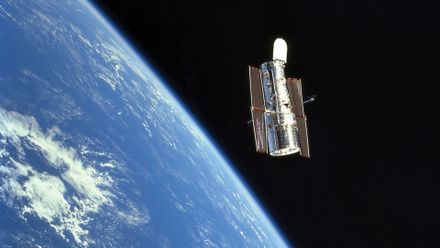
Gleaning information from a few optical photons originating from astronomical sources; telescope's benefits include increased light-gathering power, greater sensitivity of telescopic cameras and sensors and enhanced spectral resolution.
S1:E10 • Nov 30, 2018 • 32m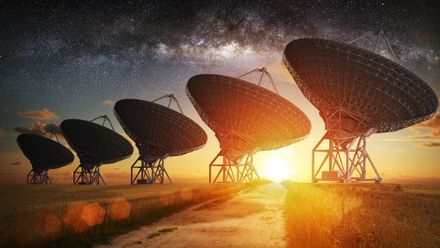
Non-visible wavelengths compose by far the largest part of the electromagnetic spectrum; astronomers assume there is nothing to see in these bands; the invention of the radio and X-ray telescopes; the challenges of focusing radio and X-ray light.
S1:E11 • Nov 30, 2018 • 33m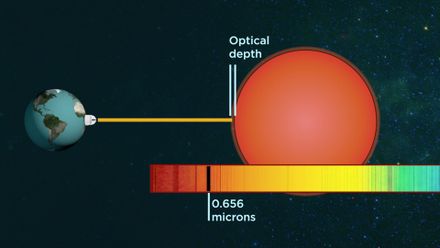
Starting with the spectrum of sunlight; noticing that thin, dark lines are present at certain wavelengths; these lines reveal the temperature of the sun's outer atmosphere; more diffuse phenomena produce bright emission lines against a dark spectrum.
S1:E12 • Nov 30, 2018 • 32m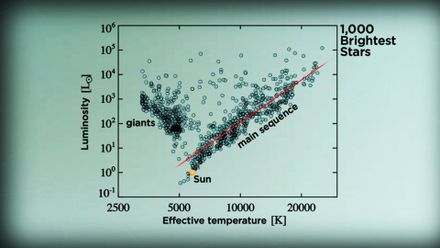
The range of stellar luminosities, temperatures, masses and radii using spectra and other data; constructing the celebrated Hertzsprung-Russell diagram, with its main sequence of stars in the prime of life; two out of three stars have companions.
S1:E13 • Nov 30, 2018 • 34m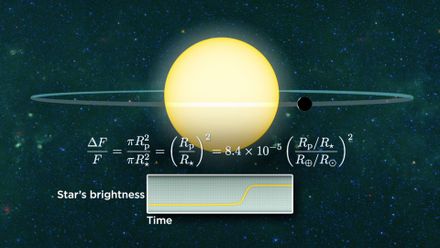
Professor Winn's specialty includes extrasolar planets, also known as exoplanets; the extreme difficulty of observing an Earth-like planet orbiting a Sun-like star in a stellar neighborhood; reviewing the characteristics of many exoplanets.
S1:E14 • Nov 30, 2018 • 33m
Examining the sun and the mass it consumes through nuclear fusion during its 4.5-billion-year history; one pictures the sun like a giant furnace of nuclear bombs going off non-stop; calculations show it is more like a collection of toasters.
S1:E15 • Nov 30, 2018 • 34m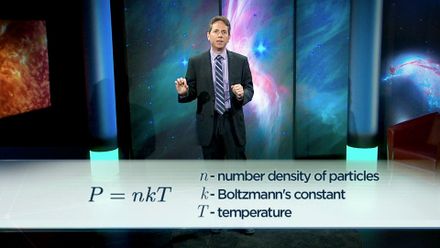
Learning how stars work by delving into the stellar structure, using the sun as a model; relying on physical principles and order-of-magnitude calculations; determining the time it takes for the energy generated in the interior to reach the surface.
S1:E16 • Nov 30, 2018 • 34m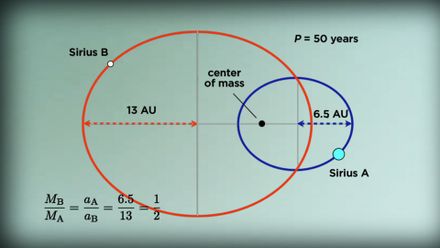
The fate of solar mass stars after they exhaust their nuclear fuel; venturing into the quantum theory to understand what keeps these exotic stars from collapsing into black holes; the Chandrasekhar limit determines a white dwarf's maximum mass.
S1:E17 • Nov 30, 2018 • 34m
Tracing stellar evolution from two points of view; diving into a protostar and witnessing events unfold as the star begins to contract and fuse hydrogen; seeing how stellar evolution looks to observers studying stars with telescopes.
S1:E18 • Nov 30, 2018 • 33m
A star that weighs several solar masses to chart its demise after fusing all nuclear fuel; such stars end in a gigantic explosion called a supernova and produce a super-compact neutron star; the rapid spin of neutron stars and the energy they send.
S1:E19 • Nov 30, 2018 • 33m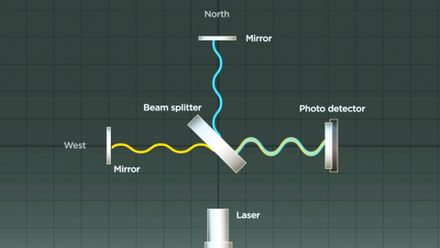
The physics of gravitational waves, a phenomenon predicted by Einstein; it takes colliding black holes to generate gravitational waves that can be picked up by an experiment called LIGO on Earth; LIGO scientists win the 2017 Nobel Prize in Physics.
S1:E20 • Nov 30, 2018 • 32m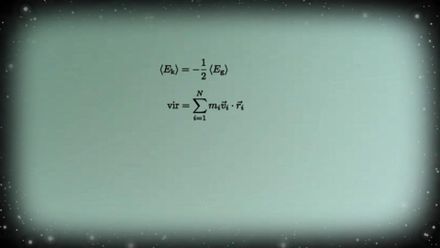
The Milky Way and locating Earth's position; surveying other galaxies; using the virial theorem to analyze a typical galaxy; galaxies themselves often collide with each other; the nearby Andromeda Galaxy is destined to collide with the Milky Way.
S1:E21 • Nov 30, 2018 • 32m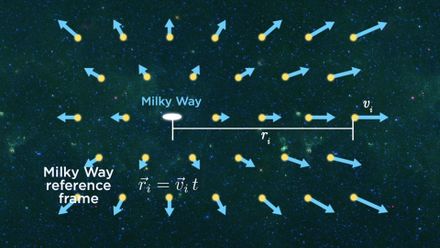
Examining active galaxies that have supermassive black holes gobbling up nearby stars; clusters of galaxies and the clues they give for dark matter; the distribution of dark matter; the Big Bang; evidence that most galaxies are speeding away.
S1:E22 • Nov 30, 2018 • 31m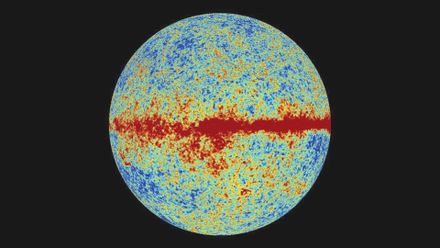
The Big Bang theory is one pillar of modern cosmology; another is the cosmic microwave background radiation; the third pillar is the cosmic abundances of the lightest elements, which tell the story of the earliest moment of nucleosynthesis.
S1:E23 • Nov 30, 2018 • 34m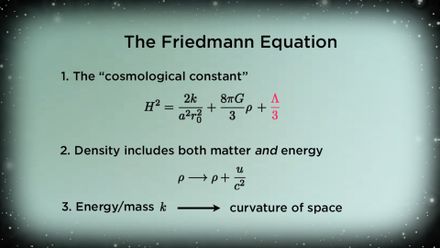
The trail of the greatest unsolved problem in astrophysics; the past, present and future of the universe; dark energy causes the expansion of the universe to accelerate; this mysterious force is traced to the lambda term in the Friedmann equation.
S1:E24 • Nov 30, 2018 • 37m