

Writing and Civilization: From Ancient Worlds to Modernity
The written word is central to one's lives; it can seem as if it has always existed; yet, writing is a relatively recent invention; the saga of visible speech from its origins to its future in the digital age; how refined writing systems develop.
Already subscribed?
Sign in
It is said that writing exists only in a civilization and a civilization cannot exist without writing; probing the validity of this statement; the critical functions that writing serves during the past 5,000 years; an introduction to pictography.
S1:E1 • Sep 27, 2013 • 31m
Three beliefs or myths about where writing comes from and how it develops; the theories of monogenesis versus polygenesis; whether writing is only invented once or independently in locations around the world; writing systems are resistant to change.
S1:E2 • Sep 27, 2013 • 31m
Most alphabets in use today are derived from one script developed over 4,000 years ago; what accounts for the vast popularity of the Roman or Latin alphabet; in Ancient Egypt, probing the origin of the alphabet; the contributions by the Canaanites.
S1:E3 • Sep 27, 2013 • 29m
Runes are often mistakenly thought to be a semi-magical system of signs used for divination and ritual; nothing could be further from the truth; the real history of the Runic alphabet, also known as the Futhark; why writing systems rise and fall.
S1:E4 • Sep 27, 2013 • 30m
The Chinese script and its derivatives are used by more than 1.5 billion people around the world; popular myths about Chinese writing as one discovers the earliest evolutions of Chinese characters; the five sign groups found in Chinese.
S1:E5 • Sep 27, 2013 • 29m
Japanese writing is a highly complicated script; it is used by more than 100 million people daily; how and why Japanese writing takes on the complex form it has today; attempts to simplify it have had little success; not one to be abandoned.
S1:E6 • Sep 27, 2013 • 30m
The earliest writing systems are known only through the efforts of archaeological decipherment; history on cryptography and the differences between decipherers and code-breakers; the theory and methodology of decipherment; the evidence it considers.
S1:E7 • Sep 27, 2013 • 29m
The five preconditions necessary for decipherment to be possible; paying particular attention to script type; the typology of logograms, phonograms and semantic signs found across the world; how these signs are combined in different writing systems.
S1:E8 • Sep 27, 2013 • 30m
The second pillar of decipherment; how epigraphers find a broad, accurate and readily accessible corpus to study; contrasting early and modern illustrations of the Classic Maya site of Palenque in Chiapas, Mexico; origins of epigraphic illustration.
S1:E9 • Sep 27, 2013 • 28m
Language is the third pillar of decipherment; the decoding of ancient Sumerian, the language of ancient Mesopotamia; philologists use the comparative method of linguistic restoration to compare related languages and reconstruct their shared ancestor.
S1:E10 • Sep 27, 2013 • 30m
The fourth pillar of decipherment is cultural context; most epigraphers' efforts begin with recognizing proper nouns; the ancient Greek historian Herodotus; he becomes the source of information for the cultural context of Old World writing systems.
S1:E11 • Sep 27, 2013 • 30m
Napoleon's expedition to Egypt is known for its discovery of the Rosetta Stone; it contains ancient Greek writing, Egyptian hieroglyphs and demotic script; this icon of decipherment is a famous example of a biscript; how common such artifacts are.
S1:E12 • Sep 27, 2013 • 29m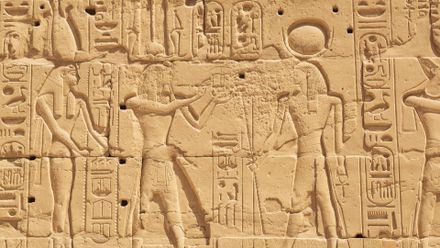
Before Jean-Francois Champollion deciphers hieroglyphic writing in 1822, no one has been able to read a word of Egyptian; knowing why Egypt's ancient language and writing system are forgotten; learning what clues lead Champollion to success.
S1:E13 • Sep 27, 2013 • 30m
Professor Zender reads hieroglyphs that Champollion's efforts helped to recover from oblivion; deciphering this blend of phonetic signs, logograms and semantic signs; the interaction of Egyptian writing and culture; the practice of damnatio memoriae.
S1:E14 • Sep 27, 2013 • 30m
Georg Grotefend contributes to the study of ancient writing and civilization; the methods he uses to decipher Old Persian cuneiform in the Achaemenid texts of Persepolis; this culture's language; the foundation established for the decipherment.
S1:E15 • Sep 27, 2013 • 31m
Scholars expand upon Grotefend's breakthroughs; relating Old Persian to the ancient cuneiform scripts that precede it; writing evolves through 3,500 years of Mesopotamian history; what ancient texts teach about ancient cultures of this region.
S1:E16 • Sep 27, 2013 • 32m
The decipherment of Linear B changes views of ancient Aegean civilization; epigraphers perplexed by many Linear B spellings; the decipherment and contents of the writing system; measuring it against the decoding of Egyptian and cuneiform scripts.
S1:E17 • Sep 27, 2013 • 32m
Whether the features of Old World scripts such as Chinese and Egyptian hieroglyphs apply to the unrelated scripts of the New World; Yuri Knorosov's decipherment of Mayan hieroglyphic writing; living in Cold War Russia both helps and hinders his work.
S1:E18 • Sep 27, 2013 • 30m
The strikingly similar structural features of the Mayan and ancient Egyptian writing systems; how Mayan writing works through a comparison with Egyptian hieroglyphs; what scholars learn about ancient Maya civilization; some fascinating inscriptions.
S1:E19 • Sep 27, 2013 • 30m
Complex views of Aztec civilization are often replaced with a one-note narrative that focuses only on the practice of human sacrifice; Aztecs write their Nahuatl language; it is still spoken by countless modern Mexicans in the form of local dialects.
S1:E20 • Sep 27, 2013 • 31m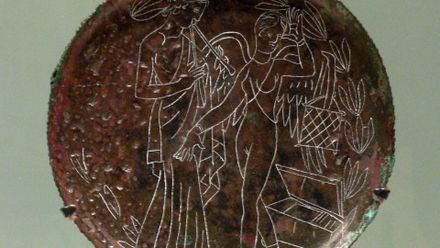
There are still dozens of undeciphered scripts; the failures of decipherment and the lessons drawn from them; focusing on the attempted decipherment of Etruscan and Meroitic scripts, which record languages with no known relatives or descendants.
S1:E21 • Sep 27, 2013 • 31m
Moving to scripts that are deliberately designed by an individual or group, often for use as a universal system; these writing systems betray their intentional design; examples include Korean Hangul and J. R. R. Tolkien's Tengwar and Certar.
S1:E22 • Sep 27, 2013 • 31m
Whether on papyrus, bamboo, stone or wood, writing shows an important relationship between medium and message; media's influence on writing's shape, direction and use; the origins of terms used for writing implements; the process for making papyrus.
S1:E23 • Sep 27, 2013 • 31m
Knowing if typing will replace handwriting and if e-books will make printed books obsolete; Professor Zender analyzes the future of writing based on past events; movable type and new signs; spelling conventions inspired by the QWERTY keyboard.
S1:E24 • Sep 27, 2013 • 32mMore Like This
 TVPG • 1 season
 TVPG • 1 season
 TVPG • 1 season
 TV14 • 1 season
 TVPG • 1 season
 TVPG • 1 season
 TVPG • 1 season
 TVPG • 1 season
 TVPG • 1 season
 TVPG • 1 season
 TVPG • 1 season
 TVPG • 1 season
 TVPG • 1 season
 TVPG • 1 season
 TVPG • 1 season
 TVPG • 1 season
 TVPG • 1 season
 TVPG • 1 season
 TVPG • 1 season
 TVPG • 1 season