

The American Civil War
Professor Gary W. Gallagher explains the strategy and battles of war as well as its effects on all Americans; learning how armies were recruited and trained; studying about prisoners; understanding how soldiers coped with camp life.
Already subscribed?
Sign in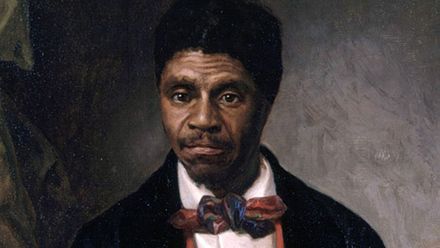
Learning about the sectional controversies and clashes that ultimately set the stage for secession and war.
S1:E1 • Mar 17, 2000 • 31m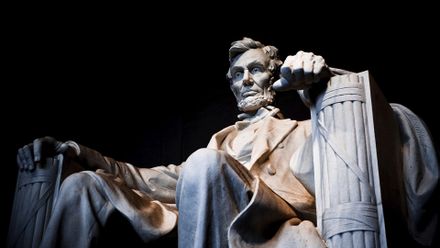
The presidential canvass of 1860 is the most important in U.S. history; it results in Abraham Lincoln's election as the first Republican to occupy the White House and brings sectional tensions to a head.
S1:E2 • Mar 17, 2000 • 30m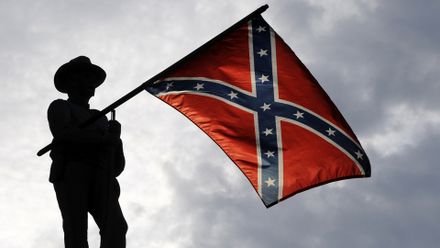
Beginning with South Carolina in December 1860, all the Lower South states secede by the first week of February 1861; they send delegates to a convention in Montgomery, Alabama, that establishes the Confederate States of America.
S1:E3 • Mar 17, 2000 • 30m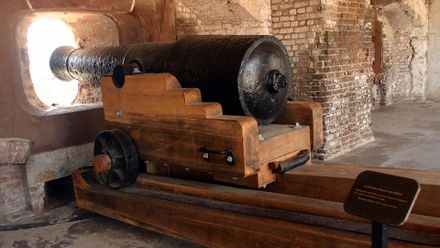
From February through April 1861, the United States and the Confederacy eye each other warily and vie for the support of eight slave states; as various compromise proposals fall short, Fort Sumter in Charleston Harbor becomes a flashpoint.
S1:E4 • Mar 17, 2000 • 30m
Many think that the South is fated to lose; learning when the Confederate States of America came closest to winning; as fighting begins, each side has important advantages.
S1:E5 • Mar 17, 2000 • 31m
Learning whether the Confederacy has better generals and which side has the edge in strategic and political leadership; the attitudes of England and France; studying the side which marshals its resources and exploits its advantages more effectively.
S1:E6 • Mar 17, 2000 • 31m
Learning why the young men join the colors of the North or the South; understanding what makes them bear the war's awful dangers and hardships; uncovering what it is like to be a soldier in the ranks.
S1:E7 • Mar 17, 2000 • 31m
Following the Upper South's secession and the move of the Confederate capital to Richmond, Virginia, both sides gear up for war; learning the details of General Winfield Scott's Anaconda Plan and the factors that lead to the Battle of First Manassas.
S1:E8 • Mar 17, 2000 • 31m
The loyalty of slaveholding states Kentucky, Maryland, Missouri and Delaware is an object of intense competition in the summer and autumn of 1861; knowing what, in the end, keeps those states in the Union.
S1:E9 • Mar 17, 2000 • 30m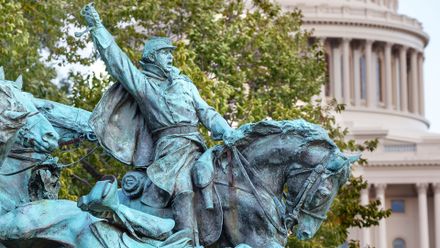
Most people look to Virginia to be the critical military arena; many leaders on both sides believe the war will be decided in the vast area between the Appalachians and the Mississippi River.
S1:E10 • Mar 17, 2000 • 30m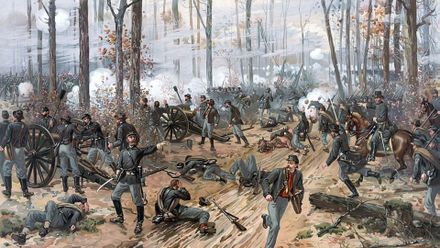
Early 1862 sees major Union successes in the West; Ulysses S. Grant takes Forts Henry and Donelson and moves south down the Tennessee River; aiming to crush Grant before Buell arrives, A. S. Johnston strikes the unwary Federals near Shiloh Church.
S1:E11 • Mar 17, 2000 • 30m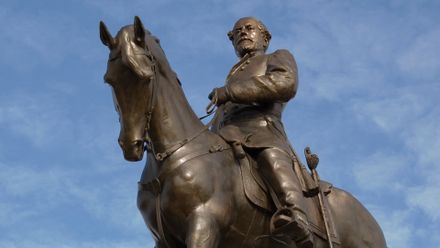
Nine months of relative quiet following First Manassas; it ends when George B. McClellan starts a slow Union drive up the Virginia Peninsula toward Richmond in April; Union forces menace Richmond from two directions; Confederate prospects look bleak.
S1:E12 • Mar 17, 2000 • 31m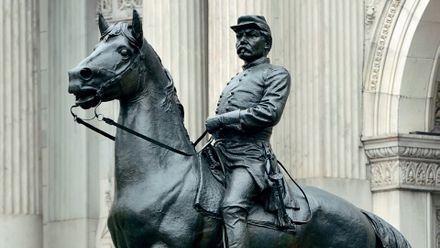
Stonewall Jackson fights in the Shenandoah Valley; Joseph E. Johnston attacks McClellan at Seven Pines or Fair Oaks; in the Seven Days' Battles, Robert E. Lee seizes the initiative and presses the Federals south to the James; Lee saves Richmond.
S1:E13 • Mar 17, 2000 • 31m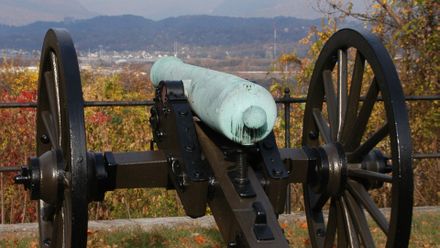
The Confederacy faces a difficult strategic situation in July 1862; Jefferson Davis and his generals respond by sending armies into Kentucky and Maryland in an impressive Confederate strategic offensive of the war; a confused battle at Perryville.
S1:E14 • Mar 17, 2000 • 30m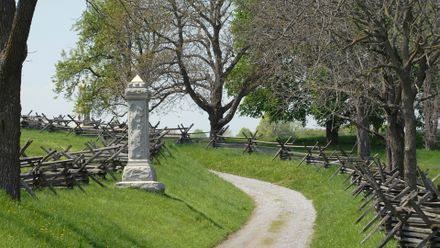
After beating John Pope at Second Manassas in late August, Lee marches north into Maryland; Lincoln reluctantly returns command to McClellan, whose pursuit of Lee culminates at Antietam; what happens on that battlefield and what it means.
S1:E15 • Mar 17, 2000 • 31m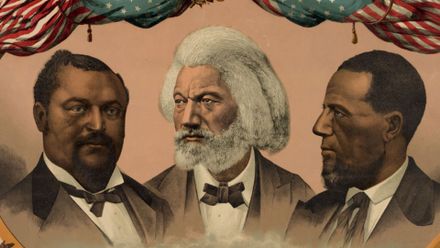
Despite slavery's role in causing the conflict, for at least the first year it remains in the background; as long as restoring the Union remains the sole war aim, there is remarkable unity among Northerners; what type of Union they fight for.
S1:E16 • Mar 17, 2000 • 29m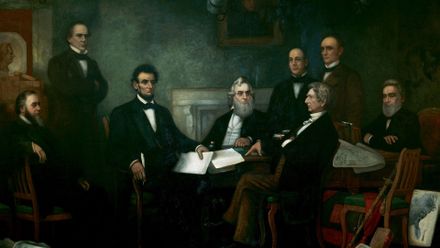
Lincoln sees emancipation as necessary to victory; he understands that he lacks the authority to end slavery in loyal areas; his famous proclamation deliberately casts emancipation as a war measure; what most Northerners think of it.
S1:E17 • Mar 17, 2000 • 30m
Knowing how many men serve during the war; learning how they are they recruited; how good the United States and the CSA are at putting their military-age men under arms.
S1:E18 • Mar 17, 2000 • 30m
War spending goes on at an unprecedented scale; both sides sell bonds, levy taxes and print paper money; despite its weak economy, the Confederacy never loses a battle because its armies run out of ordnance.
S1:E19 • Mar 17, 2000 • 30m
McClellan sits north of the Potomac; Buell follows Bragg's retreat into Tennessee; Lincoln names Ambrose E. Burnside to take over the Army of the Potomac and William S. Rosecrans to tackle Bragg; Grant begins his long campaign against Vicksburg.
S1:E20 • Mar 17, 2000 • 30m
In Virginia, the Union army suffers two setbacks along the Rappahannock; Lee throws back Burnside's costly frontal assaults at Fredericksburg; Joseph Hooker soon takes command; he plans a brilliant offensive that begins at the end of April 1863.
S1:E21 • Mar 17, 2000 • 30m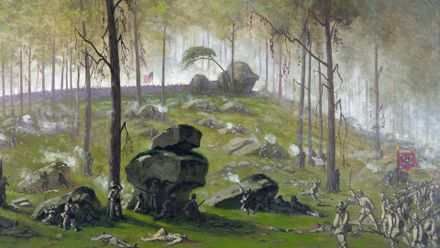
Gettysburg as the turning point of the war; it takes place against a background of uncertainty in the North; why Lee goes north; whether his strategic thinking is sound; what swings the three-day battle's outcome; how people view Gettysburg.
S1:E22 • Mar 17, 2000 • 31m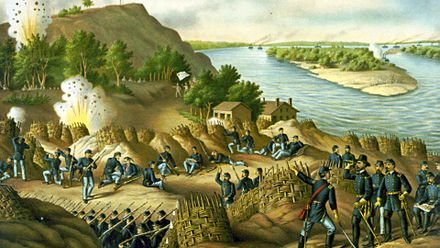
In mid-April, Grant orders the Navy to run past Vicksburg's guns; ferries his troops across the south of the city; marches inland to seize Jackson, Mississippi and then besieges Vicksburg; with skillful marching, Rosecrans pin Bragg in Chattanooga.
S1:E23 • Mar 17, 2000 • 30m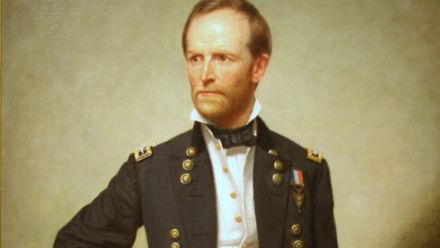
The Union seems poised for knockout blows both east and west; Meade does not force a full-blown battle; Grant is without a big goal after Vicksburg; Rosecrans ably maneuver Bragg out of Chattanooga; the CSA's only major tactical victory in the West.
S1:E24 • Mar 17, 2000 • 31m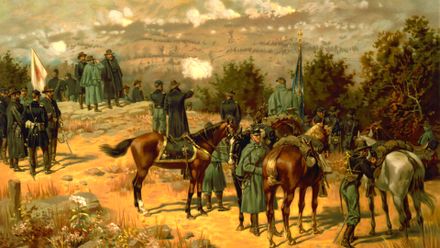
With all eyes on Chattanooga, both armies experience command problems; Grant, named overall Union commander in the West in mid-October, takes charge personally; Bragg, meanwhile, conducts an increasingly ineffective siege.
S1:E25 • Mar 17, 2000 • 30m
Lincoln and Davis cast anxious eyes toward Europe, thinking of the decisive French aid to the colonies during the American Revolution; several flare-ups with England and France; the Lincoln administration finally prevails in the diplomatic arena.
S1:E26 • Mar 17, 2000 • 31m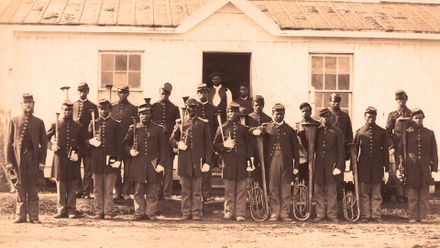
During the conflict, thousands of slaves make their way to Union lines; their plight is often hard and uncertain; nearly 180,000 black men, most of them former slaves, wear Union blue; the US Colored Troops face obstacles and injustices.
S1:E27 • Mar 17, 2000 • 31m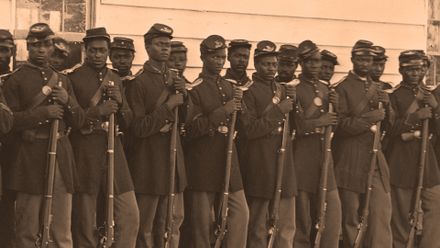
In the North, blacks are at the center of a debate over war aims; progress toward fairer treatment; slave labor vastly aids Southern mobilization and the CSA's economy; black and white Southerners found their social and economic relations changing.
S1:E28 • Mar 17, 2000 • 31m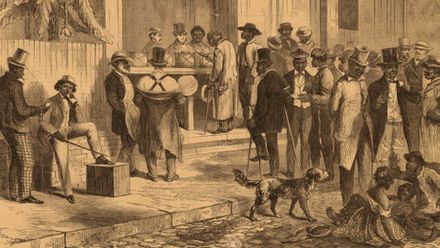
Even as war rages, Lincoln and Congress debate what would happen after it is won; In December 1863, Lincoln offers a simple, lenient reconstruction plan; radical Republicans in Congress object; an assassin cuts short Lincoln's part in the debate.
S1:E29 • Mar 17, 2000 • 30m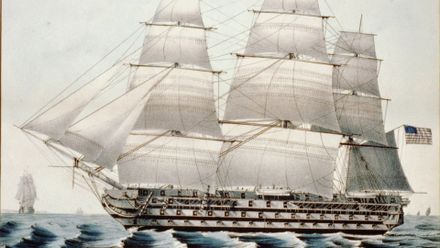
The US Navy plays a major role in beating the CSA; starting the war with just 42 ships, the Navy has nearly 700 by 1865; northern naval strategy focuses on aiding ground operations along Southern rivers and coasts; how the Confederate Navy performs.
S1:E30 • Mar 17, 2000 • 31m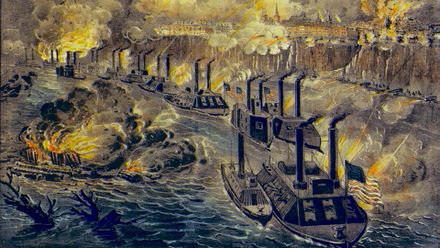
The war in the West gives a key role to the US Navy, which builds special crafts for river duty; meanwhile, Southern commerce raiders like the C.S.S. Alabama become legendary; how much they aid the CSA's war effort.
S1:E31 • Mar 17, 2000 • 31m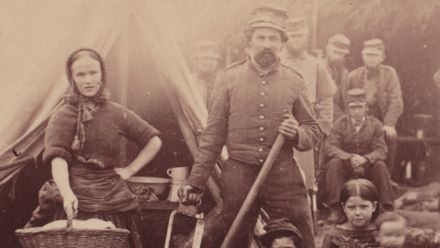
How Northern women experience the war; wartime urgencies provide increased opportunities for middle-class women to enter the public sphere as nurses, clerks or agents; the experiences of poor white women and black women are less well understood.
S1:E32 • Mar 17, 2000 • 30m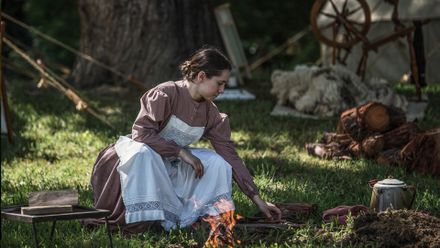
The war changes women's lives in many ways; women in the CSA suffer most directly from the war; to black women, the war brings emancipation and the opportunity to solidify marriage and family ties; the front draws more women than might seem likely.
S1:E33 • Mar 17, 2000 • 31m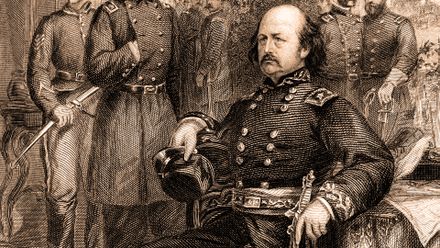
Named general-in-chief in March 1864, Grant hopes to apply enough pressure across the board to crush the Confederacy; the most important actions are led by Sherman in Georgia and Grant himself in Virginia.
S1:E34 • Mar 17, 2000 • 30m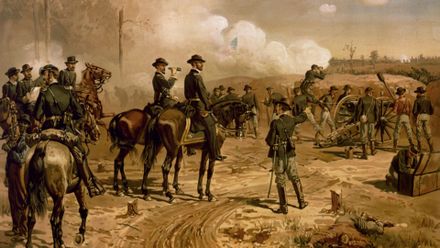
Moving south from Chattanooga, Sherman intends to use his large armies to outmaneuver Johnston, who falls back while looking for a chance to counterpunch; by early July, the sparring armies settle into a siege.
S1:E35 • Mar 17, 2000 • 31m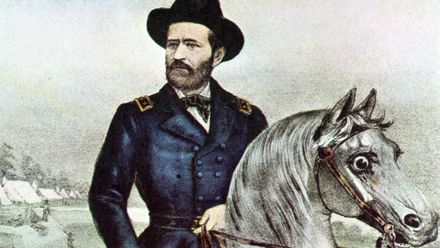
The Overland Campaign brings together each side's greatest captain in combat; the prominence of Grant and Lee ensures that their contest deeply affects civilian morale; the armies battle fiercely and almost continuously from early May to mid-June.
S1:E36 • Mar 17, 2000 • 31m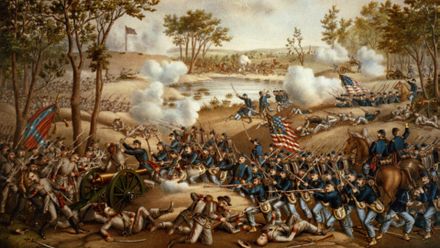
After Spotsylvania, Lee entrenches at Cold Harbor, Virginia; On June 3, Grant launches a futile and costly frontal assault; he nearly takes Petersburg on June 15; by June 19, however, the opportunity passes; Grant begins a siege.
S1:E37 • Mar 17, 2000 • 30m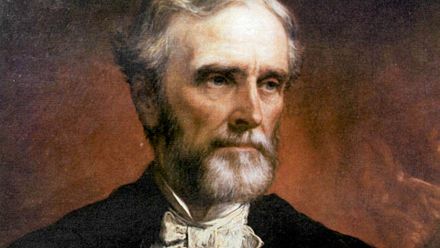
The war causes the CSA enormous strain; the CSA's founders hope to return to a Revolutionary-era ideal; bitter divisions arise; the political scene affects the war effort; economic woes make many Confederates doubt their ability to continue the war.
S1:E38 • Mar 17, 2000 • 30m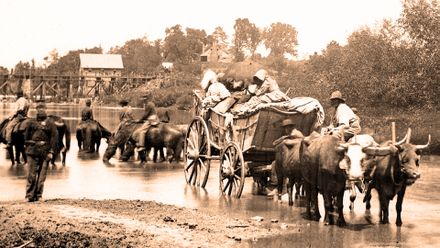
Many Southern whites become refugees as they flee from Union armies; for non-refugees, increasing hardship and a demanding government causes distress and anger as the war progresses; whether the resulting internal dissension kills the Confederacy.
S1:E39 • Mar 17, 2000 • 31m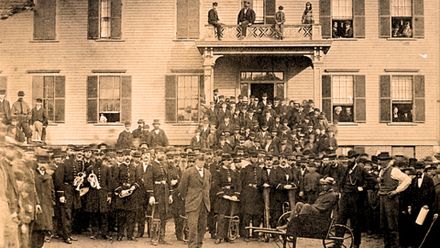
Although the war does not bring severe dislocations to the North, it produces a political sea change; the Republicans become the majority party; their policies led to crises.
S1:E40 • Mar 17, 2000 • 31m
Unlike the Confederacy, the North is able to produce both guns and butter in abundance; with no Southern presence in Congress, the Republicans start the nation down an economic path it follows for several decades.
S1:E41 • Mar 17, 2000 • 31m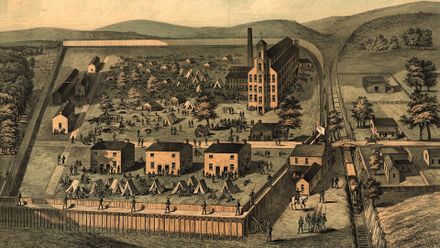
The treatment of prisoners of war; both sides hurl charges of negligence and atrocities; more than 400,000 men are captured; early in the war, most are quickly paroled or exchanged; prisoners suffer when this system breaks down.
S1:E42 • Mar 17, 2000 • 30m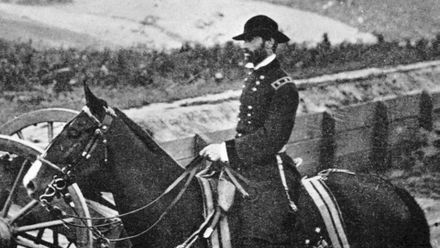
In the summer of 1864, Lincoln needs victories; the first break comes in August at Mobile Bay, Alabama, when Admiral David G. Farragut closes the CSA's last major port on the Gulf; news follows from Atlanta that Sherman has at last taken the city.
S1:E43 • Mar 17, 2000 • 30m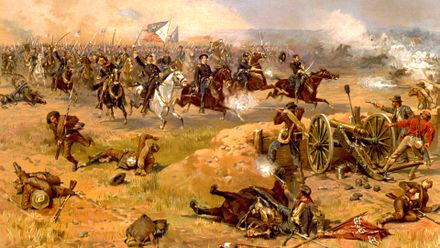
Grant and Lee confront each other along an entrenched front; In mid-June, Lee detaches a corps under Jubal Early; between September 19 and October 19, Philip H. Sheridan wins three victories over Early; he lays waste to much of the lower Valley.
S1:E44 • Mar 17, 2000 • 30m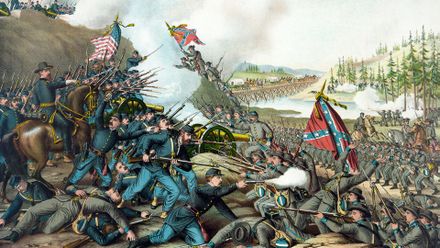
After Atlanta falls, Hood tries to draw Sherman northward; Sherman follows briefly before deciding to cut loose from his supply lines on his March to the Sea; he implements the "strategy of exhaustion" in the Confederate interior.
S1:E45 • Mar 17, 2000 • 30m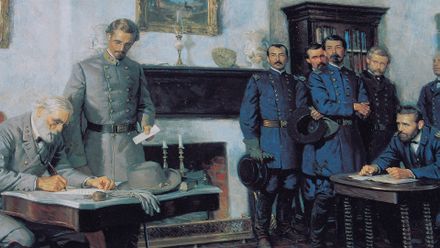
By March 1865, the Federals restrict Lee's supply lines; Lee fails to break the siege and heads west; Grant blocks the way at Appomattox, where Lee surrenders his 28,000 starving men on April 9; CSA forces elsewhere quickly give up.
S1:E46 • Mar 17, 2000 • 30m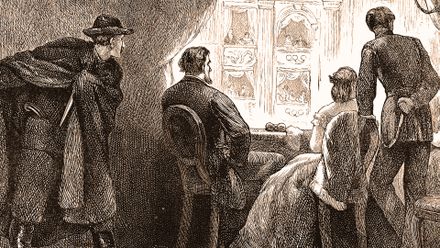
What the best evidence suggests about Lincoln's assassination; Lincoln is among the last casualties in a war whose human and material toll can never be known; taking everything into account to consider why the South loses and the North wins.
S1:E47 • Mar 17, 2000 • 30m
How participants remember and interpret the conflict in the decades after Appomattox; how modern Americans view the people and events of 1861 to 1865; considering the types of understanding at which one can arrive.
S1:E48 • Mar 17, 2000 • 32mMore Like This
 TVPG • 1 season
 TVPG • 1 season
 2015 • R • 1h 32mDetails
 2020 • TV14 • 1h 39mDetails
 TV14 • 1 season
 TVPG • 1 season
 2015 • PG • 29m 02sDetails
 2012 • TVMA • 1h 30mDetails
 PG13 • 1 season
 TV14 • 1 season
 TVPG • 1 season
 TVPG • 3 seasons
 TVMA • 1 season
 TV14 • 1 season
 2025 • PG13 • 41m 42sDetails
 TVPG • 2 seasons
 TVPG • 1 season
 TVPG • 1 season
 TVPG • 1 season
 TVPG • 1 season