

Understanding the US Government
S1:E10 A Road Map of the Federal Bureaucracy
How the vast systems of the federal government operate; tracing how and why the United States develops such a massive bureaucracy; how the executive branch is structured; analyzing the theory of the "principal-agent problem".
Already subscribed?
Sign in
The nature of governments; the major types of government; why governments exist; how major political theorists view the roles of government; examining the founding of the U.S. and the creation of the Constitution through "collective action theory".
S1:E1 • Sep 11, 2020 • 31m
Studying the system of federalism; tracing the history of federalism in the United States; how the balance shifts in the 20th century, from greater state authority to a much-expanded power of the federal government.
S1:E2 • Sep 11, 2020 • 27m
Probing the concept of civil liberties, as they delineate restrictions that government cannot impose; learning about "selective incorporation"; how the judicial system interprets and upholds the freedoms of religion, speech and the press.
S1:E3 • Sep 11, 2020 • 33m
How America's record on human rights continues to impact modern politics; studying the equal protection clause in the 14th Amendment; how it is applied; examining the history and the current landscape of human rights with regard to various groups.
S1:E4 • Sep 11, 2020 • 33m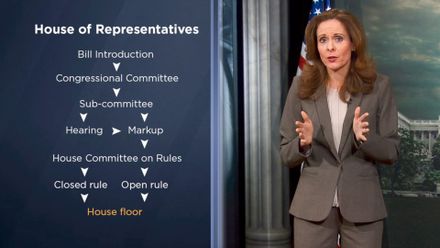
How a congressional bill originates; how legislators formally submit a bill; the stages through which a bill is acted upon; learning about the "cloture rule", a mechanism that forces bills to a vote; the tactic of filibustering in the Senate.
S1:E5 • Sep 11, 2020 • 29m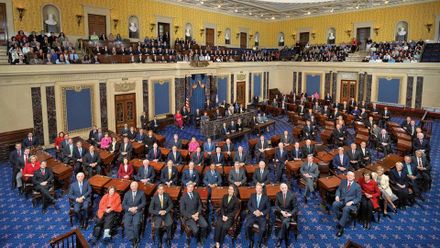
Exploring core issues in the functioning of Congress; taking account of the inherent tension for legislators between serving their constituents and serving their party; investigating procedural challenges within this unwieldy organ of government.
S1:E6 • Sep 11, 2020 • 27m
Learning how congressional elections are structured; examining key factors in the politics of congressional campaigns; delving into the issue of gerrymandering; the varied record in the United States of the practice of gerrymandering.
S1:E7 • Sep 11, 2020 • 31m
Identifying the powers granted to the president by the Constitution, versus other powers applied or developed over time; the roles of the president; delving into core topics that include the budget process and the exercise of executive privilege.
S1:E8 • Sep 11, 2020 • 33m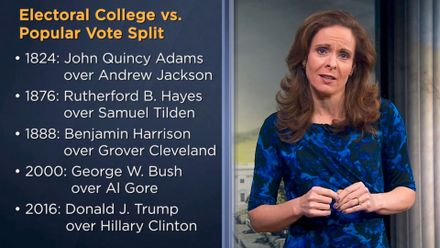
How presidential elections differ from congressional elections; a look at the Electoral College; the sometimes odd consequences of the system; how presidential nominations are made; assessing election forecasting; "fake news" and misinformation.
S1:E9 • Sep 11, 2020 • 36m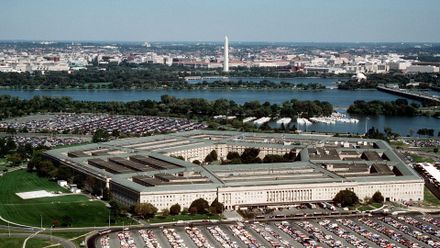
How the vast systems of the federal government operate; tracing how and why the United States develops such a massive bureaucracy; how the executive branch is structured; analyzing the theory of the "principal-agent problem".
S1:E10 • Sep 11, 2020 • 32m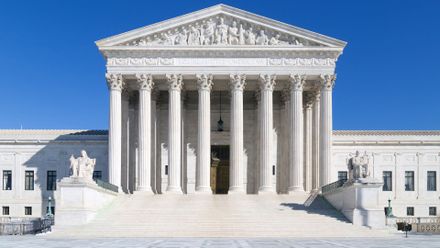
Investigating the sources of judicial authority that underlie the legal system; the judicial system's organization according to three types of legal cases; the structure of the federal court system; a detailed look at the Supreme Court.
S1:E11 • Sep 11, 2020 • 26m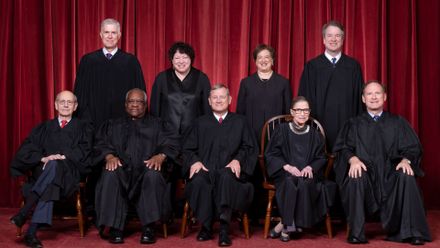
The politicized process that takes place when a president appoints a justice to the Supreme Court; categories of influences that bear on the Court; how the Court plays a role in policymaking; how the Court's role in politics and government changes.
S1:E12 • Sep 11, 2020 • 30m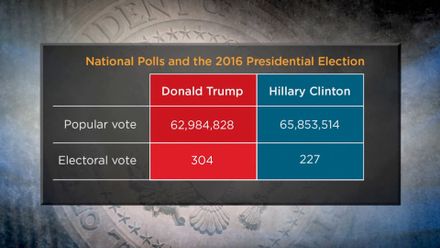
Defining "public opinion" in its various forms; the difference between the theory of the "wisdom of crowds" and what is called "groupthink"; the sources of individual opinion and political identity; looking at what polls are; what they do.
S1:E13 • Sep 11, 2020 • 33m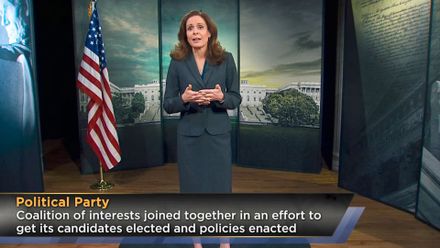
Why political parties exist; grasping how parties solve three categories of problems; why it is that the United States has only two major political parties; the history of political parties in the United States; how they change and realign over time.
S1:E14 • Sep 11, 2020 • 32m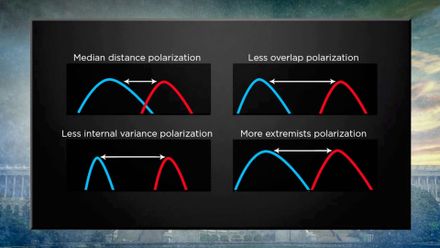
The factors that underlie the polarization of current U.S. politics; what polarization is; sources of polarization; how and why polarization tends to self-perpetuate; false assumptions about polarization; its dangers; breaking the cycle.
S1:E15 • Sep 11, 2020 • 32m
The right to vote in the United States; voter turnout in elections; accounting for consistently low voter turnout; what determines a person's likelihood to vote; the gender gap in voting; the need of candidates to appeal to median voters.
S1:E16 • Sep 11, 2020 • 28m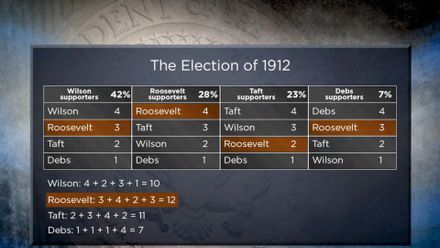
Assessing the U.S. democratic system; dispelling the myth of a single "will of the people"; how institutions such as Congress provide stability and an agreed-upon procedure for making major group decisions; democratic ways of counting votes.
S1:E17 • Sep 11, 2020 • 26m
Tracing the campaign finance reforms enacted since the 1970s; the problems that arise when sources of campaign funding do not represent the broader population; the repeating cycle of reforms; attempts to work around campaign finance limits.
S1:E18 • Sep 11, 2020 • 30m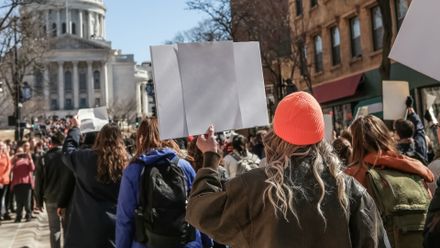
The seven types of organized interest groups that figure in American politics; the proliferation of interest groups since the 1960s; grasping how interest groups form and operate; the problems they address; what they can do for society.
S1:E19 • Sep 11, 2020 • 31m
Investigating public trust; the distrust of journalism; the ideological positions of news sources; how social media can exacerbate political polarization; the ways in which the political environment is ripe for conspiracy theories and misinformation.
S1:E20 • Sep 11, 2020 • 29m
Examining the U.S. system of free-market economics; the fiscal and monetary policies the government employs to correct for market failures; how Congress and the president address various problems; how the Fed stimulates and destimulates the economy.
S1:E21 • Sep 11, 2020 • 33m
Learning about the TANF program, or "welfare"; the institutions of Social Security, disability insurance, Medicare and Medicaid; the financial strains on these programs; questions of their future solvency; the controversies surrounding them.
S1:E22 • Sep 11, 2020 • 33m
The history of the U.S. in international politics; U.S. participation in international institutions aimed at peacekeeping, trade and economic growth; current U.S. policy trends regarding trade conditions; the negative effects of globalization.
S1:E23 • Sep 11, 2020 • 35m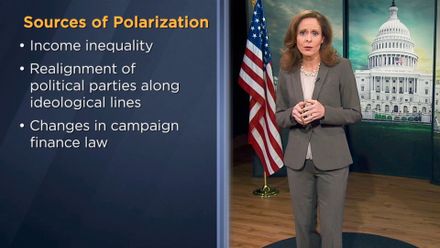
The biggest challenges American politics and government will face; looking at possible reforms; the benefits of a stronger role for political parties; the dangers of the current degradation of democratic norms; how they might be restored.
S1:E24 • Sep 11, 2020 • 35m