

The Other Side of History: Daily Life in the Ancient World
S1:E22 Living in Hellenistic Egypt
Revisiting Egypt in the years after Alexander the Great; touring the city of Alexandria, which is arguably the greatest city of the ancient world; it lies mostly beneath the sea; exploring the ethnic tensions between the Egyptians, Greeks and Jews.
Already subscribed?
Sign in
The past comes alive when considering the imaginary lives of ordinary people; these include the citizens, soldiers and slaves who live on the other side of history; asking questions that many textbooks never ask.
S1:E1 • Sep 1, 2012 • 31m
Taking a look at the lives of human ancestors; picturing oneself as a Neanderthal, whose life is dominated by the environment; discovering the significance of the human mind, language and art in the Old Stone Age.
S1:E2 • Sep 1, 2012 • 32m
Stepping into the world's earliest permanent settlement; why the development of agriculture is a revolution; the invention of writing; the creation of laws; an increase in trade; technological innovations such as the wheel.
S1:E3 • Sep 1, 2012 • 31m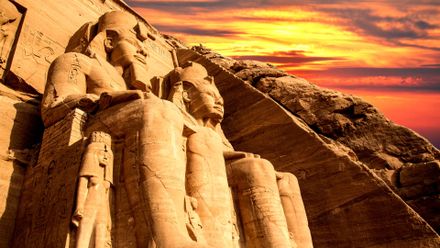
What it is like to be an ancient Egyptian; exploring everyday life during the New Kingdom era; the richness of the Nile; the conservatism and stability of the society; relics that survive across millennia, such as hieroglyphics, papyri and art.
S1:E4 • Sep 1, 2012 • 32m
Entering the lives of an ordinary Egyptian family; exploring aspects ranging from marriage, fertility and women's rights to social gatherings; experiencing elements of daily life such as the house, its furniture and even the cosmetics.
S1:E5 • Sep 1, 2012 • 31m
Egyptian religion is a hierarchical affair; priests pray on the common people's behalf; meeting gods such as Hathor, Amun-Re and Osiris; learning about the myths attached to them; discovering the ins and outs of the Egyptian priesthood.
S1:E6 • Sep 1, 2012 • 31m
Death is big business in Ancient Egypt; discovering Egyptian beliefs about the afterlife and the journey from this world to the next; learning how to make a mummy; how to get past Osiris at the gates to the afterlife.
S1:E7 • Sep 1, 2012 • 30m
As an ancient Egyptian, one might be a farmer, a herdsman, a craftsman, a hunter or a miner; a tour of people in the professions that would be available in the village of Deir el-Medina, from educated scribes to the craftsmen who built royal tombs.
S1:E8 • Sep 1, 2012 • 31m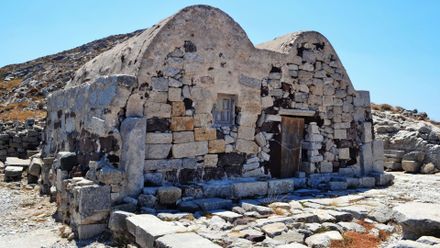
Minoans and Mycenaeans live in a thalassocracy, which is based on control of the sea; surveying life on the island of Santorini; this includes the threat of earthquakes and volcanoes; the shift of power to mainland Greece; life in the Greek Dark Age.
S1:E9 • Sep 1, 2012 • 33m
Exploring the world of the Greek polis; it is also a world of true democracies run by free male citizens; women and slaves are at a disadvantage; the broad strokes of this society; going inside the mind of a juror at the trial of Socrates.
S1:E10 • Sep 1, 2012 • 31m
Facing a myriad of challenges between birth and adulthood; beginning with whether a father decides to raise a child or expose them to the elements shortly after birth; what a Greek childhood would be like, from games played to schools attended.
S1:E11 • Sep 1, 2012 • 30m
Pondering the origins of slavery; although ancient Greeks do not invent the concept, they do leave records; discovering the range of work slaves do; traveling to Sparta, where helot slaves outnumber free Spartans by as many as 7 to 1.
S1:E12 • Sep 1, 2012 • 32m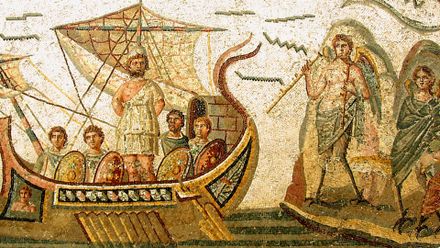
Experiencing a phalanx battle as an average citizen-soldier or hoplite; turning to Sparta, a society that revolves around military life; exploring the rise of Greek mercenaries, whom some Greek writers fear are a threat to civilization.
S1:E13 • Sep 1, 2012 • 30m
Entering the world of Athenian women, who are subjugated to males all their lives; they rarely leave the home except for festivals and funerals; looking at the hetaerae, who are female companions whose lives are relatively independent.
S1:E14 • Sep 1, 2012 • 31m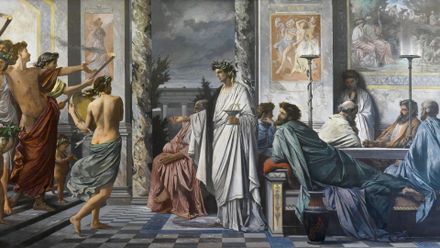
Putting oneself in the sandals of an average citizen taking a morning stroll to the agora or enjoying a discussion at a symposium; touring the clubs; witnessing the athletic events; participating in the festivals that are part of daily life.
S1:E15 • Sep 1, 2012 • 30m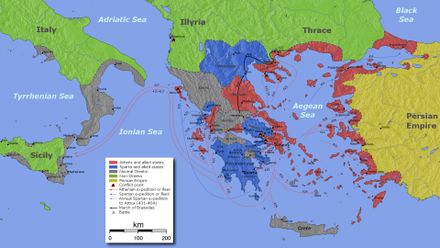
Considering the lives of the refugees long ignored by historians; from the eighth to the sixth centuries B.C., a large percentage of Greeks are uprooted from their homelands; looking at the colonization process from the point of view of the refugees.
S1:E16 • Sep 1, 2012 • 31m
Despite idealized Greek sculptures, real people in the ancient world are at great risk for injuries, disfigurement and disease; the ancients' perspective on disability, deformity and illness; the often crude way these conditions are treated.
S1:E17 • Sep 1, 2012 • 31m
A look at one of the most bizarre religious systems in human history; meeting some of the famous gods of Mount Olympus and the Underworld; experiencing the festivals and observances that are part of Greek religion.
S1:E18 • Sep 1, 2012 • 33m
Despite their lower life expectancy and higher infant mortality, some Greeks manage to live to a ripe old age; discovering the secrets to their longevity; supporting oneself in an era without anything like current retirement systems.
S1:E19 • Sep 1, 2012 • 29m
An ancient Greek faces death head-on; they die in the home; women tend to their body and sing dirges; their corpse is buried outside the city; their spirit is carried across the River Styx to Hades; life among the shades of the dead awaits them.
S1:E20 • Sep 1, 2012 • 30m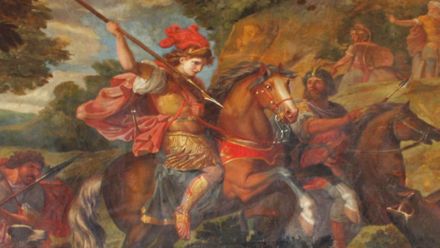
Turning to ancient Persia; how Cyrus the Great is a tolerant and pragmatic ruler who allows his subjects to maintain certain rights; how Darius builds roads, adopts a currency and creates an innovative system of communication and administration.
S1:E21 • Sep 1, 2012 • 32m
Revisiting Egypt in the years after Alexander the Great; touring the city of Alexandria, which is arguably the greatest city of the ancient world; it lies mostly beneath the sea; exploring the ethnic tensions between the Egyptians, Greeks and Jews.
S1:E22 • Sep 1, 2012 • 32m
Seeing how the Romans extend citizenship; as Virgil's "Aeneid" shows, Romans consider it their civic duty to expand their territory for the public good; despite this noble aspiration, they also have a penchant for violence and cruelty.
S1:E23 • Sep 1, 2012 • 30m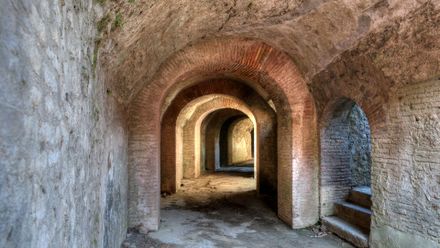
Whether Romans can achieve all they do without the labor of slaves; imagining oneself as part of the largest slave force in human history; exploring manumission, the process by which domestic slaves are sometimes freed.
S1:E24 • Sep 1, 2012 • 31m
What daily life is like for a Roman soldier; how the army is structured; the benefits soldiers could expect; what happens if they are disobedient; what soldiers do when they are not fighting, which is likely constructing the Roman road system.
S1:E25 • Sep 1, 2012 • 31m
A Roman woman lives under the domination of the paterfamilias; there is evidence that loving marriages do exist; exploring wedding rituals; the complexity of Roman women's roles in society; how opportunities for women differ based on class status.
S1:E26 • Sep 1, 2012 • 31m
Exploring the world of Rome's plebeian class; the leaky, rat-infested housing of the urban poor; experiencing the threat of fire that hangs over Rome in the first century A.D.; a glimpse of what sustains the day-to-day life of the poor.
S1:E27 • Sep 1, 2012 • 30m
Exploring the lives of the rich; touring the grand house in the city and the countryside; learning about the customs of dress, food and hygiene; following a wealthy Roman around for the day, complete with doting clients who make him seem important.
S1:E28 • Sep 1, 2012 • 28m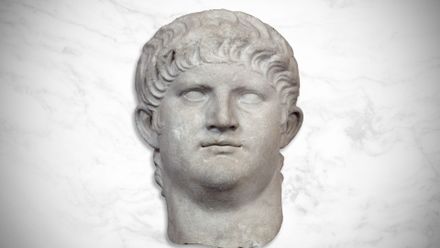
People in ancient Rome strive for recognition; charting the lives of some of Rome's celebrities, including gladiators, charioteers and the emperor Nero; looking at women who know how to hog the limelight, such as Cleopatra and Theodora.
S1:E29 • Sep 1, 2012 • 30m
Experiencing the world of Roman law and order; witnessing crime ranging from midnight muggings to piracy; the variety of punishments meted out in a society lacking prisons, from loss of civic rights and exile to impalement and crucifixion.
S1:E30 • Sep 1, 2012 • 30m
Delving into the spectator side of Roman society; learning about its public games, such as chariot races, theatrical performances, gladiatorial combats and circuses; experiencing the venues, the violence and the excitement of relaxing Roman style.
S1:E31 • Sep 1, 2012 • 30m
Cicero calls the Romans the most religious of all mortals; what religion means in the Roman world, both inside the family and in the state at large; seeing how the Roman view of the gods differs from the Greek perspective.
S1:E32 • Sep 1, 2012 • 30m
The Romans require the Jews to acknowledge their gods and emperor; this conflict escalates in the 1st century; acts of terrorism; the outbreak of the Jewish revolt of 66 A.D.; the destruction of Jerusalem; the diaspora.
S1:E33 • Sep 1, 2012 • 31m
Among the competitors of Roman polytheism is a religion that preaches love and salvation; charting the rise of Christianity over the first few centuries; exploring the daily lives of those who hold their faith in the face of Roman persecution.
S1:E34 • Sep 1, 2012 • 29m
Focusing on the world of the Celts, a mysterious European race that leaves few excavation sites; the daily life of a Celtic village during the Iron Age; it is a world of tribes, chieftains, war, bravery and the legendary Druids.
S1:E35 • Sep 1, 2012 • 31m
Picturing what it is like to be a British native under Roman rule; making peace with being subjugated; the Romans build cities, show natives new agricultural practices and protect the island for 365 years; being abandoned by them.
S1:E36 • Sep 1, 2012 • 29m
Meeting the people who fill the vacuum left by the Romans; the Anglo-Saxons invade Britain at the beginning of the so-called Dark Ages; meeting the thanes, the peasants and the slaves; examining the lives of monks and nuns.
S1:E37 • Sep 1, 2012 • 30m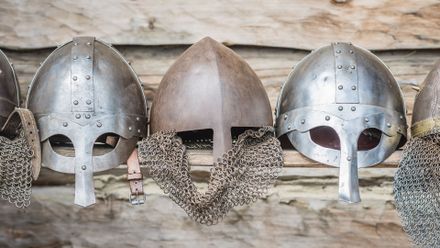
The Vikings are always on the "other side" of history, getting at the truth of this enigmatic culture; while a small number are the raiders known from other accounts, the Vikings have a vibrant trading practice based on the sea.
S1:E38 • Sep 1, 2012 • 30m
Going inside the invasion of England by the Normans, who win the Battle of Hastings; learning about Norman culture; its lasting influence on the British; the creation of a strong central government that fortifies the island to the present.
S1:E39 • Sep 1, 2012 • 31m
From the Magna Carta to the rise of vernacular English, the Middle Ages mark a turning point for the "other side" of history; finding out what influences life for ordinary people, from the control of the church to the horrors of the Black Death.
S1:E40 • Sep 1, 2012 • 29m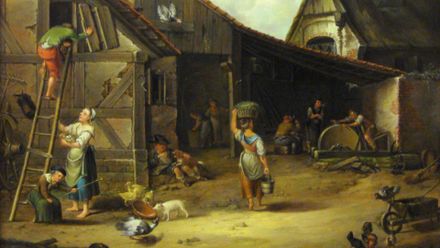
The daily life of peasants in the wake of the Black Death; the poor organize the Peasants' Revolt in 1381, the first popular uprising of its kind; seeing the dinner tables of everyday people; the anonymous cemeteries where they are buried.
S1:E41 • Sep 1, 2012 • 30m
A woman has few options during the Middle Ages, which are patriarchal and male-dominated; Chaucer's Wife of Bath, the seducer in "Sir Gawain and the Green Knight" and the notion of courtly love all add new dimensions to womanhood.
S1:E42 • Sep 1, 2012 • 28m
How the medieval church wields enormous influence over the lives of ordinary people; how it tries to maintain that influence; life as a clergyman; the world of a monastery; seeing what becomes of those the church deems heretics.
S1:E43 • Sep 1, 2012 • 29m
Gaining new insights into the realities of knighthood, from the rigorous training during childhood to the bloodthirstiness of battle; studying the code of chivalry, where courtesy is the mark of a civilized man.
S1:E44 • Sep 1, 2012 • 29m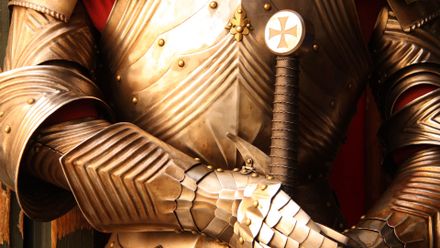
Unpacking the term "Crusade"; situating it in its cultural context; when Pope Urban says it is the Christians' duty to take up arms against the "infidels", ordinary people believe they are fighting to save Christianity from the advance of Islam.
S1:E45 • Sep 1, 2012 • 30m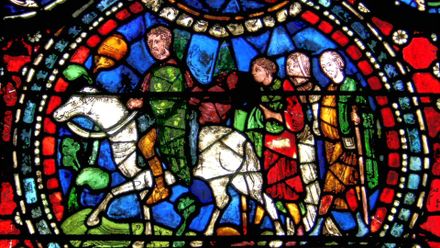
Imagining one of Chaucer's pilgrims on their way to visit Thomas Becket's tomb; going from London all the way to the crowds at Canterbury; turning to the 3,000-mile trek from England to Jerusalem to visit the holiest shrine in Christendom.
S1:E46 • Sep 1, 2012 • 28m
Sports and leisure in the Middle Ages are not that different from those of the modern day; the origins of soccer; the history of chess; the variety of medieval music; concluding with a look at touring entertainers and professional guilds.
S1:E47 • Sep 1, 2012 • 32m
Reflecting on the humanistic value of putting oneself in the hearts and minds of ordinary people from history; the difference between their lives and those of modern people; connecting with the anonymous majority making up the other side of history.
S1:E48 • Sep 1, 2012 • 36m