

Understanding the Inventions That Changed the World
S1:E28 Nuclear Power
Studying nuclear weapons and nuclear power; nuclear technology inspires the utopian dream of cheap, abundant electricity as well as the apocalyptic fear of annihilation; a look at the inner workings and risks of nuclear bombs and reactors.
Already subscribed?
Sign in
People are surrounded by great inventions that have transformed their daily lives; beginning the exploration of great inventions by considering just how pervasive inventions are; knowing how they work; who invented them and why.
S1:E1 • Aug 31, 2013 • 31m
Stepping back to the Stone Age to look at the craft of pottery and the development of metals; although one might think of ancient people as primitive, early humans were observant about the world around them; showcasing several complex inventions.
S1:E2 • Aug 31, 2013 • 33m
Technology and material abundance; how the Agricultural Revolution changes life for early humans; tracing the development of alcoholic beverages, from the earliest days of civilization through the Middle Ages; the cultural insights alcohol can offer.
S1:E3 • Aug 31, 2013 • 32m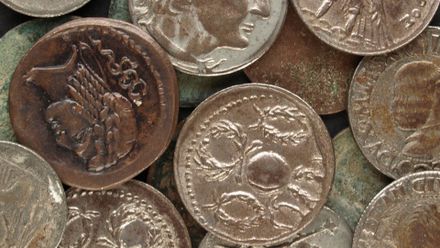
Technology, whether it is an oxcart or a telecommunications network, facilitates interaction between people; exploring the role of trade in early societies; how ships, coins and the alphabet shape the civilizations of the ancient Mediterranean.
S1:E4 • Aug 31, 2013 • 27m
Studying the use of technology in securing and maintaining political power; examining the role of the crossbow in the Warring States era of China; the crossbow is a marvel of engineering that shapes the political history of China for centuries.
S1:E5 • Aug 31, 2013 • 26m
The glory of Roman engineering, from the Romans' system of roads to their impressive monuments; how these structures work from a technical standpoint; why build them; studying Roman history; exploring the way in which technology serves state ends.
S1:E6 • Aug 31, 2013 • 28m
Two inventions that move humanity from the ancient to the modern world; the waterwheel is the first major energy source beyond human muscle and animal labor that frees people to perform sophisticated tasks; the development of the mechanical clock.
S1:E7 • Aug 31, 2013 • 30m
Witnessing the evolution of the pagoda and the cathedral, which grow out of the spiritual practices of East Asia and Europe respectively; how religious beliefs can inspire developments in engineering and architecture.
S1:E8 • Aug 31, 2013 • 31m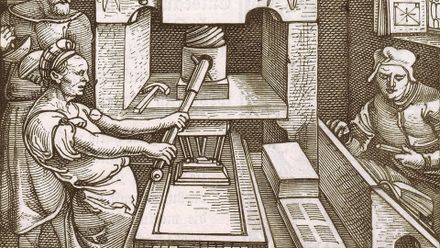
Surveying the development of writing, from the days of clay tablets and parchment through the development of the printing press; the history of movable type; how different cultural circumstances shape the impact of different inventions.
S1:E9 • Aug 31, 2013 • 27m
Witnessing the origins of gunpowder in ancient China; tracing its movement into Europe; the development of gunpowder weapons; how cannons, rifles and handguns change the face of warfare as well as the world's political and social structures.
S1:E10 • Aug 31, 2013 • 26m
Not all inventions arise from science; the history of telescopes and microscopes shows that the invention of new technology facilitates scientific advances; optical technology drives the Scientific Revolution, inspiring Galileo and others.
S1:E11 • Aug 31, 2013 • 35m
The story of Prince Henry the Navigator; his promotion of ship design and navigation during the 15th century and its influence; better ships, information about wind and currents, and new navigation techniques; political and economic change in Europe.
S1:E12 • Aug 31, 2013 • 37m
The Industrial Revolution, which is marked by economies of speed, scale and coordination as well as improvements in transportation; how the high thermal output of coal allows for new uses of iron, which lead to bigger and stronger machines.
S1:E13 • Aug 31, 2013 • 28m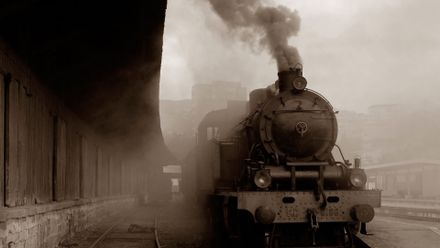
How the invention of the steam engine allows people to produce more goods more efficiently; the division of labor and Adam Smith's story of pin-making show how the integration of social and technical innovations causes improvements in production.
S1:E14 • Aug 31, 2013 • 28m
In the 18th and 19th centuries, canals and railroads provide the backbone of the Industrial Revolution; investigating the engineering challenges of creating nationwide transportation systems; the connection between infrastructure and the economy.
S1:E15 • Aug 31, 2013 • 30m
The modern food industry appears during the Industrial Revolution; advancements in canning and refrigeration; these improvements transform the American marketplace, redefine the cultural meaning of home and lay the groundwork for year-round products.
S1:E16 • Aug 31, 2013 • 29m
The history of water and sewer systems; seeing how they change the world in the 19th century; from the Roman aqueducts and the London sewer system to indoor plumbing, a clean water supply saves lives; how inventions serve the public good.
S1:E17 • Aug 31, 2013 • 30m
A look at where batteries and electric generators come from; how they work; the relationship between electricity and magnetism; the difference between direct and alternating currents; the role of science and experimentation.
S1:E18 • Aug 31, 2013 • 27m
The mid-19th century sees the rise of analog communications, where film and electric currents are used as substitutes for an object or message; the inventors of the first information age; how they make information and knowledge available to millions.
S1:E19 • Aug 31, 2013 • 30m
Electricity reshapes American culture and sets the stage for the major inventions of the 20th century; an introduction to the history and science of electricity; the inventions of Thomas Edison and Nikola Tesla; the rivalry between their companies.
S1:E20 • Aug 31, 2013 • 32m
The consumption side of the story; the 19th and early 20th centuries give rise to the department store, the mail order catalog and chain stores; how these new ways of selling goods shape American life and lead to some of the most iconic brands.
S1:E21 • Aug 31, 2013 • 30m
The 20th century can be seen as a time of mass production, mass market and mass destruction; mass entertainment is exemplified by the rise of Hollywood and the film industry; tracking the development of motion pictures and the inventions behind them.
S1:E22 • Aug 31, 2013 • 28m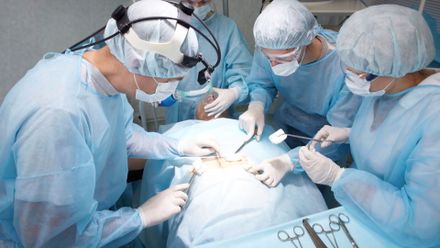
Medicine before the 19th century is not a pleasant affair, especially when it comes to surgery; exploring medical innovations such as the operating room, sterilization procedures and antibiotics; social challenges to introducing these innovations.
S1:E23 • Aug 31, 2013 • 27m
The engineering trends of the 20th century are based on new materials; diving into the world of steel, glass and plastics; finding out how these materials transform people's daily lives and their expectations of what the world should look like.
S1:E24 • Aug 31, 2013 • 34m
Other than the personal computer, the Model T is perhaps the single most important technological artifact of the 20th century; surveying the history of automobiles; meeting Henry Ford; discovering the story of the Model T.
S1:E25 • Aug 31, 2013 • 25m
Understanding the lesson that social or political circumstances are as important for an invention's success as the technology itself; tracing the development of aviation, from the Wright brothers' flight at Kitty Hawk through the jet age.
S1:E26 • Aug 31, 2013 • 26m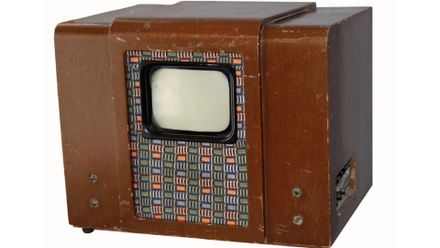
The sudden emergence of broadcasting in the 1920s leads to competition between broadcast networks; the technology of radio and television; the challenges broadcasters face; the origin of radio commercials; the cultural effects of these technologies.
S1:E27 • Aug 31, 2013 • 30m
Studying nuclear weapons and nuclear power; nuclear technology inspires the utopian dream of cheap, abundant electricity as well as the apocalyptic fear of annihilation; a look at the inner workings and risks of nuclear bombs and reactors.
S1:E28 • Aug 31, 2013 • 31m
Drawing on themes that include the mass production of goods; how appliances such as vacuum cleaners and washing machines are invented; how they change life in American homes; how they act as symbols for the middle class.
S1:E29 • Aug 31, 2013 • 26m
How the combination of several essential functions leads to the production of electronic gadgets such as radios and computers; exploring the world of vacuum tubes, transistors and integrated circuits.
S1:E30 • Aug 31, 2013 • 27m
Visiting the world of communications satellites, radio towers and mobile networks; an in-depth look at how bandwidth, infrastructure and competition between companies like Motorola and AT&T allow for truly global communications.
S1:E31 • Aug 31, 2013 • 27m
A tour of personal computing, beginning with its roots in the 1920s and World War II; comparing the mainframes of the 1960s with today's PCs; considering the key roles of software programming and graphical user interfaces.
S1:E32 • Aug 31, 2013 • 28m
The story of genetics, from Darwin and Mendel to Watson and Crick; genetic engineering, which is the direct manipulation of an organism's hereditary information by introducing foreign DNA or synthetic genes; the important applications of PCR.
S1:E33 • Aug 31, 2013 • 26m
Where the World Wide Web comes from; how it works; the conversion from analog to digital; the world of file sharing, packet switching, the Defense Department's inter-network and email; web browsers, search engines and Internet advertising.
S1:E34 • Aug 31, 2013 • 26m
Inventions are not necessarily finished until they are put into the hands of consumers, which is apparent in the world of social media; looking at the evolution of social media; its role in global political events.
S1:E35 • Aug 31, 2013 • 33m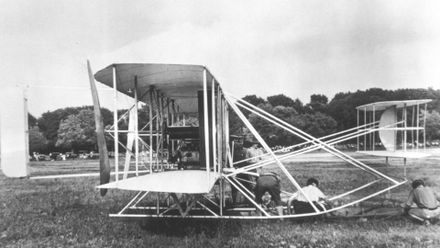
How studying inventions changes one's understanding of history; reflecting on the material dimension of history; considering the nature of progress; some key messages about how one can use yesterday's technology to solve tomorrow's problems today.
S1:E36 • Aug 31, 2013 • 32m