

Life in the World's Oceans
S1:E29 The Urban Ocean: Human Impact on Marine Life
The high-tech use of the ocean has far-reaching effects, particularly on certain species; focusing on various issues to mitigate humans' impact and provide better futures; the work begins with understanding the extent of the impact.
Already subscribed?
Sign in
So much of what people take for granted about the world is a direct cause of the structure and polarity of H2O; learning how those specific properties make water the essential ingredient for life as it is known.
S1:E1 • Feb 2, 2018 • 35m
Climate, weather and foods are determined to a great extent by ocean circulation; the uneven heating of the Earth by the Sun and the Coriolis effect result in circulation cells of air, the movement of water masses and "hot spots" of marine life.
S1:E2 • Feb 2, 2018 • 33m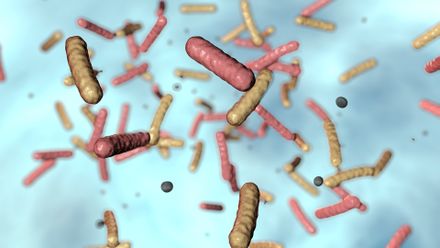
How and where life begins on Earth; photosynthetic and chemosynthetic food chains point to the possibility that life could originate through two different paths; life begins in the oceans; bacteria are the most successful organisms on the planet.
S1:E3 • Feb 2, 2018 • 37m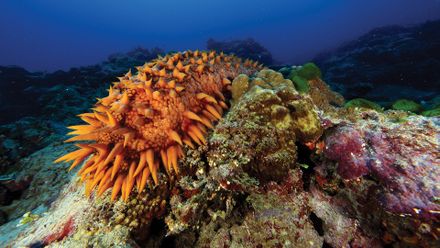
Beach organisms exist with the constantly changing winds, waves and tides; life in estuaries faces constant fluctuations in environmental salinity; hard corals are continually pummeled by wave action; each of these environments can be diverse.
S1:E4 • Feb 2, 2018 • 30m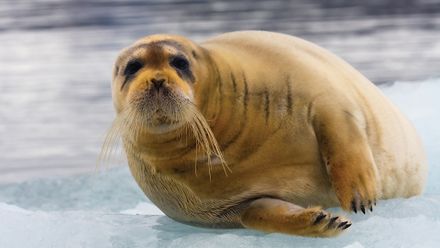
Phytoplankton form the base of almost all marine food chains, including that of the blue whale; far below the penetration of sunlight, a very different and only recently discovered food web relies solely on the chemosynthetic ability of bacteria.
S1:E5 • Feb 2, 2018 • 29m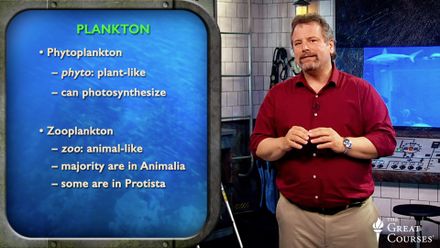
Humans owe their existence to phytoplankton, dinoflagellates, green algae cyanobacteria, and others; scientists believe they are the ancestors of terrestrial plants; phytoplankton continues to produce about half of all the oxygen in the atmosphere.
S1:E6 • Feb 2, 2018 • 29m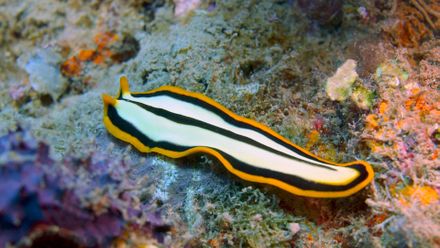
The vast majority of animals on the planet are invertebrates; marine invertebrates exhibit variety in form and function; they include sessile and mobile organisms, free-living and parasitic; they live at the surface and within the ocean floor.
S1:E7 • Feb 2, 2018 • 33m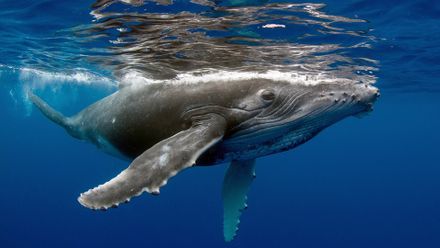
Pondering which species should be identified as "marine"; the complex marine food webs maintain long-term stability, even as they undergo natural perturbations over time; when Homo sapiens enter as an apex predator, productivity can deteriorate.
S1:E8 • Feb 2, 2018 • 33m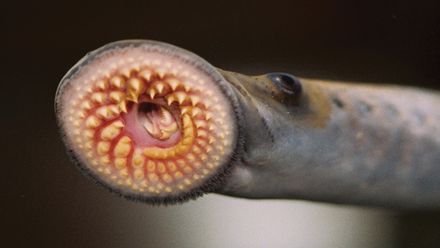
How gills, swim bladders, bioluminescence, chemosensory glands, echolocation and electrolocation allow fish to succeed in almost every type of ocean environment; surprising information about which fish may be humans' ancestors.
S1:E9 • Feb 2, 2018 • 32m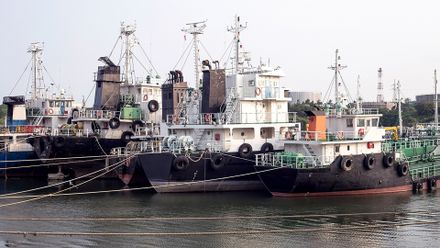
Humans have only recently had a significant impact on marine food webs; industrialization leads to problems with by-catch and overexploitation of resources; humans are creating trophic cascades with long-term impacts not yet understood.
S1:E10 • Feb 2, 2018 • 33m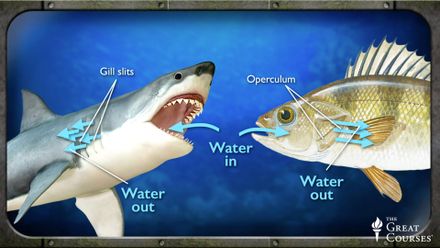
Fish have good reason to fear these top-of-their-game predators; four species are known to assault humans with no provocation; almost 99 percent of the many hundred shark species would rather swim away from humans than attack.
S1:E11 • Feb 2, 2018 • 34m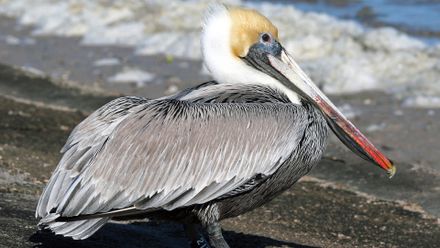
Some reptiles retain strong marine ties; these include sea turtles and seabirds whose wide variety of adaptations allow for drinking saltwater, remaining underwater for long periods and flying great distances using very little energy.
S1:E12 • Feb 2, 2018 • 31m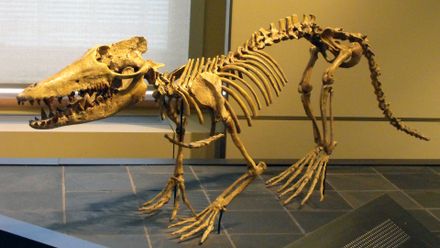
Marine mammals evolve from land mammals who find a plethora of "suddenly" open ecological niches; today's marine mammals might resemble each other because convergent evolution leads to similar adaptation; they have five separate lineages.
S1:E13 • Feb 2, 2018 • 30m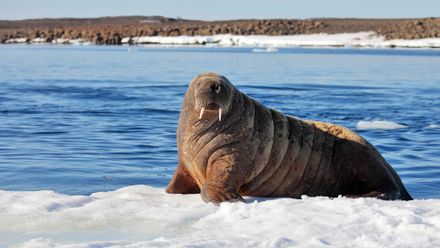
Evolution results in an array of marine mammal adaptations; with the ability to process thousands of gallons of water each day or dive to a depth of almost three kilometers, these creatures can thrive in varied environments.
S1:E14 • Feb 2, 2018 • 31m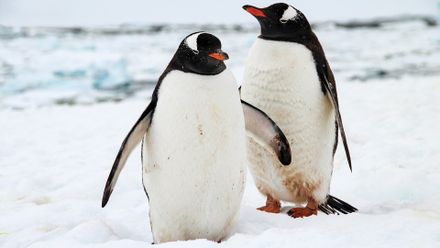
Humans are not adapted to life in the sea; what they are missing is blubber; it is such a successful insulator that marine mammals evolve internal and external means for getting rid of all that heat, possibly even including planetary migrations.
S1:E15 • Feb 2, 2018 • 31m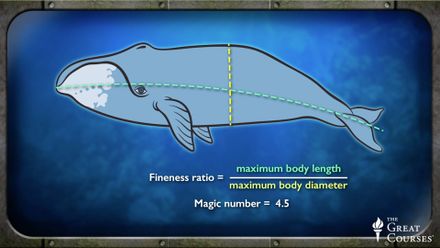
Marine mammals navigate a viscous, three-dimensional environment with all its opportunities and challenges; understanding their propulsion mechanisms; wondering how they control their buoyancy to position themselves in the water column.
S1:E16 • Feb 2, 2018 • 28m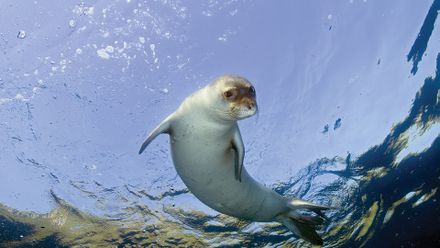
Adaptations including those related to blood chemistry, the location of stored oxygen and a variable heart rate support deep-diving marine mammals' ability to go deep and stay long; how they avoid getting "the bends" while rising to the surface.
S1:E17 • Feb 2, 2018 • 32m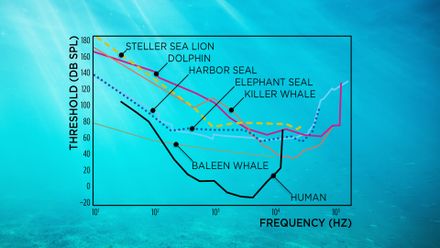
Sound travels much better in water than in air; low-frequency waves, such as those produced by certain whales, allow the animals to be "in touch" with their group over vast distances; what happens when human-generated sound gets in the way.
S1:E18 • Feb 2, 2018 • 34m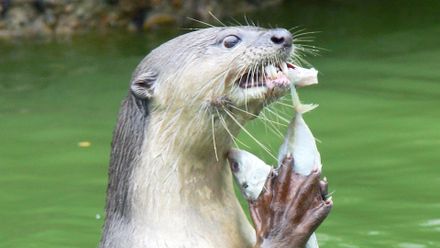
Almost all marine food webs are based on microscopic photosynthesizers; only a small fraction of the energy available at any trophic level becomes available to the next level; adaptations allow these large animals to meet their energy needs.
S1:E19 • Feb 2, 2018 • 30m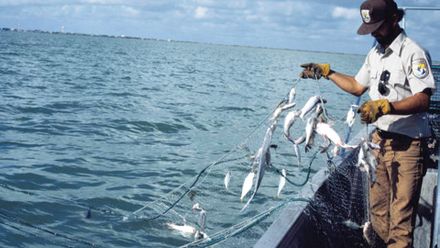
By-catch becomes an even greater problem for marine mammals; which leads to the passing of the Marine Mammal Protection Act in 1972; whale entanglement remains a problem; some argue that even whaling is far less cruel.
S1:E20 • Feb 2, 2018 • 31m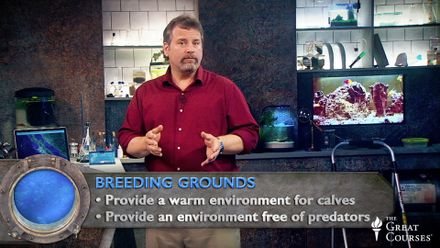
Semiaquatic marine mammals exhibit behaviors different from those who live fully in the water; in the former, a female community needs relatively few males to reproduce; in the latter, reproduction appears to be a driving force of whale songs.
S1:E21 • Feb 2, 2018 • 33m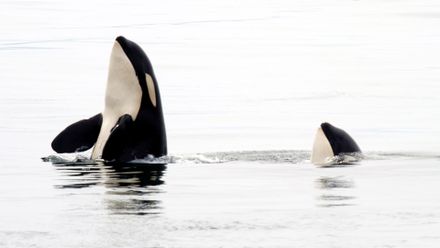
Marine mammals develop a variety of social and hunting behaviors over millions of years; if the energy expenditure does not support the goal of passing on genetic material, natural selection will eventually drop the adaptation.
S1:E22 • Feb 2, 2018 • 31m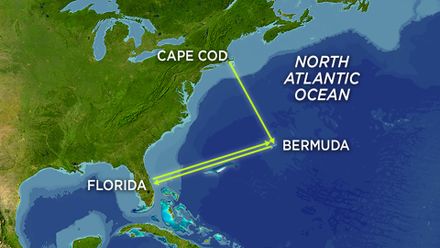
Marine mammals adapt to the widest possible variety of marine ecological niches; some live only in rivers or lakes; others live only in waters over the continental shelves; some live in the open ocean; a few even adapt to life at the poles.
S1:E23 • Feb 2, 2018 • 33m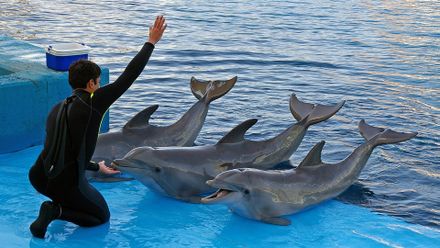
Marine mammals develop sophisticated communication; they can be trained to learn rules; documented instances of learning and cultural transmission of information; pondering whether their intelligence is comparable to humans' own.
S1:E24 • Feb 2, 2018 • 35m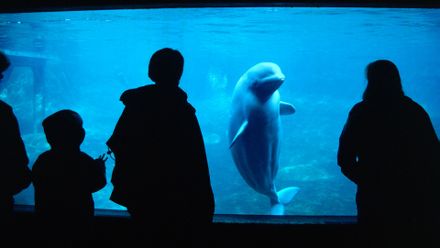
Whether marine mammals are a resource or intelligent creatures to be revered; the answer might depend to some extent on one's country and culture of origin; increasing one's understanding of the biology, cognition and sociality of marine mammals.
S1:E25 • Feb 2, 2018 • 32m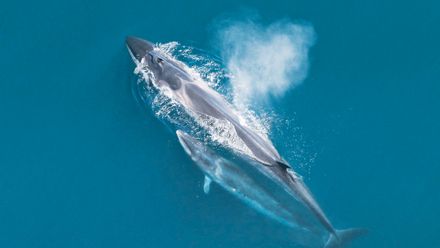
Worldwide industrial whaling of the early 20th century; six species of whales are hunted to dangerously low numbers; as their populations continue to recover, some countries are expected to promote a resumption of the commercial whale hunt.
S1:E26 • Feb 2, 2018 • 32m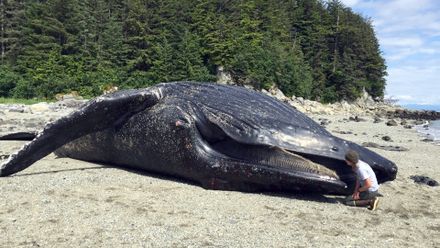
It requires very specific skills to help stranded marine mammals; even with the best intentions and professional assistance, not all animals can be saved; what can be learned from these strandings; where they are most likely to occur.
S1:E28 • Feb 2, 2018 • 31m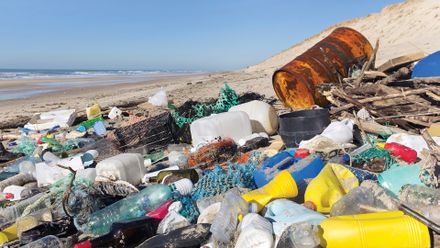
The high-tech use of the ocean has far-reaching effects, particularly on certain species; focusing on various issues to mitigate humans' impact and provide better futures; the work begins with understanding the extent of the impact.
S1:E29 • Feb 2, 2018 • 35m
Humans contribute to global climate change, ocean acidification and overfishing; the results are potentially catastrophic, both to marine life and to human health; there is a light at the end of this tunnel; it depends in part on one's own actions.
S1:E30 • Feb 2, 2018 • 42m