

The Great Ideas of Philosophy, 2nd Edition
S1:E4 What Is There?
The universe is made of various elements, but it all seems reducible to one specific thing.
Already subscribed?
Sign in
Throwing light on the roles of Homer, ancient Greeks, and some Sanskrit texts in teaching the world about critical reflection.
S1:E1 • Dec 27, 2004 • 31m
Learning why the ancient Greeks expressed and scrutinized their innermost feelings and thoughts.
S1:E2 • Dec 27, 2004 • 31m
An abstract perspective can help determine an individual's place within the vast universe.
S1:E3 • Dec 27, 2004 • 30m
The universe is made of various elements, but it all seems reducible to one specific thing.
S1:E4 • Dec 27, 2004 • 31m
Remembering and learning about the world's first great dramatists and their profound ideas.
S1:E5 • Dec 27, 2004 • 29m
According to Herodotus's observation of humanity, there is plenty to learn from history.
S1:E6 • Dec 27, 2004 • 30m
Learning how rhetoric wins arguments and philosophy guides individuals to humanity.
S1:E7 • Dec 27, 2004 • 31m
If one knows what to look for, a search is not necessary. And if one does not know, that search is impossible. Greek philosopher Plato delves into this dichotomy in his fictional Socratic dialogue.
S1:E8 • Dec 27, 2004 • 31m
While trying to establish whether virtue is teachable, Daniel N. Robinson delves into the Socratic recognition of multiculturalism and moral relativism.
S1:E9 • Dec 27, 2004 • 31m
Plato uses the polis as a metaphor in his famous dialogue to explain the expanded version of the person. In this setting, all fates are believed to be inextricably entwined.
S1:E10 • Dec 27, 2004 • 31m
Learning how Hippocratic medicine demystified the human condition and made lives easier.
S1:E11 • Dec 27, 2004 • 29m
Smith measures a triangle's angles while Jones knows them by definition. And Greek philosopher Aristotle must determine whether they know the same thing.
S1:E12 • Dec 27, 2004 • 31m
Aristotle's idea of equality in healthy friendships.
S1:E13 • Dec 27, 2004 • 30m
Aristotle's idea of a fulfilling human life.
S1:E14 • Dec 27, 2004 • 31m
Learning how the ancient Greek Stoics and the Romans civilized the world through philosophy.
S1:E15 • Dec 27, 2004 • 31m
Studying about the Jewish Christians and how they defended a monotheistic source of law.
S1:E16 • Dec 27, 2004 • 29m
The Roman system of law is one of the noteworthy achievements in the history of civilization.
S1:E17 • Dec 27, 2004 • 29m
Considered the pinnacle of the early Christian Church-related ideas, Saint Augustine explores the human capacity for good and evil.
S1:E18 • Dec 27, 2004 • 30m
While delving into the Prophet's teachings and their impact on the masses, Daniel explains how the Western world perceived these so-called Eastern heresies.
S1:E19 • Dec 27, 2004 • 31m
The present-day concept of a university can be traced back to 12th-century Paris.
S1:E20 • Dec 27, 2004 • 31m
Studying the first great renaissance of 13th-century Oxford to learn about Roger Bacon's connection to the field of experimental science.
S1:E21 • Dec 27, 2004 • 30m
The concept of critical inquiry in jurisprudence stems from Thomas Aquinas's treatises on law.
S1:E22 • Dec 27, 2004 • 30m
Throughout history, humanistic thought challenges the ones who seek to defend religious faith. This is evident in the works of Petrarch and Erasmus.
S1:E23 • Dec 27, 2004 • 30m
Studying the ominous presence of natural magic and cruel superstition amid the Renaissance.
S1:E24 • Dec 27, 2004 • 31m
Learning how Francis Bacon became one of the originators of modern experimental science.
S1:E25 • Dec 27, 2004 • 30m
Descartes emphasizes the significance of reason in his famous phrase "I think, therefore I am."
S1:E26 • Dec 27, 2004 • 30m
Studying the connection between Newtonian science and the Enlightenment thinkers.
S1:E27 • Dec 27, 2004 • 30m
While social science gains traction, Hobbes's treatise prepares people for a changed future.
S1:E28 • Dec 27, 2004 • 30m
The mind can be considered a microcosm of the entire physical reality, presumably composed of smaller elements held together by a strong force of attraction.
S1:E29 • Dec 27, 2004 • 30m
Learning how Irish philosopher George Berkeley's extravagant critique of materialism unintentionally supports the skeptics he aimed to counter.
S1:E30 • Dec 27, 2004 • 30m
Regarded as one of the most influential philosophers to write in English, David Hume pushes the boundaries of empiricism by grounding morality, truth, causation and governance in experience.
S1:E31 • Dec 27, 2004 • 31m
Thomas Reid, a successful and influential critic of Hume's work, inspires America's founders with a naturalistic common sense psychology compatible with religious teaching.
S1:E32 • Dec 27, 2004 • 30m
Through their works, the 18th-century French thinkers like Voltaire, Rousseau, Condorcet and Diderot encourage skepticism toward traditional authority.
S1:E33 • Dec 27, 2004 • 31m
Supporting the proposed constitution of the US, an extraordinary collection of 18th-century documents represents a profound legacy in political philosophy.
S1:E34 • Dec 27, 2004 • 30m
Kant challenges the limits of reason with his unique perspective on Enlightenment and freedom.
S1:E35 • Dec 27, 2004 • 30m
Kant studies human existence in both natural and moral settings.
S1:E36 • Dec 27, 2004 • 30m
Studying the influence of Franz Gall's phrenology theory on the present-day brain sciences.
S1:E37 • Dec 27, 2004 • 31m
Romantic idealists like Goethe and Schiller's ideas of freedom form a significant part of the debate concerning the negative aspects of science.
S1:E38 • Dec 27, 2004 • 31m
German philosopher Hegel's "Reason in History" and other literary works are considered instrumental in inspiring transcendentalism across the US, Great Britain, and the rest of Europe.
S1:E39 • Dec 27, 2004 • 31m
Studying the rise of aestheticism and the simultaneous narrowing scientific view among intellectuals in the late 19th century.
S1:E40 • Dec 27, 2004 • 30m
German classical scholar Friedrich Nietzsche ties every human decision to his self-coined equivocal concept of "will to power," which has sparked debates for ages.
S1:E41 • Dec 27, 2004 • 29m
According to British philosopher J.S. Mill, there is only one legitimate reason for the state or majority to exercise power over individuals. He further delves into this topic in his 1859 book "On Liberty."
S1:E42 • Dec 27, 2004 • 30m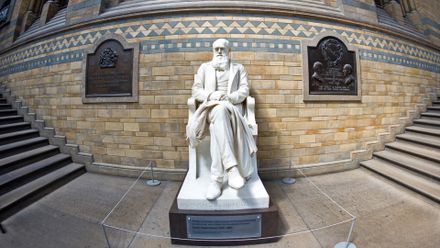
Emerging in the late 18th and 19th centuries, English naturalist Charles Darwin's concepts of evolutionary science are believed to have had significant socio-political reverberations.
S1:E43 • Dec 27, 2004 • 30m
The present has reduced the once-influential Marxist ideologies to a mere subtext.
S1:E44 • Dec 27, 2004 • 31m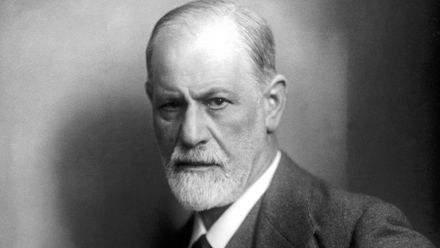
Eminent 19th-century thinkers Marx, Darwin and Freud are considered pioneers of modern social and self-understanding. Their presumably scientific approach anchors theories in observable facts.
S1:E45 • Dec 27, 2004 • 31m
Renowned philosopher William James opposes rigid "block universes" and theoretical arrogance. As the father of American psychology, he has something much better to offer.
S1:E46 • Dec 27, 2004 • 30m
Rooted in common sense, William James steers philosophy and science toward unveiling humanity's deepest and most enduring interests.
S1:E47 • Dec 27, 2004 • 30m
Renowned 20th-century Austrian scholar Ludwig Wittgenstein deliberates on the science and philosophy behind word meanings in language.
S1:E48 • Dec 27, 2004 • 29m
Alan Turing, the father of modern computer science, is famous for breaking Germany's WWII Enigma code. In his papers, he dwells on the possibility of repeating the feat with the human mind.
S1:E49 • Dec 27, 2004 • 31m
A good life can take on any of these forms: the contemplative, the active, the fatalistic, or the hedonistic. Each one presents a compelling case, albeit with limited arguments.
S1:E50 • Dec 27, 2004 • 32m
From the Greek word "ontos," arises a branch of metaphysics known as ontology, which explores the concept of "real being." Debates within ontology have significant moral and societal consequences.
S1:E51 • Dec 27, 2004 • 28m
Thomas Kuhn's "The Structure of Scientific Revolutions" can help ascertain whether science must address fundamental questions with precision and objectivity.
S1:E52 • Dec 27, 2004 • 30m
Psychology covers a wide range of interests and entails a multitude of complexities. The most dominant research tool in this domain is cognitive neuroscience.
S1:E53 • Dec 27, 2004 • 31m
When it comes to the philosophy of mind, the key debate centers on whether a scientific or humanistic approach is more appropriate for examining issues.
S1:E54 • Dec 27, 2004 • 29m
David Hume's philosophy rejects the idea of an objective moral reality in the external world.
S1:E55 • Dec 27, 2004 • 29m
Moral philosophy offers a sense of direction in the medical domain, where crucial life-and-death choices are a routine occurrence.
S1:E56 • Dec 27, 2004 • 30m
Scholars like Aristotle, Cicero, Jeremy Bentham and John Austin's contributions to the evolution of natural law theory into its more sophisticated contemporary version.
S1:E57 • Dec 27, 2004 • 30m
Propounded by Saint Augustine, Thomas Aquinas and later scholars like Francisco de Vitoria and Francisco Suárez, the "just war" theories outline criteria for morally justified wars.
S1:E58 • Dec 27, 2004 • 30m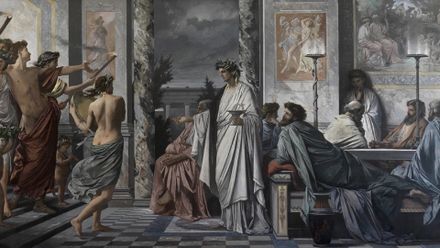
Beauty is a frequently examined topic in philosophy, with even Plato pondering it in his writings. However, its rational definition remains open to question.
S1:E59 • Dec 27, 2004 • 30m
Examining the thought-provoking theological insights sprouting from the minds of renowned scholars like Thomas Aquinas, Thomas Reid and William James.
S1:E60 • Dec 27, 2004 • 30m