

Money and Banking: What Everyone Should Know
In a 36-part lecture, renowned economist and professor Michael K. Salemi provides insight into the world of finance and its significance in human lives.
Already subscribed?
Sign in
The professor explains money's fundamental nature as a social institution and a contract.
S1:E1 • Jan 13, 2012 • 31m
There are five stages in the evolution of money.
S1:E2 • Jan 13, 2012 • 30m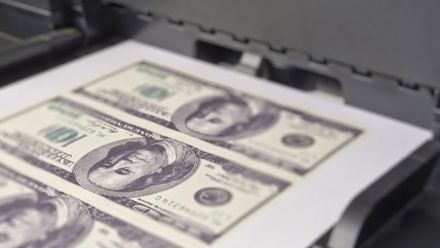
The professor elaborates on the invention of paper money and the history of the gold standard.
S1:E3 • Jan 13, 2012 • 30m
The professor discusses key issues related to national currency and coinage.
S1:E4 • Jan 13, 2012 • 28m
Various nontraditional models can be effective in solving economic problems.
S1:E5 • Jan 13, 2012 • 30m
There is a correlation between inflation and the consumer price index.
S1:E6 • Jan 13, 2012 • 30m
Perhaps, governments are the root cause of extreme inflation.
S1:E7 • Jan 13, 2012 • 29m
In economics, investment can be defined as the increase in a nation's capital stock.
S1:E8 • Jan 13, 2012 • 32m
It is crucial to understand the difference between nominal and real interest rates.
S1:E9 • Jan 13, 2012 • 28m
Intermediaries like commercial banks facilitate borrowing and lending in a financial system.
S1:E10 • Jan 13, 2012 • 32m
Banks acquire funds from various sources to fulfill multiple financial purposes.
S1:E11 • Jan 13, 2012 • 30m
Central banks play a critical role in economies by providing banking services to commercial banks.
S1:E12 • Jan 13, 2012 • 29m
The concept of present value has various applications in an individual's everyday life.
S1:E13 • Jan 13, 2012 • 30m
Expected value serves as a valuable statistical tool for forecasting potential outcomes.
S1:E14 • Jan 13, 2012 • 29m
People worry about potential losses more than they feel excited about pursuing likely gains.
S1:E15 • Jan 13, 2012 • 29m
Treasury bills and bonds are two of the many commonly used bond instruments in the financial market.
S1:E16 • Jan 13, 2012 • 31m
The professor provides insight into secondary bond market operations and their investment offerings.
S1:E17 • Jan 13, 2012 • 30m
Interest rates represent the market prices established within the current credit market.
S1:E18 • Jan 13, 2012 • 28m
Interest rates can change depending on certain factors.
S1:E19 • Jan 13, 2012 • 33m
The expectations hypothesis is a known concept in finance and economics.
S1:E20 • Jan 13, 2012 • 32m
The professor sheds light on the history of stock markets and the intricacies of trading.
S1:E21 • Jan 13, 2012 • 30m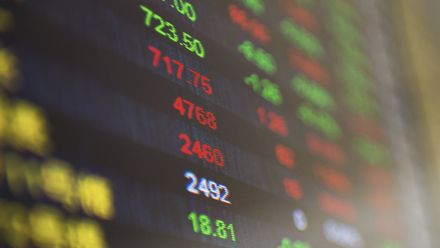
Numerous variables determine prices in the stock market.
S1:E22 • Jan 13, 2012 • 32m
The professor introduces the concept of group psychology in stock investing.
S1:E23 • Jan 13, 2012 • 28m
One can create derivative securities using underlying products in financial markets.
S1:E24 • Jan 13, 2012 • 32m
Asymmetric information affects financial markets in multiple ways.
S1:E25 • Jan 13, 2012 • 29m
When it comes to government bailouts of financial firms, there are various advantages and disadvantages to consider.
S1:E26 • Jan 13, 2012 • 31m
The professor traces the dramatic origins of the subprime mortgage crisis of 2008.
S1:E27 • Jan 13, 2012 • 31m
The Federal Reserve raises or lowers short-term interest rates depending on various factors.
S1:E28 • Jan 13, 2012 • 31m
Governments draft monetary policies with certain objectives in mind.
S1:E29 • Jan 13, 2012 • 30m
The Federal Reserve's predictable policy can offer several advantages.
S1:E30 • Jan 13, 2012 • 30m
The professor describes the Federal Reserve's response to the 2008 Great Recession.
S1:E31 • Jan 13, 2012 • 29m
Economists measure the level of independence and transparency of a central bank.
S1:E32 • Jan 13, 2012 • 32m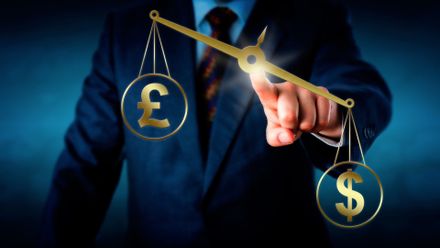
Currency exchange rates fluctuate depending on demand and supply.
S1:E33 • Jan 13, 2012 • 29m
Various factors influence exchange rates in the short and long run.
S1:E34 • Jan 13, 2012 • 32m
Coordinated interest rate policy offers several benefits.
S1:E35 • Jan 13, 2012 • 30m
Three crucial questions confront the world's financial systems.
S1:E36 • Jan 13, 2012 • 34mMore Like This
 2020 • TVPG • 14mDetails
 TVPG • 1 season
 TVPG • 1 season
 TVPG • 1 season
 TVPG • 2 seasons
 TVPG • 1 season
 TVPG • 1 season
 PG • 1 season
 TVPG • 1 season
 TVPG • 1 season
 TVPG • 1 season
 TVPG • 1 season
 TVPG • 1 season
 TVPG • 1 season
 TVPG • 1 season
 TVPG • 1 season
 TVPG • 1 season
 TVPG • 1 season
 TVPG • 1 season
 TVPG • 1 season