

How to Listen to and Understand Great Music, 3rd Edition
Forever changing how one listens to music, this outstanding course explores the history, composition and sublime accomplishments of Western concert music.
Already subscribed?
Sign in
Introducing themes, concepts and terminology that will be used throughout the series.
S1:E1 • Dec 21, 2006 • 47m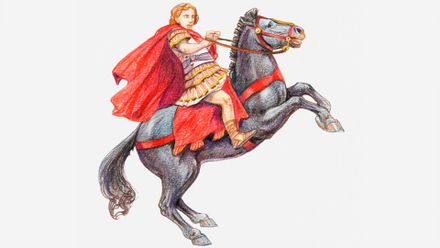
Introducing the ancient world as a 4,000-year period of extraordinary cultural richness.
S1:E2 • Dec 21, 2006 • 45m
Focusing on the changing role of music in the medieval world.
S1:E3 • Dec 21, 2006 • 44m
Examining the impact of ancient Greek and Roman culture on Europe in the 15th and 16th centuries.
S1:E4 • Dec 21, 2006 • 46m
Introducing the mass as the most important compositional genre of the renaissance.
S1:E5 • Dec 21, 2006 • 45m
Focusing on the madrigal, the most important genre of Italian secular music of the late renaissance.
S1:E6 • Dec 21, 2006 • 45m
Comparing the measured elegance of renaissance music with the extravagant emotionalism of baroque music.
S1:E7 • Dec 21, 2006 • 45m
Building listening skills and a descriptive vocabulary and discussing style and features of baroque music.
S1:E8 • Dec 21, 2006 • 48m
Describing the rise of German music during the baroque.
S1:E9 • Dec 21, 2006 • 46m
Introducing the parts of a fugue, including the exposition, subject restatements and episodes.
S1:E10 • Dec 21, 2006 • 46m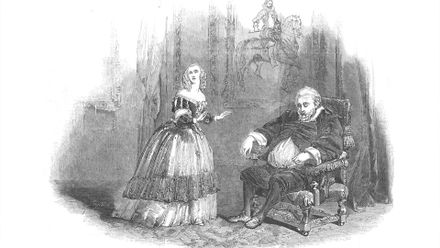
Discussing the evolution of opera from the late renaissance through the early baroque.
S1:E11 • Dec 21, 2006 • 45m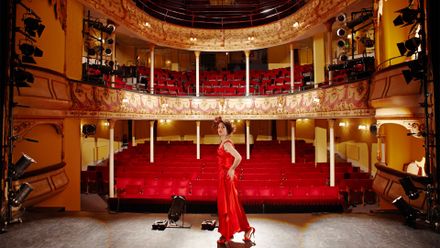
Continuing with the evolution of opera from the late renaissance through the early baroque.
S1:E12 • Dec 21, 2006 • 48m
Exploring the oratorio and Lutheran church cantata, as well as the baroque mass, sacred motet and more.
S1:E13 • Dec 21, 2006 • 44m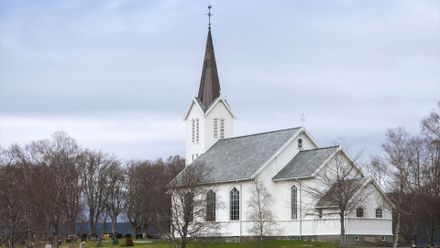
Focusing on the Lutheran church cantata, which evolves as a musical commentary on a bible reading.
S1:E14 • Dec 21, 2006 • 47m
Exploring the processes that organize musical materials into recognizable structures without words.
S1:E15 • Dec 21, 2006 • 45m
Focusing now on ritornello form and the Baroque concerto.
S1:E16 • Dec 21, 2006 • 46m
Introducing the Age of Enlightenment and its impact on musical style.
S1:E17 • Dec 21, 2006 • 45m
Building listening skills and vocabulary regarding cadence, or musical punctuation.
S1:E18 • Dec 21, 2006 • 46m
Examining an adaptation of baroque variations to the musical needs of the classical era.
S1:E19 • Dec 21, 2006 • 48m
Investigating baroque minuet and trio form, the antecedent of classical minuet and trio form.
S1:E20 • Dec 21, 2006 • 44m
Examining the highly stylized minuet and trios of the classical era.
S1:E21 • Dec 21, 2006 • 47m
Discussing the antecedents of rondo form, the French rondeau and the baroque ritornello form.
S1:E22 • Dec 21, 2006 • 49m
Discussing the many meanings and uses of the word sonata.
S1:E23 • Dec 21, 2006 • 43m
Analyzing and discussing the fourth movement of Mozart's symphony in G minor, K. 550.
S1:E24 • Dec 21, 2006 • 46m
Analyzing and discussing two additional sonata-allegro form movements.
S1:E25 • Dec 21, 2006 • 46m
Exploring the classical symphony as both an orchestral genre and a social phenomenon.
S1:E26 • Dec 21, 2006 • 43m
Discussing the perfection of the violin family and the invention of the piano during the baroque era.
S1:E27 • Dec 21, 2006 • 43m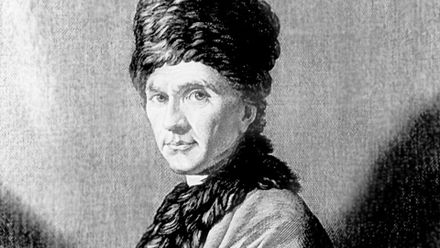
Exploring the ideal operatic genre for the classical era's plots, music and characters.
S1:E28 • Dec 21, 2006 • 45m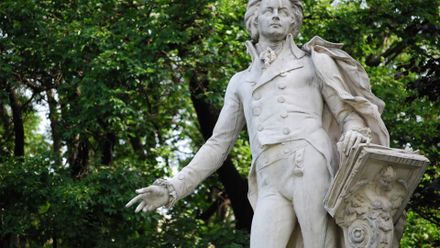
Discussing the operas of Mozart with special attention to Don Giovanni.
S1:E29 • Dec 21, 2006 • 44m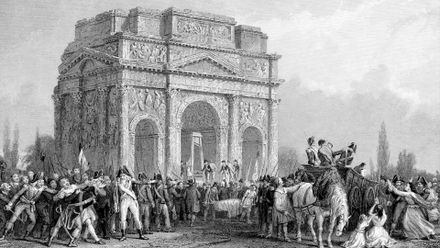
Discussing Ludwig van Beethoven's life and the revolutionary era he experiences.
S1:E30 • Dec 21, 2006 • 44m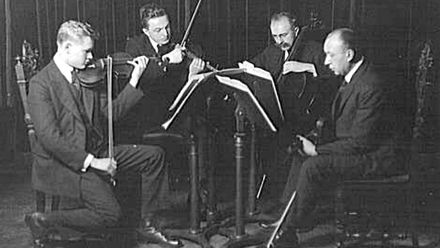
Discussing Beethoven's four compositional periods and exploring his significant compositional innovations.
S1:E31 • Dec 21, 2006 • 45m
Describing Beethoven's mature compositional innovations and artistic beliefs.
S1:E32 • Dec 21, 2006 • 46m
Examining four romantic trends studied in detail over the next few lectures.
S1:E33 • Dec 21, 2006 • 44m
Exploring a paradox faced by early romantic composers.
S1:E34 • Dec 21, 2006 • 46m
Exploring the initial of two great romantic originals, Hector Berlioz.
S1:E35 • Dec 21, 2006 • 45m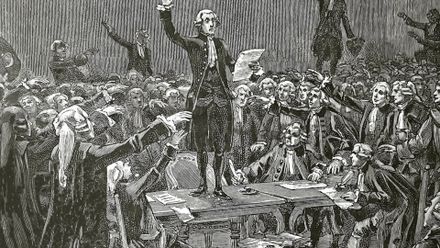
Hector Berlioz combines his four great loves in Symphonie fantastique.
S1:E36 • Dec 21, 2006 • 49m
Examining early 19th-century Italian opera as a popular art.
S1:E37 • Dec 21, 2006 • 46m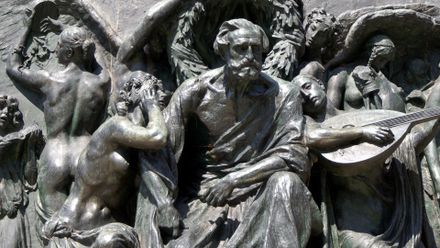
Hearing and discussing the final scene from Verdi's opera Aida.
S1:E38 • Dec 21, 2006 • 48m
Examining the rise of German literature and musical theater in the works of Goethe and Mozart.
S1:E39 • Dec 21, 2006 • 46m
Exploring the overture and Act I of Wagner's Tristan und Isolde.
S1:E40 • Dec 21, 2006 • 46m
Considering the major genres of 19th-century orchestral program music.
S1:E41 • Dec 21, 2006 • 44m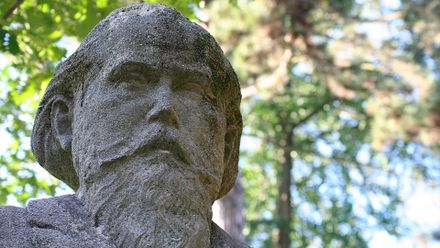
Discussing major genres of 19th-century orchestral program music.
S1:E42 • Dec 21, 2006 • 47m
Examining the trend of folkloric musical nationalism during the second half of the 19th century.
S1:E43 • Dec 21, 2006 • 46m
Discussing and illustrating the music and ideas of the Russian five.
S1:E44 • Dec 21, 2006 • 46m
Surveying musical and expressive trends from the baroque Era through the late 19th century.
S1:E45 • Dec 21, 2006 • 44m
Exploring early 20th-century modernism by examining the life and music of Claude Debussy.
S1:E46 • Dec 21, 2006 • 45m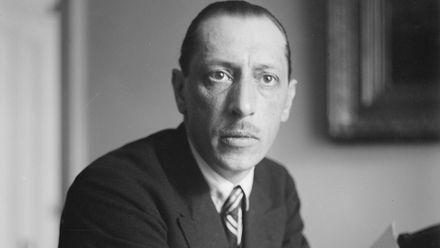
Exploring early 20th-century modernism with a discussion of Igor Stravinsky.
S1:E47 • Dec 21, 2006 • 45m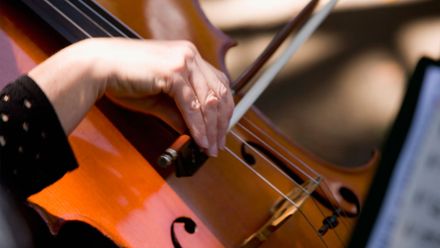
Exploring early 20th-century modernism with Arnold Schönberg.
S1:E48 • Dec 21, 2006 • 46mMore Like This
 2026 • G • 30m 30sDetails
 2020 • G • 25m 46sDetails
 2026 • TVPG • 54mDetails
 2011 • G • 1hDetails
 2025 • 55mDetails
 2023 • TV14 • 45mDetails
 1997 • G • 1hDetails
 TVPG • 1 season
 2025 • 50mDetails
 TVPG • 1 season
 2025 • 50mDetails
 TVPG • 1 season
 2023 • TVMA • 49m 26sDetails
 2025 • 51mDetails
 TVG • 2 seasons
 2021 • PG13 • 1hDetails
 TVPG • 1 season
 2025 • 16mDetails
 NR • 1 season
 2020 • G • 44m 58sDetails