

The Barbarian Empires of the Steppes
S1:E25 The Sultans of Delhi
Examining Turkish conquests of northern India in the early 13th century; their successes and limitations in creating a Muslim civilization; considering the political issues involved; the cultural and religious landscape that the Turks deal with.
Already subscribed?
Sign in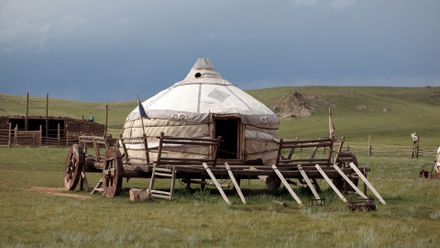
The Mongol sack on Baghdad in 1258 is often seen as the epitome of the clash between barbarian peoples of the steppes and the people of the civilized world; exploring this notion and a detailed account of the destruction; life on the steppes.
S1:E1 • Jan 13, 2014 • 32m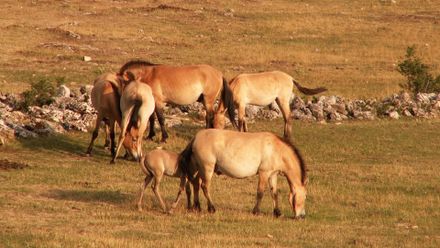
Learning about the earliest known nomads of the Pontic-Caspian steppes; innovations include the raising of livestock, the domestication of the horse and the invention of the spoked wheel; transforming steppe life and leading to migrations.
S1:E2 • Jan 13, 2014 • 29m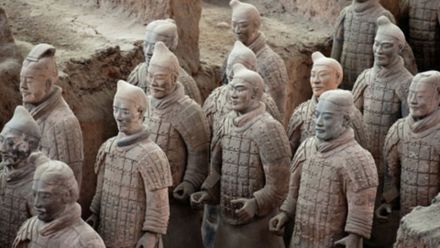
Learning about Indo-Europeans in Mongolia; examining how Iranian and Tocharian nomads come into contact with China; their interaction; the repercussions this contact has across the central and western steppes; the bordering civilizations.
S1:E3 • Jan 13, 2014 • 31m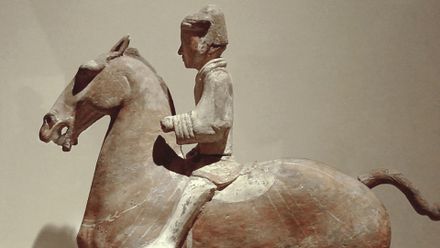
The Xiongnu are promised Chinese brides, among other humiliating and unacceptable gifts; looking closely at the relationship between the Han Empire of China and the nomadic confederacy of the Xiongnu; Han tries to eliminate the Xiongnu threat.
S1:E4 • Jan 13, 2014 • 31m
Moving to the western and central steppes; Iranian-speaking nomads with great military prowess establish a symbiotic relationship with the Greeks based on trade; attempts to conquer the Scythians by the Persians and, later, Alexander the Great.
S1:E5 • Jan 13, 2014 • 30m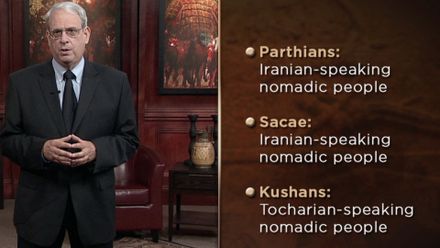
Looking at the rise to power and achievements of the nomadic steppe peoples known as the Parthians; despite clashes with the Romans, they rule Iran and the wider Middle East from horseback for 400 years; the first nomadic empire in the Near East.
S1:E6 • Jan 13, 2014 • 31m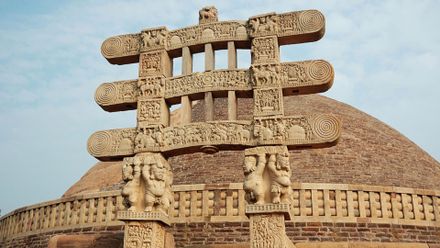
Examining the Sacae and Kushans, who are forced west into the Middle East and India by the Xiongnu confederacy; the role both groups play in developing trade along the Silk Road; Kujula Kadphises and his successors carve out an Indian empire.
S1:E7 • Jan 13, 2014 • 30m
Through control of key trade routes and market participation, the Sarmatians amass great wealth; prized as mercenaries, their military prowess influences Roman tactics; no great Sarmatian leader emerges; this experience affects the Romans.
S1:E8 • Jan 13, 2014 • 30m
Between the 2nd century B.C. and 2nd century A.D., the Silk Road brings a virtual global economy; exploring this iconic route and its trade connections; including the types of goods moved; the people involved; these arrangements benefit all parties.
S1:E9 • Jan 13, 2014 • 30m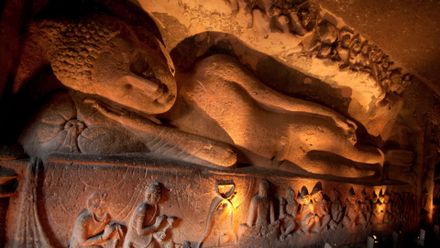
The importance of the Silk Road; a discussion of religions spread and practiced along the route; learning why Nestorian Christianity, Manichaeism, Zoroastrianism, Judaism, and Buddhism are appealing to nomadic populations; the impact of these faiths.
S1:E10 • Jan 13, 2014 • 31m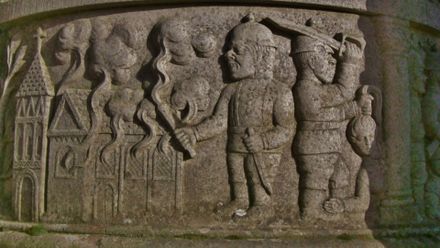
The Huns employ tactics similar to the Xiongnu and are viewed as both a major threat and militarily advantageous by the divided Roman Empire; exploring their conquests and the dual strategies eastern Rome used to manage the Hun threat.
S1:E11 • Jan 13, 2014 • 31m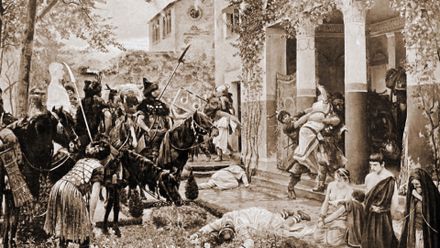
Attila the Hun is considered a great leader and a merciless conqueror; examining the Huns with the story of Attila, from his rise to power to his death; the royal marriage proposal that leads to the ravaging of Western Europe.
S1:E12 • Jan 13, 2014 • 31m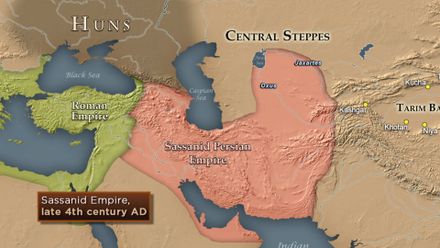
To understand the history of the Hephthalites and the Gok Turks in context, looking at the Sassanid Empire, the contemporary rival to the late Roman world; from the monarchy's aspirations to the way its Neo-Persian shahs come into conflict with Rome.
S1:E13 • Jan 13, 2014 • 29m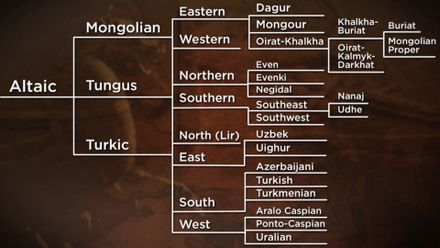
Progressing into the early Middle Ages, a period defined by the Turks; exploring the Avar Khaghans, the Gok Turks and the Uighurs; they develop between the 5th and 9th centuries A.D.; these confederations impact the Islamic world.
S1:E14 • Jan 13, 2014 • 31m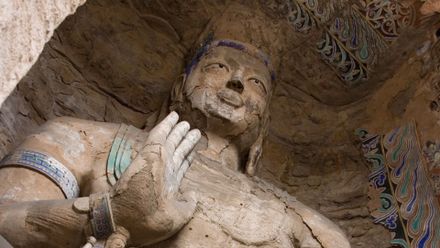
The interaction of the Turks and Chinese; looking at China since the Han dynasty's fragmentation; investigating the nomads who settle in China; the unification under the Sui and Tang emperors; their relationship with the Gok Turks and Uighurs.
S1:E15 • Jan 13, 2014 • 31m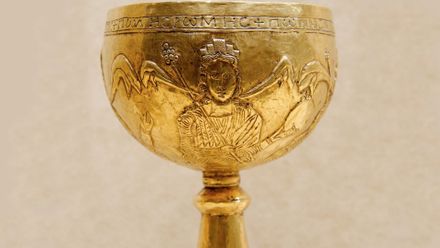
Images of Western Europe when discussing the Middle Ages; during the time of the Avars, Gok Turks and Uighurs, Constantinople represents the great Christian civilization bordering the steppes; Byzantine civilization and the peoples of the steppes.
S1:E16 • Jan 13, 2014 • 31m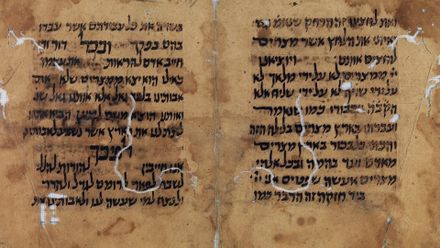
The Khazars convert to Judaism rather than Orthodox Christianity; knowing why the Byzantines, despite dealings with the Khazars across centuries, fail to win them over to their commonwealth; the Khazars play a role in Byzantine foreign policy.
S1:E17 • Jan 13, 2014 • 32m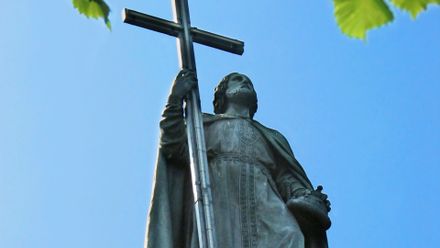
The Byzantines fail with the Khazars; learning whether the Byzantines absorb or convert any other nomads to orthodox Christianity and Byzantine civilization; their relationship with the peoples of the Pontic-Caspian steppes; looking at the Magyars.
S1:E18 • Jan 13, 2014 • 31m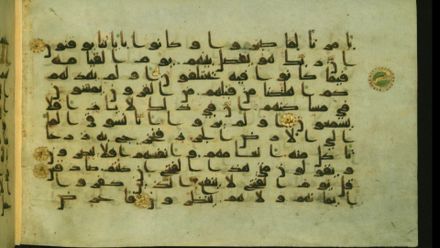
Learning how the Muslim civilization emerges and its dramatic rise; its significant role among Turkish-speaking nomads; the caliphate and its divisions; the teachings of Muhammad; a Muslim capital at Baghdad and associated cities spread Islam.
S1:E19 • Jan 13, 2014 • 31m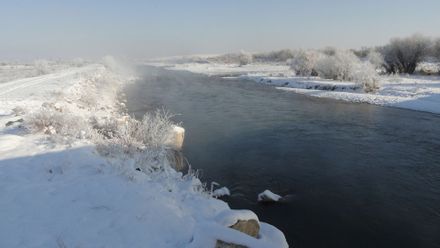
Examining the initial contact between Islamic civilization and the Turkish nomads in detail; the wars waged between the early caliphs and Turkish tribes; the Battle of Talas, fought between the armies of the Abbasid caliphate and the Tang emperor.
S1:E20 • Jan 13, 2014 • 30m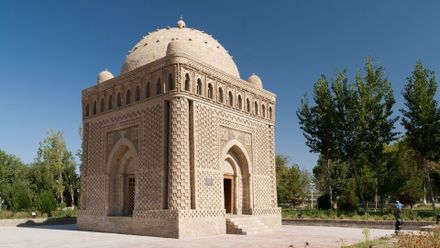
After the Battle of Talas, Islamic expansion halts for 300 years; exploring Baghdad's rise as an intellectual and economic center of the Islamic world; the religion's cultural achievements during this period; Turkish merchants convert to Sunni Islam.
S1:E21 • Jan 13, 2014 • 30m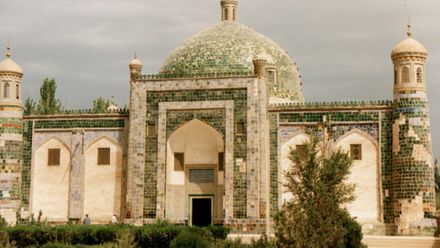
The rise of the slave trade and tracing a series of Turkish migrations that leads to new powers on the steppes; focusing on the Karakhanids, the sultans of Ghazni and the Seljuk Turks; they represent the greatest of these new political organizations.
S1:E22 • Jan 13, 2014 • 30m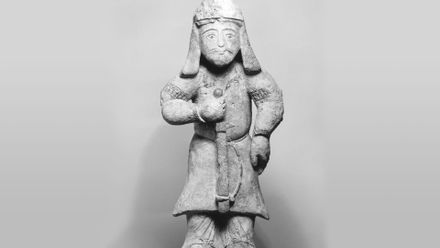
After the Seljuk Turks emerge as a major factor in eastern Islam, they conquer the region of Asia Minor and northern India near Delhi; taking a comparative look at these conquests; including the Turks' seesaw struggle with the crusaders.
S1:E23 • Jan 13, 2014 • 31m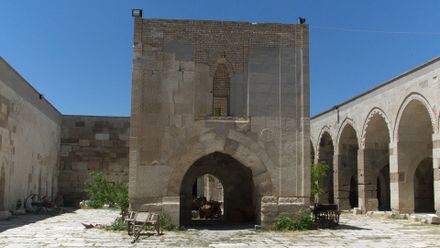
Learning how the Seljuk Turks use their victory; exploring how the sultans in Konya, the new center of Muslim Turkish civilization, forge a wider unity; the region's Christian population converts; a new Turkish civilization in Asia Minor develops.
S1:E24 • Jan 13, 2014 • 29m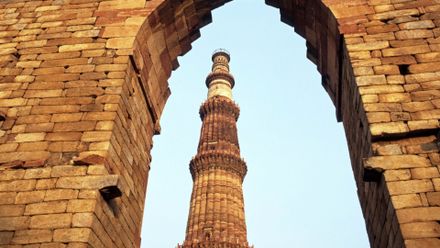
Examining Turkish conquests of northern India in the early 13th century; their successes and limitations in creating a Muslim civilization; considering the political issues involved; the cultural and religious landscape that the Turks deal with.
S1:E25 • Jan 13, 2014 • 31m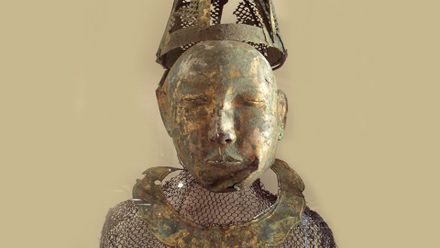
The Mongols emerge and have a dramatic impact on the 13th century; studying the interaction of the restored Song Empire and the Khitans, the Jurchens and the Xi Xia who enter northern China in the 10th and 11th centuries when the Great Wall falls.
S1:E26 • Jan 13, 2014 • 30m
Genghis Khan's rivals see him as the embodiment of the steppe barbarian; this man unites the Mongol tribes and sets his sights on world conquest; Temujin, as Genghis Khan is originally known, knew who the Mongols were at the time of his birth.
S1:E27 • Jan 13, 2014 • 29m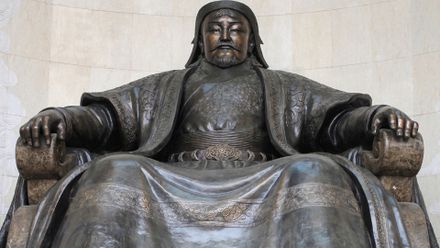
Temujin's new status as the great khan; following his nomadic army's path of violent conquest, aided by skilled mapmakers and Chinese engineers; from the small kingdom of the Xi Xia and the Jin Empire to the invasion of the Islamic world.
S1:E28 • Jan 13, 2014 • 32m
Genghis Khan has his third son, Ogedei, succeed him rather than his oldest; the Mongols' vast westward expansion; Ogedei's efforts to transition from a tributary-based empire to a tax-based one; Batu's invasion of Russia and Christian Europe.
S1:E29 • Jan 13, 2014 • 30m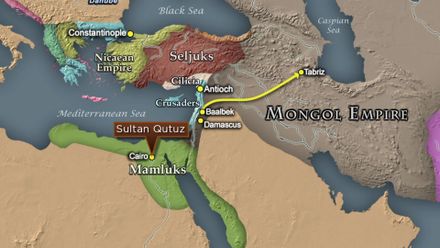
The campaigns of Hulagu; witnessing the political struggle to elect the next great khan; delving into campaigns including the sack of Baghdad, seen as the height of Mongol atrocities; the battle that ended Mongol power in the Islamic world.
S1:E30 • Jan 13, 2014 • 31m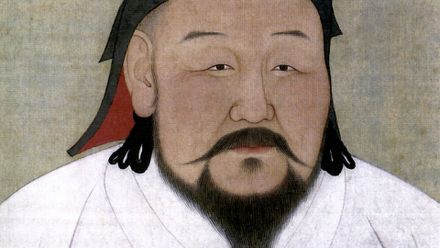
At his death in 1227, Genghis Khan achieves most of what he desired territorially; Kublai Khan and Mongke invade Song China; some scholars call this conquest the greatest of the Mongol's military achievements; Kublai Klan invents a new army.
S1:E31 • Jan 13, 2014 • 30m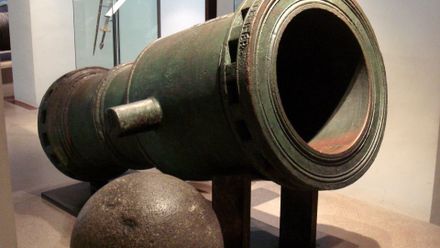
The costs and benefits of the Mongol conquests; probing whether it is accurate to say that a Mongol peace is imposed on the sedentary civilizations that come under their control; Mongol destruction; cultural exchange and prosperity arise.
S1:E32 • Jan 13, 2014 • 32m
By Kublai Khan's death in 1294, the Mongolians rule four domains, each of which later crumbles: Kublai Khan's homeland region; the central steppes of the Chagatai; the Ilkhans' Persia and Transoxiana; the western forest zones of the Golden Horde.
S1:E33 • Jan 13, 2014 • 32m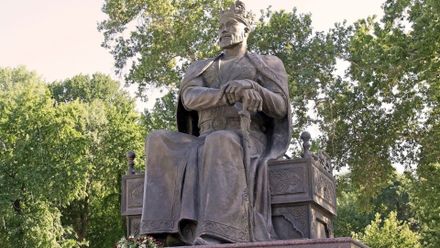
Between 1381 and his death in 1405, Tamerlane wages seven campaigns on his path of conquest; he defeats the Mamluk and Ottoman armies and crushes the armies of the Sultan of Delhi; the fall of the Golden Horde; his empire is ultimately short-lived.
S1:E34 • Jan 13, 2014 • 31m
With a reign of India that endures until the British arrive, the Mughals are remembered as great rulers by Hindus, Sikhs and Muslims; the life and legacy of the man who, as a descendant of Tamerlane and Genghis Khan, becomes a great conqueror.
S1:E35 • Jan 13, 2014 • 30m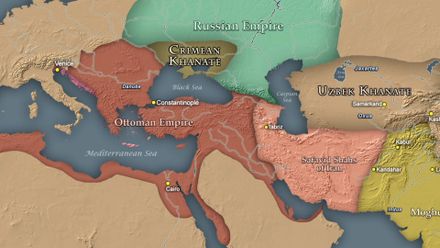
By the 16th and 17th centuries, the nomadic peoples of the Eurasian steppes cease to play the decisive role they had for nearly 6,000 years; reviewing a discussion of what this legacy means to everyone today.
S1:E36 • Jan 13, 2014 • 35m