

Understanding the Dark Side of Human Nature
S1:E14 Nightmares and the Dream Self
Why Freud believes dreams reveal important aspects of people; how Augustine copes when he dreams of actions that go against his beliefs; a disturbing dream becomes an opportunity for learning, even when one has no idea how to interpret it.
Already subscribed?
Sign in
People reserve the concept of the dark side for science fiction or psychopaths; the truth of human nature; how the dark side relates both to one's tendencies toward immorality and evil and to some of the human condition's most problematic aspects.
S1:E1 • Jul 19, 2019 • 31m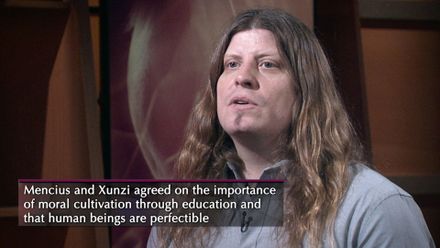
Answering the question of whether people are fundamentally good, fundamentally evil or neither; an ancient debate between great Confucian philosophers; contemplating theories of human nature; how they frame a person's view of the world.
S1:E2 • Jul 19, 2019 • 32m
In order to fully examine the dark side of human nature, one needs to go deeper; questioning whether evil actually exists, what it means to call an action evil; exploring the ontological and conceptual aspects of evil by referencing great thinkers.
S1:E3 • Jul 19, 2019 • 32m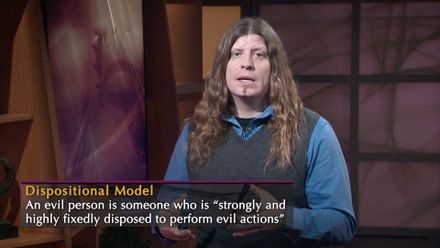
The line between bad and evil; what it takes to label a person evil; developing one's own views of when an individual is or is not evil by considering four models of evil, which are the Evildoer, the Dispositional, the Affect and the Moral Monster.
S1:E4 • Jul 19, 2019 • 32m
The question of whether psychopaths responsible for their actions; considering how much responsibility evildoers can and should accept for their crimes, with the help of philosophers; ways by which they might not be so different from other people.
S1:E5 �� Jul 19, 2019 • 30m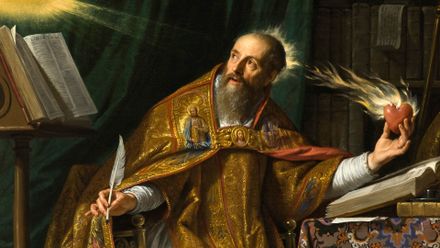
How one would know if they are committing a sin; what its consequences would be; exploring the Christian concepts of sin, from the words of Jesus to Thomas Aquinas, Augustine and modern theologians; how they relate to a secular notion of evil.
S1:E6 • Jul 19, 2019 • 34m
Whether dark thoughts and desires are a fundamental part of human nature; why one cannot seem to suppress or eradicate them; exploring answers to these questions with help from Tiantai Buddhist philosophers and modern-day evolutionary psychologists.
S1:E7 • Jul 19, 2019 • 34m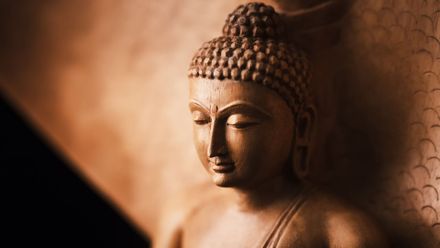
The Buddha addresses questions about suffering in his Four Noble Truths; learning about the Buddha's optimistic path forward; whether the Buddha's teachings carry truth in the 21st century; an evolutionary psychologist provides a fascinating answer.
S1:E8 • Jul 19, 2019 • 31m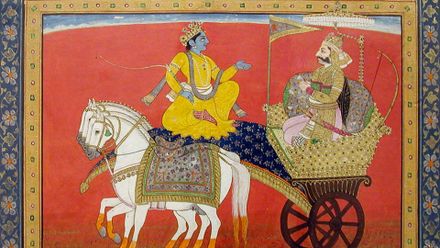
Turning to the Bhagavad Gita to study the roles played by desires and expectations; why people are disappointed in their lives; how one could live without desire and expectations; one path provided by the Gita leads to the experience of "flow".
S1:E9 • Jul 19, 2019 • 32m
How to respond to the knowledge of death; why the Roman philosopher Lucretius believes that the fear of death drives people to act against their best interests; why the Daoist philosopher Zhuangzi wonders if a negative view of death even makes sense.
S1:E10 • Jul 19, 2019 • 32m
Wondering whether life has any meaning at all; why so many philosophers who have grappled with this question conclude that lives do have value; how one theologian finds meaning in the courage to face oneself in the world as it really is.
S1:E11 • Jul 19, 2019 • 32m
Questioning whether grief could ever have a good side; exploring the many ways in which philosophers and psychologists grapple with this issue for millennia; grief might be an important opportunity for self-knowledge and connection to community.
S1:E12 • Jul 19, 2019 • 29m
Whether there is something in human nature that drives people to kill others; whether a drive to kill is activated by nature or nurture; the genetic and situational points of view; the truth of how much people have in common with those who kill.
S1:E13 • Jul 19, 2019 • 30m
Why Freud believes dreams reveal important aspects of people; how Augustine copes when he dreams of actions that go against his beliefs; a disturbing dream becomes an opportunity for learning, even when one has no idea how to interpret it.
S1:E14 • Jul 19, 2019 • 28m
Considering what people become when they hold two contradictory thoughts in their minds at the same time; whether self-deception gives humans an evolutionary advantage; what one can do to try to avoid deceiving themselves about their own life.
S1:E15 • Jul 19, 2019 • 31m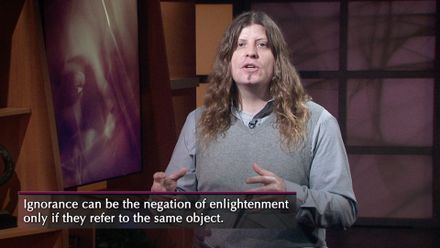
Exploring the concept of ignorance through the writings of Shankara and Ramanuja; why some modern philosophers describe ignorance as a complex social phenomenon that can bring out the dark side of human nature; what can be done to counteract it.
S1:E16 • Jul 19, 2019 • 31m
Socrates does not think people can act against their best interest; exploring potential explanations for why one sometimes does what they say they never would do; whether it is a failure to follow through on intentions or it is ego depletion.
S1:E17 • Jul 19, 2019 • 28m
Judging two people who drive drunk from a party; many philosophers address the role of luck and its moral implications in people's lives; exploring their various perspectives, which may not give easy answers; thinking twice before placing blame.
S1:E18 • Jul 19, 2019 • 30m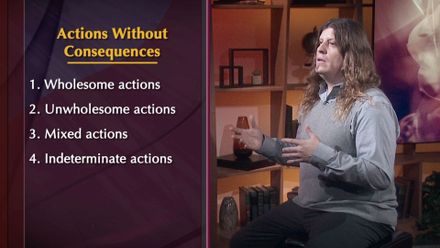
An example from the Old Testament Book of Job; looking at the question of whether victims get what they deserve; exploring whether people can eliminate victim-blaming while maintaining that the world is, in the end, a fair and just place.
S1:E19 • Jul 19, 2019 • 30m
Taking the law into one's hands to exact revenge on a perpetrator; why people feel the need for vengeance; what can be learned from the Greek dramatist Aeschylus, as he struggles to reconcile the tension between retributive justice and revenge.
S1:E20 • Jul 19, 2019 • 30m
Looking at when members of the Charleston, S.C., church forgive Dylann Roof; the possibility and morality of forgiveness; how Christian and Buddhist philosophers explain forgiveness and the redemption of sinners; whether anyone is beyond redemption.
S1:E21 • Jul 19, 2019 • 30m
Anger and righteous anger; replacing anger with the motivation of compassion and loving-kindness; examining and broadening one's thoughts on this emotion by learning from philosophers like Shantideva, Seneca and Nobel Laureate Elie Wiesel.
S1:E22 • Jul 19, 2019 • 28m
How to remain peaceful in the midst of such a troubled world; brain science shows that people mirror the behavior of others; exploring Christian and Buddhist guidelines for confronting the dark side of human nature without spiraling into darkness.
S1:E23 • Jul 19, 2019 • 29m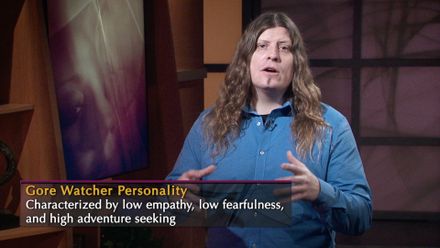
Curiosity about death, violence or evil; how psychologists and philosophers describe the benefits of a fascination with the dark side; learning about oneself and what it means to be human by grappling with death, anger, fear and dark thoughts.
S1:E24 • Jul 19, 2019 • 33m