

Thermodynamics: Four Laws That Move the Universe
Season 1
Thermodynamics is the branch of science that deals with the movement of heat; it is subtle and wide-ranging in its effects; its profound impact on the development of modern civilization; an in-depth tour of this vital and fascinating science.
Already subscribed?
Sign in
Seeing how thermodynamics governs all processes that use energy to transform materials, whether the product is a pan of brownies or a cell phone; imagining what it would take to build a modern technological civilization from scratch.
S1:E1 • Mar 7, 2014 • 32m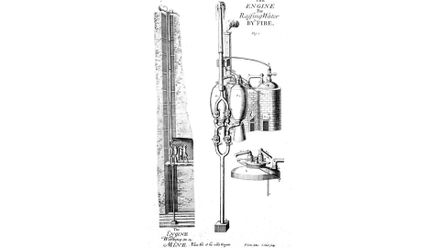
Charting the key historical milestones in the development of thermodynamics; comparing macroscopic and microscopic views of the world; representing the relationship between a material's properties, structure, performance and processing.
S1:E2 • Mar 7, 2014 • 29m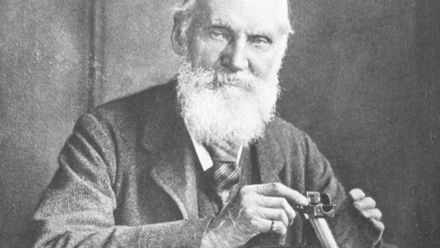
Analyzing temperature, the most central idea of thermodynamics; investigating the origin of different temperature scales; methods for measuring temperature; how the concept of temperature is a consequence of the zeroth law of thermodynamics.
S1:E3 • Mar 7, 2014 • 33m
Exploring other basic concepts that are critical to thermodynamics; the idea of a system; boundary conditions; processes within systems; the meaning of the state of a system; the definition of equilibrium; a misunderstood quantity called entropy.
S1:E4 • Mar 7, 2014 • 31m
How pressure, volume and temperature are state functions related by a formula called the ideal gas law; contrasting these variables with work and heat; why they are not state functions; how the ideal gas law can be used to calculate a piston's work.
S1:E5 • Mar 7, 2014 • 34m
The values for work and heat in a system depend on the path taken to get to a particular state; noting that the sum of work and heat does not depend on the path as it is a constant; this fact is the foundation of the first law of thermodynamics.
S1:E6 • Mar 7, 2014 • 31m
Witnessing examples of energy transforming from one type to another; how the ideal gas law can be used to ignite a piece of cotton; how soup can be made hot by rapid mixing; probing the concepts of reversibility and irreversibility.
S1:E7 • Mar 7, 2014 • 30m
The connection between entropy and the second law of thermodynamics, which states that all real processes tend to increase the universe's entropy; exploring important consequences of the law, including the fact that time flows in only one direction.
S1:E8 • Mar 7, 2014 • 32m
Studying molar and partial molar quantities, which help describe what happens when materials are combined; focusing on the case of water mixed with ethanol, which adds up to a surprising volume; these ideas lead to the variable of chemical potential.
S1:E9 • Mar 7, 2014 • 33m
Defining the Gibbs free energy, which is closely related to entropy and allows the determination of equilibrium for systems under experimental conditions; exploring enthalpy, a variable that is useful when discussing constant pressure processes.
S1:E10 • Mar 7, 2014 • 30m
Investigating the thermodynamic force that drives a liquid to flow from one side of a barrier to another; this force is called the chemical potential gradient; its applications, from desalinating water to generating electricity.
S1:E11 • Mar 7, 2014 • 30m
How materials vary in their ability to absorb heat; this factor is called heat capacity; a way to correlate energy flow with temperature; the heat capacity of various materials; how quantum effects reduce heat capacity at very low temperatures.
S1:E12 • Mar 7, 2014 • 31m
The problem of thermal energy flow and volume; this phenomenon causes materials to expand when heated and contract when cooled; analyzing these events at the atomic scale; studying the unusual but essential behavior of water when it freezes.
S1:E13 • Mar 7, 2014 • 30m
The properties of different materials as they change phase from solid to liquid to gas, the behavior of supercooled water, and phase diagrams are important tools for predicting how temperature and pressure determine when phase transitions occur.
S1:E14 • Mar 7, 2014 • 31m
Why ice melts above zero degrees Celsius; why water boils above 100 degrees Celsius; the quantity that governs the equilibrium between liquid and gaseous phases; using phase diagrams to probe these questions; a demonstration of the triple point.
S1:E15 • Mar 7, 2014 • 32m
The properties of phases and phase diagrams; how a flask of water can be made to boil by cooling it; exploring why a curve in a phase diagram has a certain slope; closing with a multicomponent phase diagram that explains why salt causes ice to melt.
S1:E16 • Mar 7, 2014 • 30m
Exploring the phenomenon of mixing, a crucial process for any situation where the product is composed of more than one material; focusing on the case of oil and water, which are notoriously unmixable; what keeps them separate at the molecular level.
S1:E17 • Mar 7, 2014 • 31m
Applying phase diagrams to the analysis of phase transitions of mixtures; a mixture of two different components often has surprising properties; why solder and other eutectic materials melt at a lower temperature than do their constituent substances.
S1:E18 • Mar 7, 2014 • 29m
Studying heat engines and their design limits for converting heat into work; the maximum possible efficiency in a heat engine is defined by the Carnot engine, an unattainable ideal whose properties illustrate the second law of thermodynamics.
S1:E19 • Mar 7, 2014 • 30m
Evaluating four other approaches to generating work from thermodynamic forces, which are magnetism, phase change, entropy and surface tension; these engines demonstrate the ways to produce mechanical energy from the unique properties of materials.
S1:E20 • Mar 7, 2014 • 34m
Tracing the source of the electron flow that makes batteries so indispensable to modern life; the electrochemical potential, which describes the thermodynamics of any system in which chemical reactions occur together with charged particles.
S1:E21 • Mar 7, 2014 • 31m
Chemical reactions are fundamentally part of everything people do; how the concepts of thermodynamics reveal when a reaction will or will not occur; focusing on the Haber process, which transforms the field of agriculture.
S1:E22 • Mar 7, 2014 • 31m
Contrasting two types of reactions, which sheds light on the reaction quotient; studying pure compounds reacting together in the first reaction; looking at dissolved compounds reacting; how to compute the reaction quotient at any concentration.
S1:E23 • Mar 7, 2014 • 34m
Reviewing major concepts; innovative technologies that may help solve the world's urgent energy and fresh water needs; these processes rely on the design of new materials, which can only be achieved through a deep understanding of thermodynamics.
S1:E24 • Mar 7, 2014 • 35mMore Like This
 TVPG • 1 season
 TVPG • 1 season
 TVPG • 1 season
 TVPG • 1 season
 TVPG • 1 season
 TVPG • 1 season
 TVPG • 1 season
 2020 • TVPG • 14mDetails
 TVPG • 1 season
 TVPG • 1 season
 TVPG • 1 season
 TVPG • 1 season
 TVPG • 1 season
 TVPG • 1 season
 TVPG • 1 season
 TVPG • 1 season
 TVPG • 1 season
 TVPG • 1 season
 2019 • TVPG • 51mDetails
 TVPG • 1 season