

Robotics
S1:E16 Underwater Robots That Hover and Glide
Some of the most exciting robots on the planet are found underwater; roboticists have developed unique solutions to creating autonomous underwater vehicles, overcoming critical challenges involving sensors, power supply and design.
Already subscribed?
Sign in
The world of robots; the origin of robots; three components responsible for the advancements in robot design; how behavioral autonomy is essential to the development of modern robotics.
S1:E1 • May 29, 2015 • 39m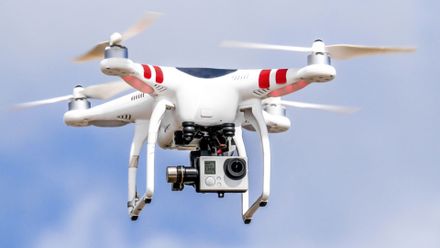
How robots actually work; deconstructing a Roomba to learn the five functional categories of parts all robots need; exploring a universal lesson about robotics; how trade-offs in robot design work.
S1:E2 • May 29, 2015 • 33m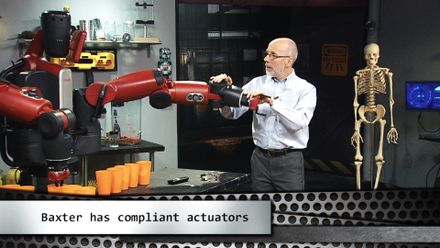
Investigating robot actuators; the motors and transmissions that underlie all robotic movement; the early use of springs as motors in automata; how electricity spins the magnets that make motors move; how movement defines a robot.
S1:E3 • May 29, 2015 • 33m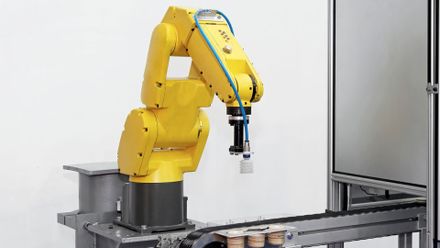
Intelligent behavior in robots is rooted in the sensors that determine how much robots know about the world around them; how sensors work to communicate across the electromagnetic spectrum such as through infrared and visible light.
S1:E4 • May 29, 2015 • 31m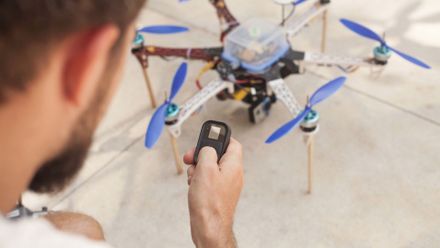
How a remotely controlled machine is turned into an autonomous robot; self-control in robots; robot controllers; the part of robots that uses sensory information to decide how the robot should achieve its immediate and long-term goals.
S1:E5 • May 29, 2015 • 31m
The most important problem mobile robots must solve is how to navigate, or move with purpose; how simultaneous localization and mapping is the key to a robot's autonomy in both structured and exploratory situations.
S1:E6 • May 29, 2015 • 31m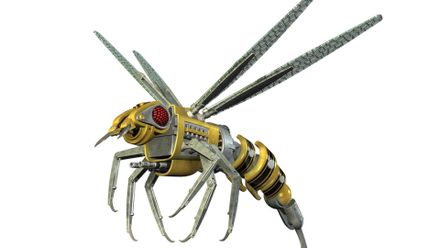
An approach to creating robots that is inspired not by maps but by the behavior of animals; the benefits of behavior-based robotic architecture; how simple animals including ants have inspired roboticists to build fascinating inventions.
S1:E7 • May 29, 2015 • 30m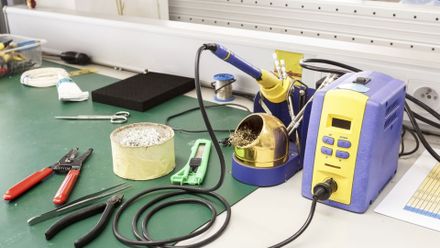
How to build a robot; working with tools like multimeters and solid-core wires; how to perform tasks including stripping wire and building circuits; and how to hack into existing robots to perform tasks they are not intended to do.
S1:E8 • May 29, 2015 • 34m
The actual design and construction of more complex robots for research or business; the iterative decision-making process used by robotics engineers; intriguing robots including Madeline, the first transphibian vehicle, and RayBot.
S1:E9 • May 29, 2015 • 31m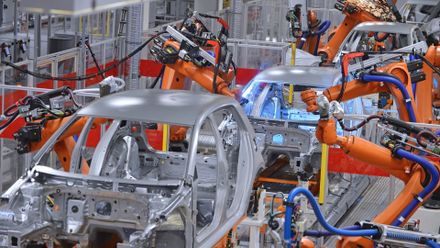
Robots that take out the trash and put away books; how robots are designed to perform specific tasks; the choices roboticists must consider; the stability of the workplace and the minute steps of the task itself.
S1:E10 • May 29, 2015 • 29m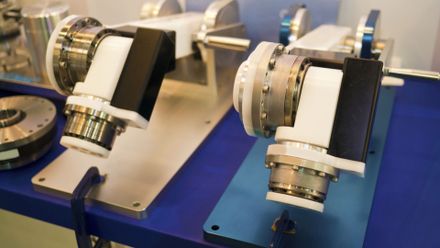
Robots help manufacture cars, medicines and other everyday materials; variations on the robotic arm; early prototypes of pick-and-place robots; consider the trade-offs between range and control of motion; industrial robotics.
S1:E11 • May 29, 2015 • 31m
Advancements in modern robotics have made robots useful, safe, reliable and affordable; vacuum cleaners like Roomba, gutter cleaners like Looj, and lawn mowers like MowBot; how robots adjust to tasks.
S1:E12 • May 29, 2015 • 33m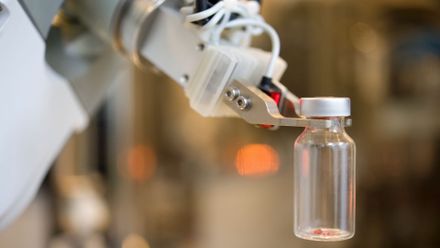
Hospital robots have designs and functions meant to tackle the complexity of the modern medical workplace; how robots like HelpMate and Da Vinci work in patient wards, surgical theaters, and other settings; the burgeoning field of neuroprosthetics.
S1:E13 • May 29, 2015 • 28m
How robotic cars handle different situations; the trade-offs between speed and safety in creating self-driving vehicles; the future of getting from one place to another.
S1:E14 • May 29, 2015 • 30m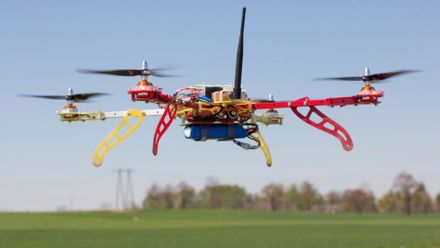
Aerial robots; the autopilot features in commercial airplanes; unmanned drones that can deliver packages; the role of gyroscopic sensors; recent technological advancements that are extending the functionality and power of flying robots.
S1:E15 • May 29, 2015 • 32m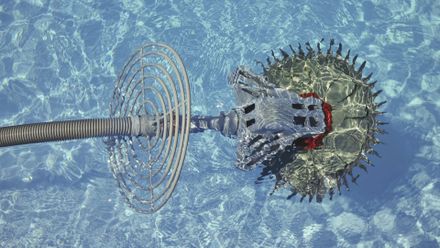
Some of the most exciting robots on the planet are found underwater; roboticists have developed unique solutions to creating autonomous underwater vehicles, overcoming critical challenges involving sensors, power supply and design.
S1:E16 • May 29, 2015 • 33m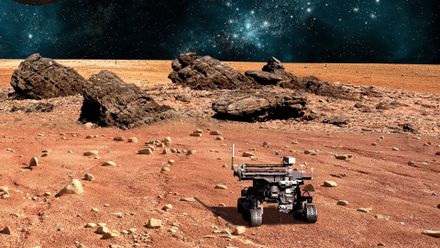
Space missions redefine the limits of autonomous robots; the Robonaut 2 is a humanoid robot working on the International Space Station; the rovers Spirit and Opportunity are furthering human understanding of the complex geography of Mars.
S1:E17 • May 29, 2015 • 33m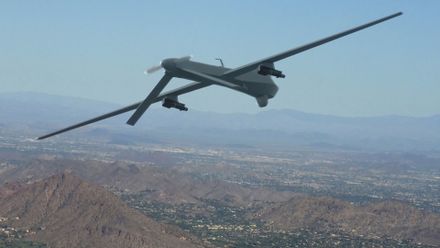
Semi-autonomous military robots and the need to oversee their safety and control; the Predator unmanned aerial system; the Phalanx weapons system; the trade-offs involved in the speed and accuracy of action; distinguishing friend from foe.
S1:E18 • May 29, 2015 • 33m
Walking and running robots, whether they move on four legs or two, offer some of the most extreme physical challenges; the advantages of legged robots; how robots with legs balance themselves and move around in different environments.
S1:E19 • May 29, 2015 • 33m
A huge challenge in robotics is getting robots to work as a team to do things they cannot do alone; swarm robots are simple, similar mobile robots that combine to generate complex behaviors, an area of robotics that has vast potential.
S1:E20 • May 29, 2015 • 28m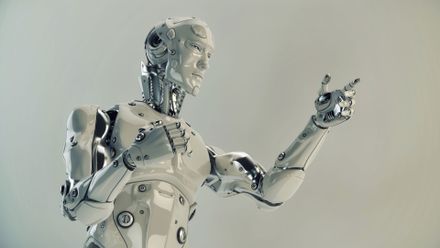
Robots are starting to perform the core features of life; living robots; robots that harvest energy; robots that grow by building and improving themselves; robots that design themselves autonomously.
S1:E21 • May 29, 2015 • 29m
The world of social robotics; robots are built specifically to communicate with humans and other autonomous physical agents; how simple signals like words, expression and body language can create a dynamic user interface between human and robot.
S1:E22 • May 29, 2015 • 31m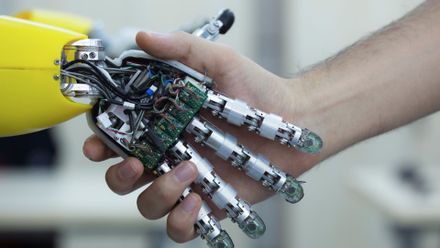
Robots are becoming just like humans; examining recent developments in artificial intelligence; robot bipedalism and dexterity; the uncanny valley; three imitation games that determine where we stand with humanoid robots.
S1:E23 • May 29, 2015 • 32m
Robotics is a multidisciplinary field; it has multiple futures; companion robots can coordinate activities; surgical robots can work autonomously using updates from a robotic cloud system.
S1:E24 • May 29, 2015 • 34m